Best Crappie Bait: Jig, Minnow, or Both
The best crappie bait is a small jig on most days and a live minnow when the fish turn fussy. Jigs cover water and keep you efficient. Minnows convert followers into biters. The skill is knowing which kind of day you are on, and that is what our complete crappie fishing system sorts out from the water temperature. Here is the decision chart.
Crappie Fishing Mastery: the complete system this article comes from, as an instant PDF. Get the guide — $17
What Each Bait Actually Does
A jig is a weighted head with a soft body or hair. It falls at a speed you control, hangs where you stop it, and still breathes a little when you do nothing. That matches the way crappie hover and inhale a meal. You can cast it, count it down, shoot it under a dock or hold it over brush.
A live minnow solves the one problem a jig cannot: it looks, smells and panics like real food with no skill required from you. On a float, a tightline or a multi-hook rig, the bait supplies its own action while you sit still.
So the honest answer is not jig or minnow. It is jigs for speed, docks, casting and covering water, and minnows for the stare-downs.
When the Jig Is the Right Call
- You still have to find them. Fan casts with a counted fall search ten times the water a bucket of minnows will.
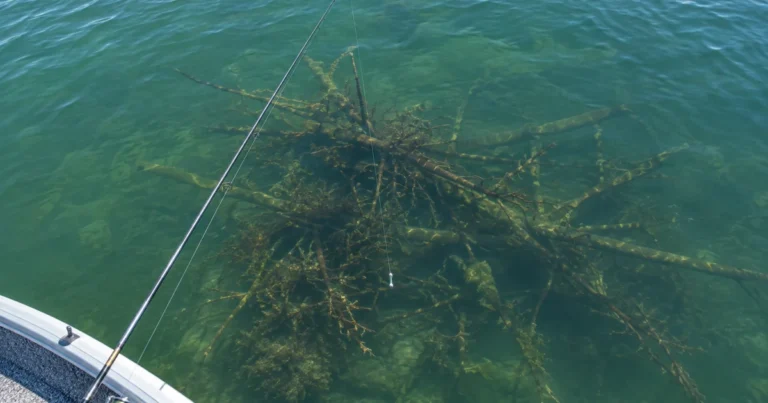
- Docks and tight shade. Slinging a compact body into the dark back corner of a pontoon is a jig-only job.
- Fish are grouped and feeding. Pre-spawn and fall crappie take a jig as readily as anything alive, and you never stop to rebait.
- Cold water, with the right body. A marabou hair jig breathes while sitting perfectly still, which is exactly what a 45 °F crappie wants.
- You want depth control to the foot. A counted fall or a stop knot puts a jig at a repeatable depth all day long.
When a Live Minnow Out-Fishes a Jig
The minnow advantage peaks in five situations:
- Cold water, when fish want a meal delivered slowly to their nose.
- After a front, when fish go neutral. They will watch a jig and eat a minnow.
- Pressured water, where the schools have seen every plastic in the shop.
- Static presentations such as slip floats, tightlines and multi-rod rigs, where the bait has to provide its own movement.
- Beginners or kids aboard. Nothing builds a new angler like a float and a minnow.
Pick Your Bait by Temperature, Clarity and Mood
Water temperature tells you which season your lake is actually in. Clarity and the mood of the fish set the size. Start on this row and adjust by one notch.
| Situation | Bait | Size |
|---|---|---|
| Below 45 °F, deep basins, bites are a half-inch tick | Small live minnow, or a marabou hair jig held still | 1/32 oz; smallest minnows |
| 45-55 °F, big staging schools, light bites | Minnow under a slip float, or a minnow-tipped jig | 1/32 to 1/16 oz; small minnows |
| 55-65 °F, pre-spawn and spawn, fish shallow | Jig under a float, pitched to visible cover | 1/16 oz; 1/32 oz in the shallowest pockets |
| 65-75 °F, post-spawn, fish follow and quit | Minnow-tipped jig; plain jig for dock shade | 1/32 to 1/16 oz; small to medium minnows |
| Above 75 °F, deep brush and ledges | Jig fished vertically on marked cover; lively minnow at night | 1/8 oz deep, 1/16 oz under lights |
| Cooling through the 70s, fall, bait everywhere | Jig, cast and counted down to find roamers | 1/16 oz; medium minnows once you slow down |
| Gin-clear water, spooky fish | Natural translucent jig on long casts; minnow if they refuse | 1/32 oz |
| Muddy water or under lights at night | A body that pushes water, or a lively minnow | 1/16 oz; medium minnows |
Worked example: choosing bait at 58 °F in mid-April
Say the water is 58 °F in mid-April and fish are stacked on the last brush outside a spawning cove, in about 6 feet. That temperature puts the lake squarely in pre-spawn, the most forgiving bait window of the year.
- Start with a 1/16 oz jig under a float set at 5 feet and pitch it to the brush edge. Pre-spawn fish are grouped and feeding hard, so a bait that stays in the strike window should get an answer inside ten casts.
- Marks at 6 feet and nothing commits? Drop to 1/32 oz for a slower fall before you change anything else.
- Still only followers? Hook a small minnow through the lips on that same jighead and give the brush ten more minutes.
- If a front drops through overnight, the same fish slide one zone deeper. Hang a lip-hooked minnow under the float at 8 or 9 feet instead of searching with a jig.
Size First, Color Last
Once you have chosen jig or minnow, two dials remain and they go in order. Size comes first: 1/16 oz is the answer until proven otherwise, 1/32 oz when it is tough and 1/8 oz when it is deep or windy. Short strikes and nipped tails mean change size or slow down. Color is the last dial of all, set by water clarity, and our crappie jig color selector gives you the five that cover most days. The order never changes: location, then depth, then speed, then size, then color.
The Hybrid That Saves Tough Days
Hook a small minnow through the lips on your regular jighead and you get the jig profile and control plus live scent and wiggle. It is the best tough-day rig in the sport. Make it your protocol: before you leave fish that will not eat, tip the jig and give that spot ten more minutes.
Three hookings, three jobs. Lips for anything moving, such as trolling and drifting. Behind the dorsal fin, just under the skin and above the spine, for static presentations where you want the minnow struggling in place. Tail for fish that short-strike or follow without eating.
Buy and Keep Minnows Properly
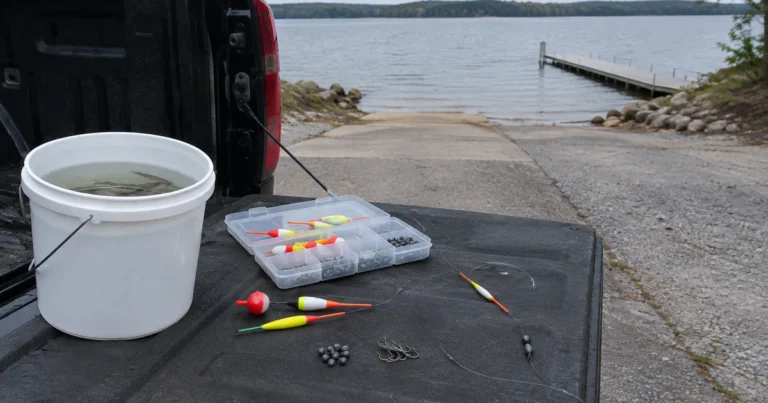
Dead minnows catch dramatically fewer crappie than lively ones, and minnow care is almost entirely temperature and oxygen.
- Buy lively. In the shop tank you want darting, hard-to-net minnows, not fish hanging listless at the surface.
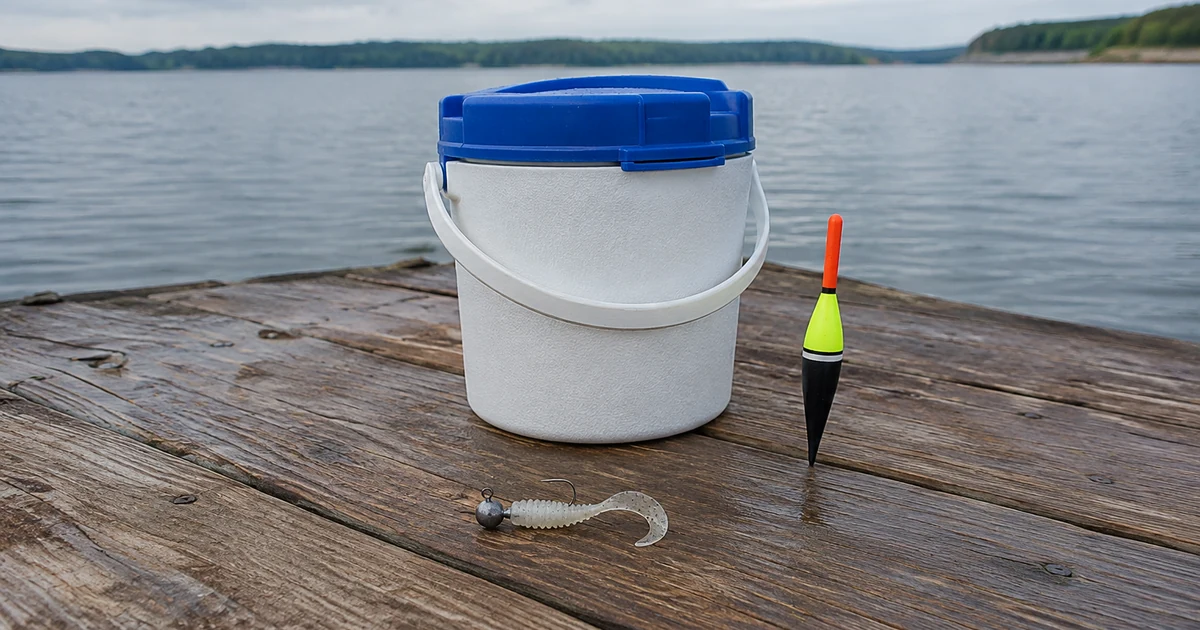
- Use an insulated or aerated container. A foam bucket doubles survival over a bare pail, and a clip-on aerator doubles it again.
- Keep them cool and shaded. In summer drop in a small frozen water bottle rather than tipping in chlorinated tap-water ice cubes.
- Refresh with lake water gently through the day instead of shocking them with full swaps.
- Do not crowd them. Two dozen minnows in a small pail suffocate by noon.
- Buy more than you think. A day of float fishing burns several dozen.
Read your state agency rules on bait species, transport and disposal before you buy, and never dump leftover bait in the lake.
Deliver It at the Right Depth
Whichever bait you choose, the depth decides whether it gets eaten. Crappie feed upward, so keep the bait at or slightly above the fish and never below them. A float does that job better than anything else for most anglers, because the stop knot is a dial you can move a foot at a time. Our slip bobber rig guide covers the setup and the bites you are probably missing.
What to Carry
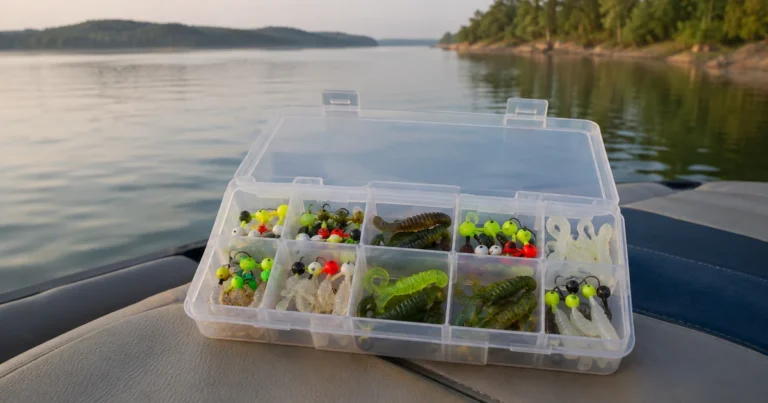
- Jigheads in 1/32, 1/16 and 1/8 oz on light-wire hooks, with double stock of the 1/16s.
- Bodies in three families: a curly grub, a paddle tail and a tube or marabou hair jig.
- Five colors: one clear-water natural, one chartreuse combination, one solid bright, one dark, one glow.
- Light-wire hooks in #2 to #6, split shot, slip floats with stops and beads.
- On minnow days, the insulated bucket, an aerator and a small bait net.
Two small trays cover everything above. If you are starting from scratch, read how to catch crappie first, because no bait fixes fishing in the wrong tenth of the lake.
The Short Version
Tie on a 1/16 oz jig and go looking. When fish show and refuse, go smaller, slower and stiller, then tip the jig with a minnow. When the water is cold, when a front just passed, or when you are fishing static from a float, start with live bait instead. Read the thermometer, keep the bait above the fish, and you have already made the only call that matters about the best crappie bait.
Frequently Asked Questions
Do crappie prefer jigs or minnows?
Neither one wins across the board. Jigs win for covering water, docks and casting, because you never stop to rebait. Minnows win the stare-downs: cold water, post-front days and heavily pressured fish that will watch a jig and eat live bait. Carry both and let the fish decide.
What size minnow is best for crappie?
Match size to season. Small crappie minnows in cold water and on tough bites, medium ones the rest of the year. A big slab will eat a surprisingly large shiner, and upsizing filters for better fish at the cost of fewer total bites.
What is the best bait for crappie in winter?
A small live minnow fished slowly, or a marabou hair jig in 1/32 oz held nearly motionless. Winter crappie want small meals delivered to their nose, and marabou breathes while the jig sits perfectly still.
Can you catch crappie without live bait?
Yes. A jig catches crappie in every state and every season, and most anglers who fish often lean on jigs because they cover water faster. Keep a minnow option for the days when fish follow and refuse.
What is the best bait for crappie from the bank?
A jig or a lip-hooked minnow under a slip float. It holds the bait at an exact depth at casting distance, which is the closest a shore angler gets to a vertical presentation.
Tight lines,
— David