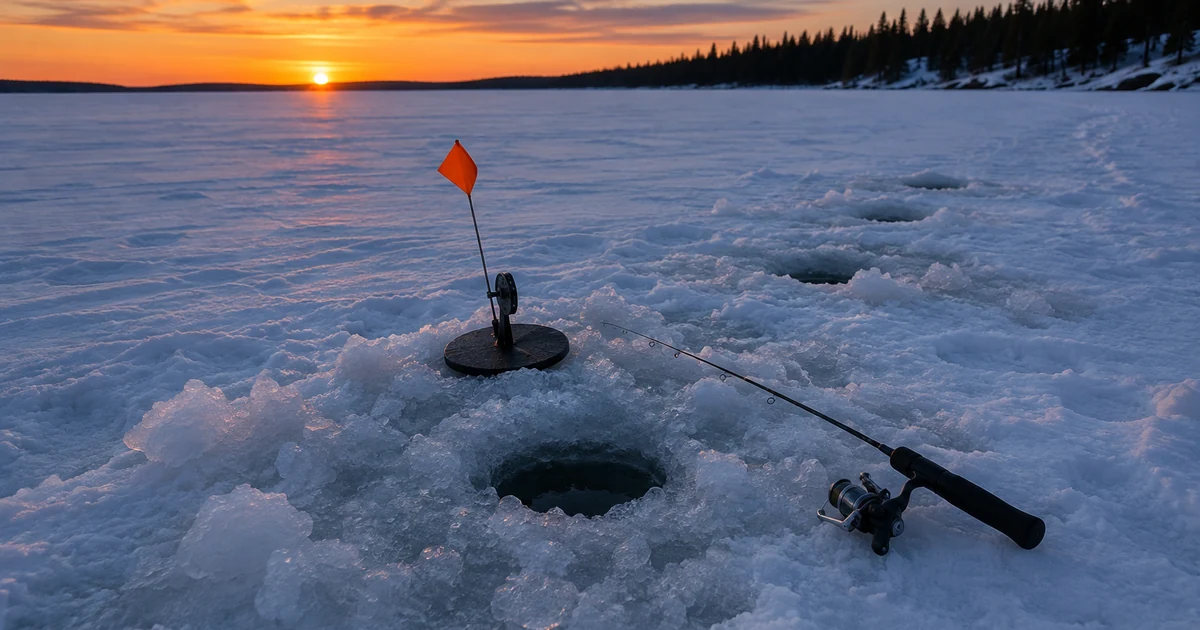
Ice Fishing for Walleye: Where They Are and the Golden 45 Minutes
For a lot of walleye anglers, the season doesn’t end at ice-up. It begins. Ice fishing is walleye fishing distilled: no casting, no boat control, just location, presentation and timing. It’s also the most affordable trophy hunt in the sport. A rod, a handful of lures, an auger and a bucket put you over the same fish the summer fleet chases. Here’s the hardwater side of our complete walleye fishing system.
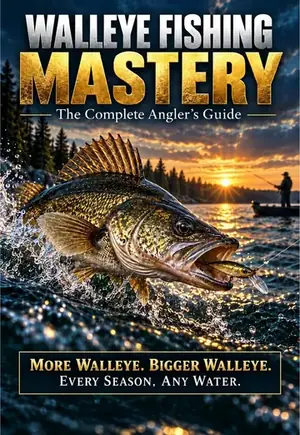
Walleye Fishing Mastery: the complete system this article comes from, as an instant PDF. Get the guide — $17
Safety First: The Non-Negotiable Minimums
No fish is worth your life. These are general minimums for clear, new, hard ice. Double them for white or refrozen ice, and treat all early-season, late-season and river ice as suspect:
- 4 inches: walking.
- 5 to 7 inches: snowmobile or ATV.
- 8 to 12 inches: small car (better: don’t). 12 to 15 inches and up: light truck (better: still don’t).
Carry ice picks around your neck, 50 feet of throw rope, a spud bar to test ahead of you early in the season, and your phone in a waterproof pocket. Check the thickness every 100 to 150 feet early season, and watch for current areas, inlets, springs, pressure ridges and dark patches. Fish with a partner early and late, spread out when you walk, and tell someone which lake you’re on and when you’ll be back. A flotation ice suit is the best money you’ll ever spend on this sport. No ice is ever 100 percent safe, and these guidelines never replace checking it yourself and local knowledge.
Where Walleye Are Under the Ice
Early ice (the first 2 to 3 weeks)
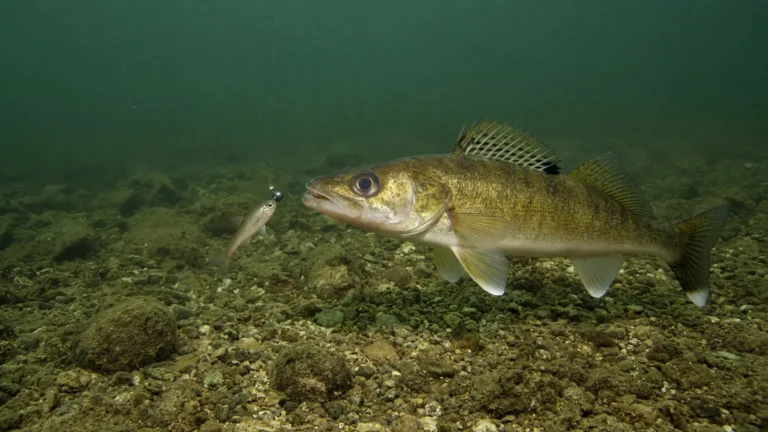
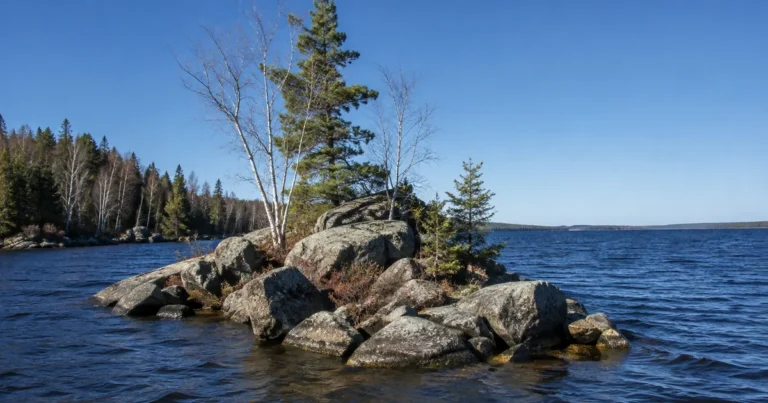
The fish are where you left them in November: points, humps, rock and weed edges in 8 to 20 feet, feeding aggressively at dawn and dusk. It’s the fastest ice bite of the year. If you fished the fall trophy window, go back to those same spots. Fish the structure lips at prime time and the deep bases at midday.
Midwinter
Walleye slide to main-basin flats and deep structure, 25 to 40 feet on many lakes. Their moods tighten and the feeding windows shrink. Mobility wins now: the angler who drills 30 holes across a flat and hops them out-fishes the one guarding two holes.
Late ice
Melting water and longer days pull fish back toward spawning areas: river mouths, gravel shorelines and pre-spawn staging holes. Big females feed again. Late ice is also dangerous ice, so re-read the safety section before you go.
One habit at every hole: fish the bottom 3 feet first, but check the top 15 feet on your electronics. Winter walleye suspend more than anglers think, especially at dusk.
The Two-Line System
Where regulations allow more than one line, the classic setup is one active jigging rod plus one deadstick or tip-up. The jigging lure calls fish in; the “boring” live minnow closes the ones that won’t commit. On the toughest winter days the deadstick often out-fishes the jigging rod.
- Jigging rod: a 28 to 32 inch medium-light rod with a soft tip, 4 to 6 lb monofilament or 6 to 8 lb braid to a fluorocarbon leader.
- Calling lures: rap-style swimming lures worked snap, glide, pause, with a 3-second pause for active fish and 10 seconds or more for tough ones. Rattle and flutter spoons tipped with a minnow head, with long holds. A hair jig or plain jig with a full minnow as the finesse fallback.
- Deadstick or tip-up: a lively shiner, fathead or small sucker on a #6 octopus hook or small treble, 6 to 18 inches off the bottom, 10 to 30 feet from your jigging hole. Check it every 20 to 30 minutes; a dying minnow fishes at half power.
When a fish rises on your flasher, lead it upward. Making a following fish chase your lure a foot or two up converts better than dropping the lure into its face.
The Golden 45 Minutes
The walleye’s feeding clock compresses on the ice. On most lakes, the day’s fish come from about 30 minutes before sunset to 30 to 45 minutes after dark, with a smaller echo at dawn. Then don’t leave at dark: the first hour of night is often the biggest-fish window of the whole winter day, especially on clear lakes.
A Simple Ice Day, Scripted
- The night before: pick the structure from your fall spots or a map, check the ice reports and the wind forecast, charge your electronics, and get bait for both rods.
- Early afternoon: check the thickness on the way out and drill the full grid over the structure: lip, slope and base, 20 holes or more. Drill everything before prime time, because silence is part of the presentation later.
- Mid-afternoon: hop the holes with a calling lure, 10 to 15 minutes each, to find the depth holding fish.
- An hour before sunset: set the deadstick on your best contact, settle on the best hole, and kill the noise and the white lights.
- Fish through the golden 45 and the first hour of dark. Head in with a red-mode headlamp. Shore anglers who fish walleye at night from the bank will recognize the same clock.
No electronics? Fish the structure edges at prime time and let the deadstick read the mood for you. For the jig itself, the same rules as open water apply; see jig and minnow for walleye.
Tight lines,
— David



One Comment
Comments are closed.