Crappie Rigs: 5 Setups That Catch Fish and When to Use Each
You don’t need a drawer full of gadgets to rig for crappie. Five setups catch nearly every crappie that swims: the slip float, the fixed float or tightline, the double minnow rig, the minnow-tipped jig and the spider rig. Each one does a different job. Pick the one that matches where the fish are, and the rest of our complete crappie fishing system gets a lot easier.
Crappie Fishing Mastery: the complete system this article comes from, as an instant PDF. Get the guide — $17
The Terminal Tackle Behind Every Rig
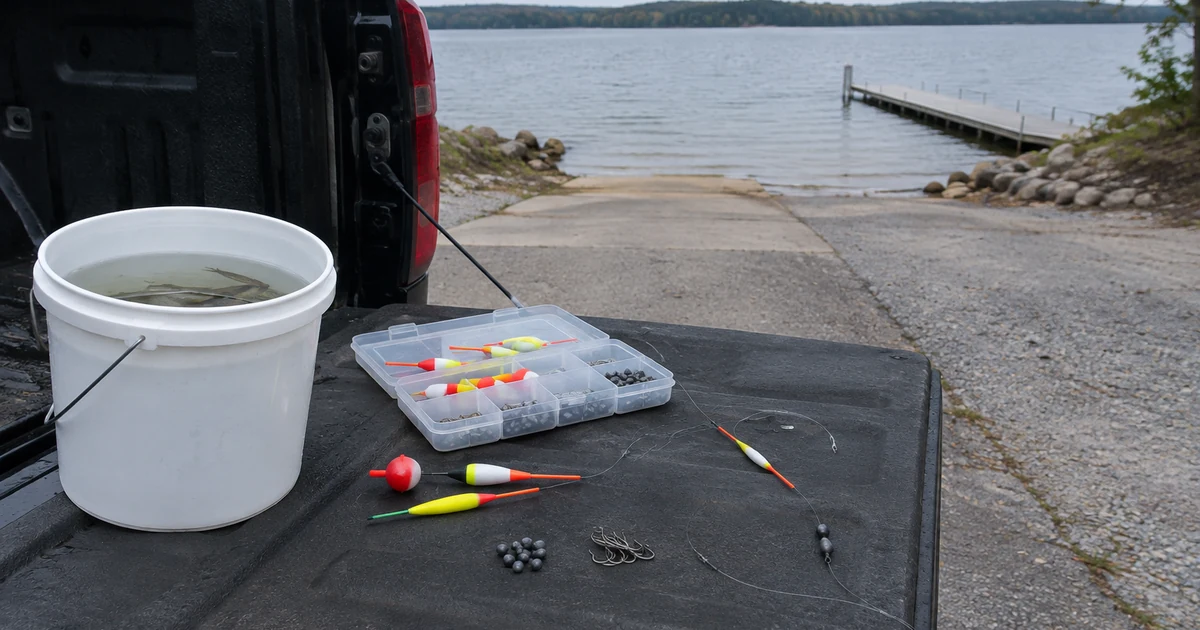
All five rigs come from one small tray:
- Light-wire Aberdeen hooks, #2 to #6.
- Split shot in two or three sizes.
- Several slip floats with bobber stops and beads, plus a few small fixed floats.
- Small barrel swivels and a couple of pre-tied double minnow rigs.
- Jigheads in 1/32, 1/16 and 1/8 oz.
- Forceps, clippers and a hook file.
Main line is 4 to 6 lb high-visibility mono. One rule covers every float: it should barely float. If a crappie feels resistance when it takes the bait, it spits it.
Rig 1: The Slip Float
The most versatile rig in crappie fishing, and the best one for bank anglers. Thread the line through in this order from the top: stop knot, bead, slip float, then split shot if you are using a plain hook, then the jig or hook. The stop knot reels through the guides, so you can fish 2 feet deep or 18 feet deep and still cast normally.
- Use it when: fish hold at a known depth away from you, the water is clear and the fish are spooky, the wind can drift a bait along cover, or you are fishing live minnows.
- Key detail: with a minnow, pinch the split shot 8 to 12 inches above the hook.
- Adjust it: no bites after a good soak? Move the stop knot a foot up or down before you change spots.
Our slip bobber rig guide covers depth setting and bite detection in full.
Rig 2: The Fixed Float or Tightline
For shallow work, keep it simple. A small clip-on float with a jig or minnow is the go-to for spawning pockets and dipping cover in 1 to 4 feet of water. Pitch past a stump or bush and let the bait hover beside it. Guarding males will hit it again and again.
The tightline version drops the float altogether: a hook and one split shot under a 10 to 14 foot jig pole, with line about as long as the pole or shorter. Lower it straight down into a pocket, hold 10 to 20 seconds, lift straight out and try the next gap. It’s the simplest rig there is, and during the spawn it is one of the best.
Rig 3: The Double Minnow Rig
This is the standard for vertical minnow fishing and spider rigging. A weight goes at the bottom of the line. Two hooks sit above it on droppers or dropper loops, one about a foot up and the other two to three feet up.
- You fish two depths at once.
- The bottom weight lets you feel the bottom the whole time.
- Pre-tied ones cost very little, or tie your own with dropper loops.
Use it over deep brush, along channel edges and anywhere you are fishing straight down with live bait.
Rig 4: The Minnow-Tipped Jig
When fish look but won’t commit, this is the rig to tie on. Hook a small minnow through the lips on your regular jighead. You get the jig’s shape and control, plus real scent and movement. Fish it vertically, cast it or hang it under a float.
Use it as your tough-day move. Before you give up on fish that won’t eat, tip the jig with a minnow and give the spot ten more minutes.
Rig 5: The Spider Rig and Longline Basics
Spider rigging means several long rods, usually 12 to 16 feet, fanned out in holders across the bow. You push forward with the trolling motor at a crawl, about 0.1 to 0.5 mph. Baits are double minnow rigs, jigs or jig-and-minnow combos, set at staggered depths such as 6, 8, 10 and 12 feet. Check your state’s rod-count rules first.
- Follow structure, such as a channel edge or a stumpy flat, not random open water.
- Watch the rod tips. A crappie often just loads a tip with weight instead of yanking it.
- When one rod gets bit, shift the other baits toward that depth and bait.
- When you catch several in one place, stop and fish it vertically.
Longline trolling is the cousin of the spider rig. You cast 1/32 to 1/8 oz jigs 40 to 80 feet behind the boat and pull them at 0.5 to 1.2 mph. Longer line, lighter jig and slower speed run shallower. Shorter line, heavier jig and faster speed run deeper. Slow down when you hook a fish so it doesn’t tear off.
Which Rig, When
| Situation | Rig |
|---|---|
| Fish at a known depth, away from you or from the bank | Slip float |
| Spawn, visible shallow cover in 1 to 4 ft | Fixed float or tightline |
| Deep brush or a school right below the boat, live bait | Double minnow rig |
| Fish follow but won’t bite, after a front | Minnow-tipped jig |
| Scattered fish on big flats and channel edges | Spider rig or longline |
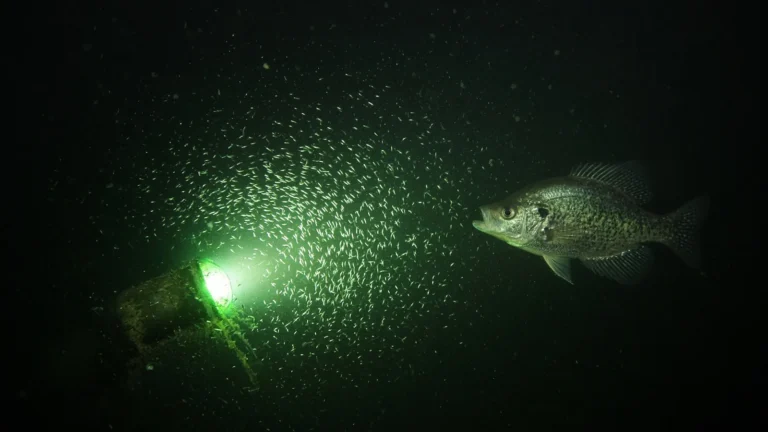
| Summer nights under lights | Slip float or tightline with a lively minnow |
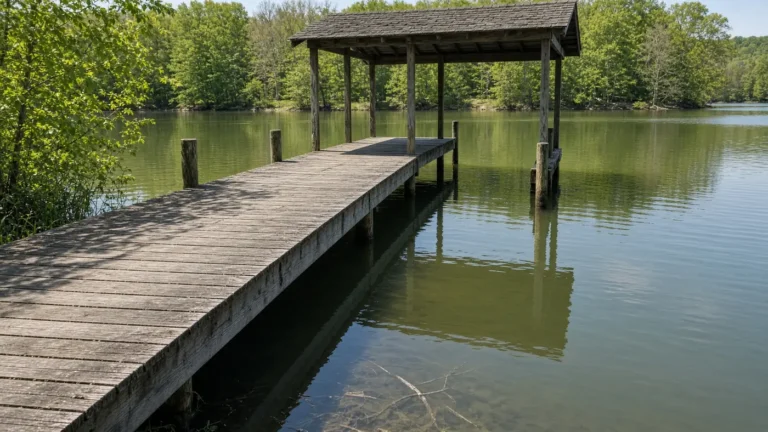
For the night setup, see our guide to night crappie fishing under lights. From shore, the slip float and the long pole do most of the work, as covered in our bank fishing guide.
Hook the Minnow for the Rig
- Through the lips (bottom lip up through the top): for anything that moves, like spider rigs, trolling and drifting.
- Behind the dorsal fin, just under the skin and above the spine: for still presentations like slip floats, tightlines and vertical fishing. The minnow struggles in place.
- Through the tail: the minnow swims away from the hook. Good for fish that are nipping or following without eating.
Handle the Bite on Live Bait
Crappie often grab a minnow, turn and swim off before they fully eat it. On a float, wait a slow two-count after it goes under, then lift. On tightlines and multi-hook rigs, you’ll feel weight or steady pulling. Lift firmly, never swing. If a fish you plan to release is hooked deep, cut the line close instead of digging. A light-wire hook gives that fish a much better chance.
Frequently Asked Questions
What is the best crappie rig for beginners?
A small jig or a lip-hooked minnow under a float. The float holds the bait at the right depth and gives a clear signal when a fish takes. Use a fixed float in water up to about 4 feet and a slip float for anything deeper.
How far above the hook should the split shot go on a crappie float rig?
With a live minnow under a slip float, pinch the split shot on 8 to 12 inches above the hook. That keeps the minnow down and loads the float properly.
How do you tie a double minnow rig for crappie?
Put a weight at the bottom of the line and two hooks on droppers or dropper loops above it, one about a foot up and the other two to three feet up. Pre-tied versions are cheap if you would rather not tie your own.
What hook size is best for crappie minnows?
Light-wire Aberdeen hooks from #2 to #6, sized to the minnow. Light wire goes in easily, does less damage to the thin crappie mouth and bends free when it snags.
Tight lines,
— David