How to Catch Crappie: Find the 10% of Water That Holds Them
Crappie are easy to catch once you find them. The hard part is location: on most days, nine out of ten fish in a lake sit in about a tenth of the water. Learn where that tenth is, keep your bait at or just above the school, and pick the presentation that fits the spot. That is the core of our complete crappie fishing system, and this guide gives you the short version.
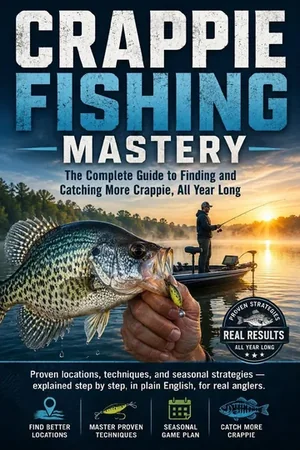
Crappie Fishing Mastery: the complete system this article comes from, as an instant PDF. Get the guide — $17
Start With the Schooling Rule
Crappie live in schools sorted by size. A school can be a handful of fish or several hundred. That one fact shapes how you spend your day:
- One fish means more fish. When you catch a crappie, stop moving. Mark the spot and work it thoroughly before you go anywhere.
- No bites means nobody home. Because crappie bunch up, empty water really is empty. Give a spot 10 to 15 minutes of proper effort. If nothing happens, leave.
- Small fish travel together. If every fish is a 6-inch “paper,” that school won’t get bigger. Go a little deeper, get tighter to the cover, or find a different school. The better fish often sit slightly deeper or closer to the wood than the small ones.
Search fast until you make contact, then slow way down. Most anglers do the opposite.
The Golden Rule: Keep the Bait Above Them
A crappie’s eyes sit high on its head. It feeds by looking up, sliding under its prey and rising to take it. So a jig hanging three feet under the school is invisible. A crappie will come up two or three feet for a meal, but it will almost never go down for one.
When you aren’t sure of the depth, fish too shallow rather than too deep. Start high in the water column and step down. If you can see fish on your graph, put the bait level with them or a foot above.
Two more feeding habits matter. Crappie don’t chase. They hover, ease up and suck in the bait, often while it sits nearly still. That’s why holding a jig motionless outfishes hard jigging most days. And the bite is usually tiny. Watch your line for a tick, a sideways slide or sudden slack, and lift on anything that looks different. Lift firmly, never swing. A crappie’s mouth is thin and tears easily.
Let Water Temperature Tell You Where They Are
The calendar lies. The spawn happens at roughly the same water temperature in Florida and Minnesota, just months apart. Read the surface temperature every trip and use this table as your starting point.
| Season | Water temp | Where to look |
|---|---|---|
| Late winter staging | 40s to low 50s °F | Creek mouths, channel bends, ledges 10-20 ft |
| Pre-spawn | Mid-50s to low 60s °F | Last cover outside spawning coves, 4-10 ft |
| Spawn | About 56-68 °F | Protected hard bottom near cover, 1-6 ft |
| Post-spawn | Upper 60s to mid-70s °F | Structure next to spawning areas, 8-15 ft, and docks |
| Summer | Upper 70s and up | Brush 12-25 ft, ledges, bridges, just above the thermocline |
| Fall | Cooling 70s to 50s °F | Creek arms and mid-depth flats, 8-15 ft, near the bait |
| Winter | Below about 50 °F | Deep basins, channel bends, timber, 15-30+ ft |
The simple version: warming water pulls fish in toward the coves, hot water pushes them deep or into shade, cooling water sends them into the creeks after bait, and cold water packs them deep. The weeks after the spawn are where most anglers lose them. If that’s your problem, read where crappie go after the spawn.
Find Cover Sitting on Structure
Structure is the shape of the bottom: channels, ledges, points, flats, humps. Cover is what sits on it: brush piles, stumps, laydowns, weeds, dock posts, bridge pilings. The best crappie spots combine the two at the right depth for the season.
- Creek channels are the routes crappie travel. The bends, the junctions and the places where the channel swings near a bank are where schools stop.
- Brush piles concentrate crappie better than anything else, but only at the seasonal depth. Fish the edges and the top before you drop into the middle.
- Laydowns run from the bank into deeper water. Start at the crown, the deep end, where the bigger fish usually sit.
- Docks with 6 feet or more of water under them, wide shade and some age on them hold fish much of the year.
- Bridges give crappie every depth on one piling.
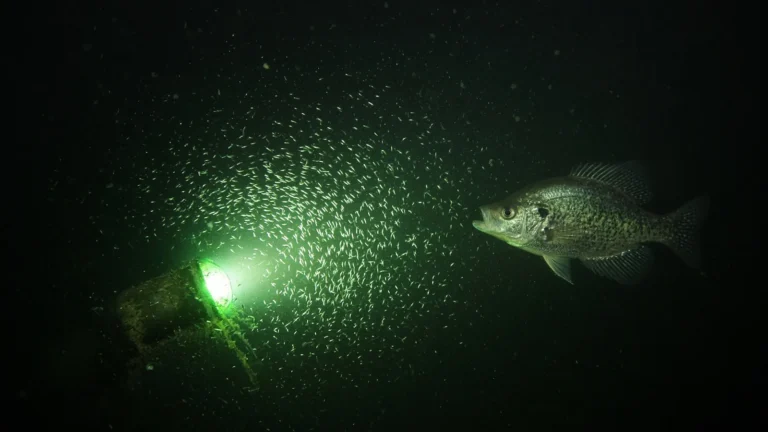
Over all of it, one rule wins: crappie live where they eat. A great-looking brush pile with no baitfish around is probably empty. A bait cloud with marks under it in open water is worth stopping for.
Do 30 Minutes of Map Homework
The night before, pull up a contour map of your lake and run this routine:
- Figure out the season from the water temperature and the depth band that goes with it.
- Mark the spawning coves: protected, shallow, facing northwest. They anchor the whole migration, even outside spring.
- Follow the creek channels from those coves out toward the main lake. Mark every bend and junction.
- Circle each place where your seasonal depth crosses one of those marks. That list of circles is your milk run.
- On the water, check each circle for bait and cover and fish it for fifteen minutes. When two spots produce the same way, run that pattern across the whole lake.
Pick the Technique That Fits the Spot
Seven techniques cover crappie fishing. You don’t need all of them. Use this decision list to choose:
- Fish right under you on cover or a school: vertical jigging.
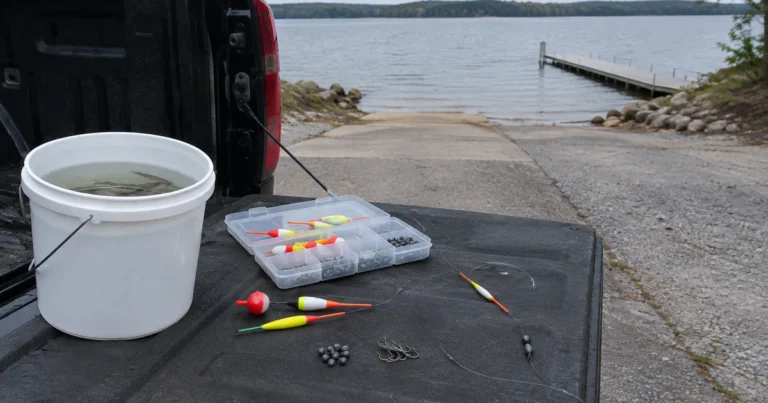
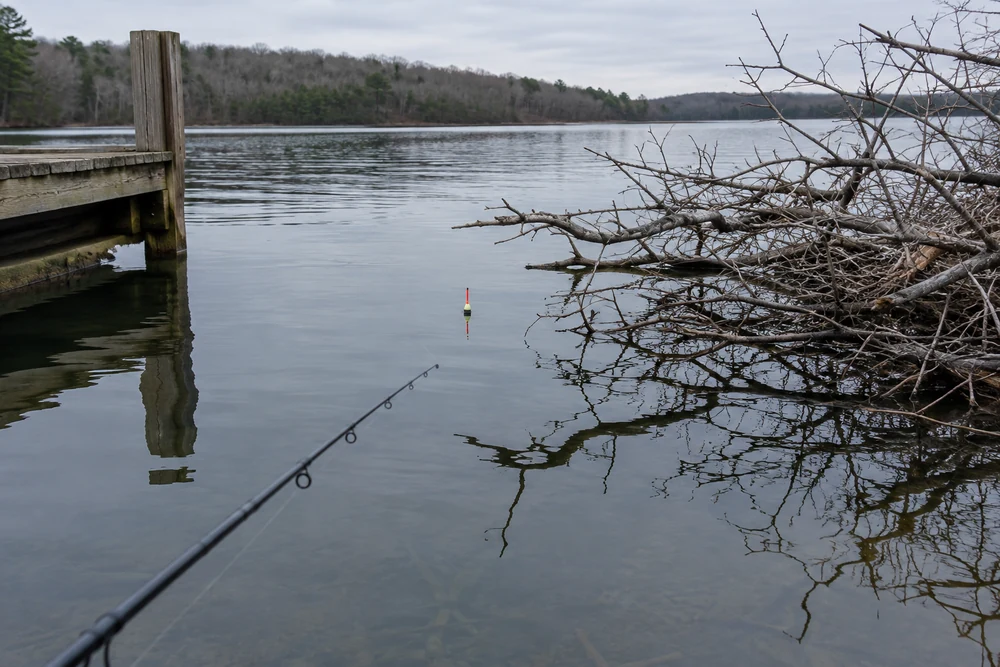
- Fish at a known depth away from you: a slip float. Our slip bobber rig guide covers setup and depth.
- Sunny day and docks on the lake: shoot them. See dock shooting step by step.
- Unsure where they are, shallow to mid depth: cast and count the jig down, or dip visible cover.
- Unsure where they are, big flats or channels: spider rig or longline troll until they show up.
- Visible shallow cover in spring: tightline or dip with a long pole.
- Everything looks right and nothing bites: stay put, go smaller, hold dead still, or switch to a live minnow.
For most people, two techniques are enough to start. From a boat, pair vertical jigging with a slip float. From the bank, pair a slip float with cast-and-countdown.
Gear That Keeps It Simple
- A 6’6″ to 7′ light or ultralight spinning rod with a fast tip and a 1000 to 2500 size reel.
- 4 to 6 lb high-visibility mono, so you can watch the line for bites you will never feel.
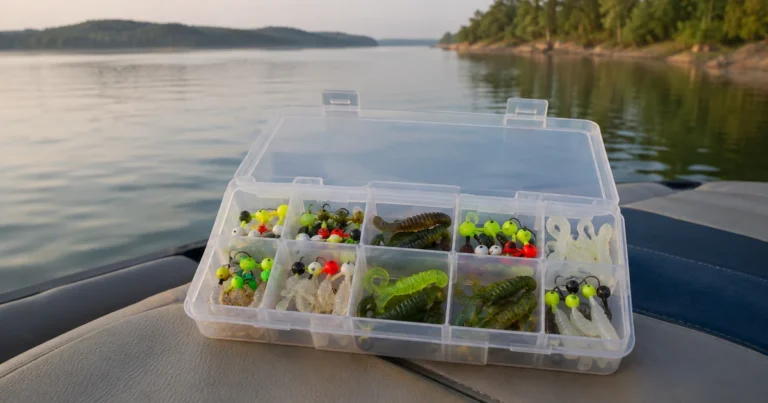
- Jigheads in 1/32, 1/16 and 1/8 oz. Tie on the 1/16 unless you have a reason not to.
- A few slip floats with stops and beads, light-wire hooks in #2 to #6, and split shot.
Your First Month, Week by Week
- Week 1: build your milk run of at least eight spots, start a trip log, and fish every spot for fifteen minutes. Note water temperature and whether bait was there.
- Week 2: fish only your two techniques. When the bite is slow, change depth or location before you change lures.
- Week 3: check fronts, wind and water trends before choosing your fishing day, and fish one condition you usually avoid.
- Week 4: run the whole system in one trip, then compare it with week one.
Keep the log going after that. A minute per trip, and by next year you will know what your lake does every month.
Frequently Asked Questions
What is the easiest way to catch crappie for a beginner?
A small jig or a live minnow under a float, set at the depth where the fish are. The float gives you something to watch and a clear signal when a fish takes. Pick spring or fall, when schools sit tight and shallow, and fish stable weather rather than the day after a front.
What depth should I fish for crappie?
It depends on the season, and water temperature tells you which season your lake is in. Spawners sit 1 to 6 feet deep, pre-spawn fish 4 to 10 feet, fall fish 8 to 15 feet, summer fish on brush in 12 to 25 feet, and winter fish 15 to 30-plus feet. Within that band, always keep your bait at or a little above the fish.
How long should I fish one spot for crappie?
Give a spot about fifteen minutes of real effort. Crappie school, so if nothing bites in that time the school is not there and you should move. When you do catch one, slow down and work the area hard, because more fish are close by.
What time of day is best for crappie?
In spring, mid-morning through afternoon often beats dawn because the sun warms the shallows. In summer, dawn, dusk and night are best. Fall offers feeding windows all day, and in winter the midday hours are usually the most productive.
Tight lines,
— David