Crappie Jigs: Weights, Bodies and How to Fish Them
If you could carry only one crappie lure, it would be a jig: a weighted head with a soft body or hair. Crappie jigs catch fish in every state, every season and every type of water. You only need three head weights, three body styles and three ways to fish them. This guide covers all three, drawn from our complete crappie fishing system.
Crappie Fishing Mastery: the complete system this article comes from, as an instant PDF. Get the guide — $17
Why Jigs Work So Well on Crappie
Crappie don’t run baitfish down. They hover, ease forward and suck the bait in, often while it barely moves. A small jig matches that perfectly. It falls slowly, hangs in place and breathes or swims a little even when you aren’t moving it. Crappie also feed upward, so a jig held at or slightly above a school is right where they want to eat.
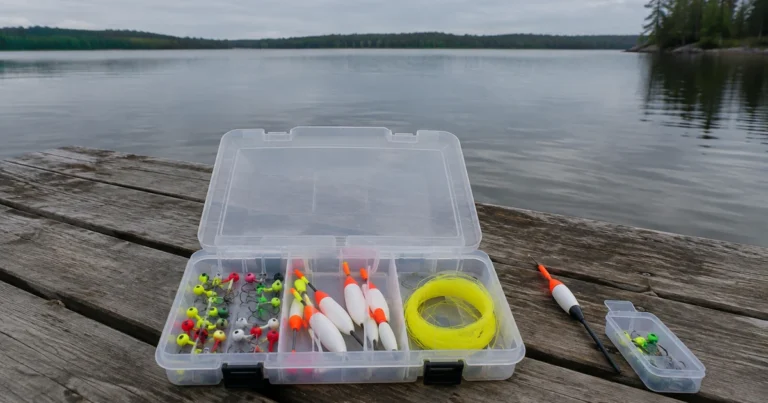
The Three Jighead Weights to Carry
| Weight | Role | When to tie it on |
|---|---|---|
| 1/16 oz | The everyday head | Casting and float fishing. Your default whenever you aren’t sure. |
| 1/32 oz | The finesse head | Cold water, spooky fish, shallow spawners, slow days, after a front. |
| 1/8 oz | The deep head | 15 feet and deeper, wind or current, staying vertical. |
Lighter and heavier heads like 1/64 and 1/4 oz have a few special uses. Add them later, when a situation calls for them. Stock double the 1/16s, because you will lose and use them most.
Pick simple round heads on light-wire hooks, either sickle or Aberdeen style. Light wire goes into a thin crappie mouth with little pressure, and it bends free when you snag brush, so you re-tie less. Keep a few weedguard heads for heavy cover.
The Three Body Families
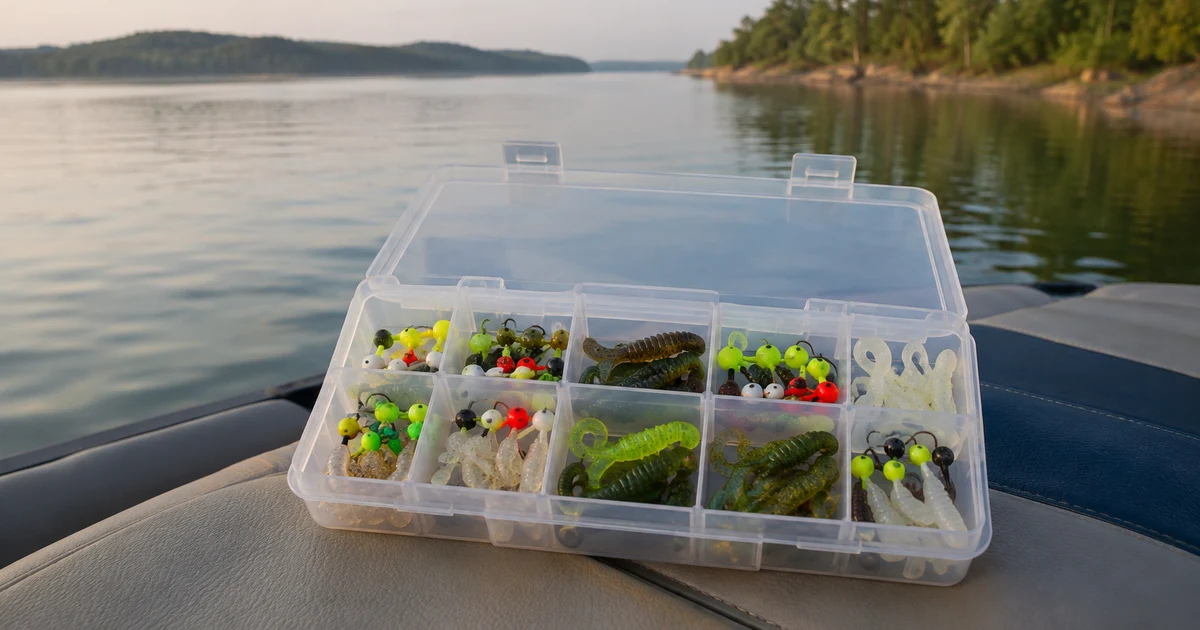
- Curly-tail grubs. The tail keeps swimming even at a crawl. This is the do-anything body when you don’t know what the fish want.
- Paddle tails and shad shapes. A tighter thump that looks like a baitfish. Use them when crappie are feeding on shad and for steady cast-and-retrieve.
- Tubes and hair jigs. The quiet end of the box. Marabou moves and breathes while the jig sits perfectly still, which makes it the top pick for cold water and dead-sticking. Tubes are also the best body for dock shooting because they skip and glide.
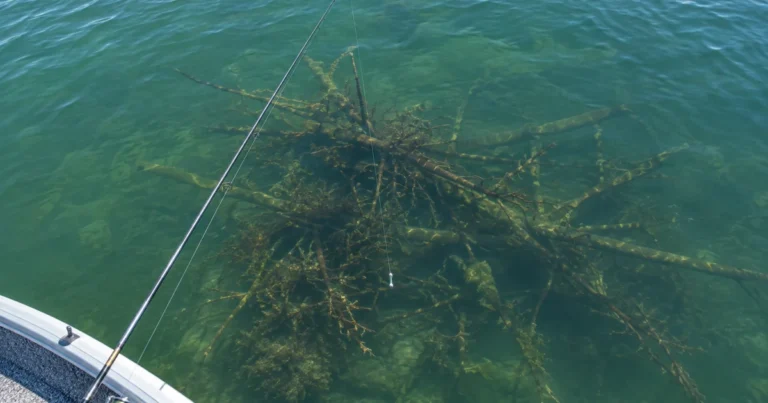
In muddy water or at night, a body that pushes water, such as a paddle tail or a marabou skirt, helps crappie find it by feel as well as sight. For colors, use our crappie jig color selector by water clarity. Remember that color matters less than depth, and depth matters less than location.
Line That Helps the Jig Work
Run 4 to 6 lb high-visibility monofilament. Most crappie bites never reach your hand, so you see them on the line. In very clear water, add a 2 to 4 foot fluorocarbon leader. Heavy line kills the slow, natural fall that gets a jig bit. If your jig won’t drop naturally, go lighter on the line, or drop from 1/16 to 1/32 oz.
Method 1: Vertical Jigging
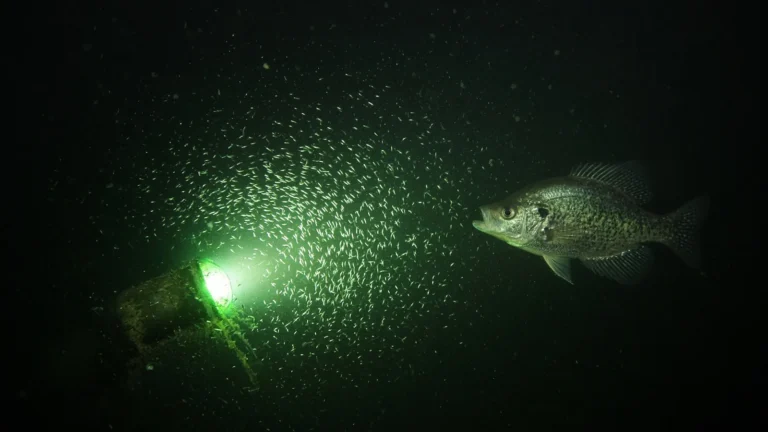
Use it when fish sit right below you on brush, timber, bridge pilings or a school on your graph. Use a 1/16 or 1/8 oz jig.
- Hold the boat right over the target, quietly.
- Lower the jig and stop it at the fish’s level or slightly above. A 1/16 oz jig on light mono sinks about a foot per second, so you can count it down.
- Hold it still. The water moves the jig enough on its own.
- Every 20 to 30 seconds, lift it slowly 6 to 12 inches and let it settle. Most bites come as it settles or just after.
- Catch one and note the exact depth. Put the next drop there.
The number one mistake is working the jig too much. Snapping it around turns away fish that would have eaten a still jig.
Method 2: Cast and Countdown
Use it to find scattered or roaming fish: pre-spawn banks, fall creeks, bank fishing, suspended fish. Use a 1/16 oz head with a grub or paddle tail, 1/32 shallow and 1/8 deep or windy.
- Fan your casts across the area like the numbers on a clock.
- Count the jig down before every retrieve. Start at three, and add a count each cast until you get bit or hit bottom.
- Reel slower than seems right, then slower again, with a pause or soft twitch now and then.
- When a count gets bit, repeat it. Then fish that same depth along the rest of the bank.
- If a spot gives up a few fish and dies, the school likely slid a few yards along the cover. Follow the edge.
Method 3: Jig Under a Float
A jig under a float holds the bait at one depth for as long as you want. A fixed clip-on float works in 1 to 4 feet of water, like spawning pockets, where you pitch to cover and let the jig hover by a nest. For deeper water or longer casts, use a slip float with a stop knot you can slide to any depth. Our slip bobber rig guide covers that setup in detail. Either way, use a float a crappie can pull under without feeling resistance.
Two More Ways to Fish a Jig
- Dipping with a long pole. With a 10 to 14 foot jig pole and a 1/16 oz jig, lower it straight into brush gaps, beside stumps and along trunks. Hold 10 to 20 seconds, lift straight out and move to the next hole.
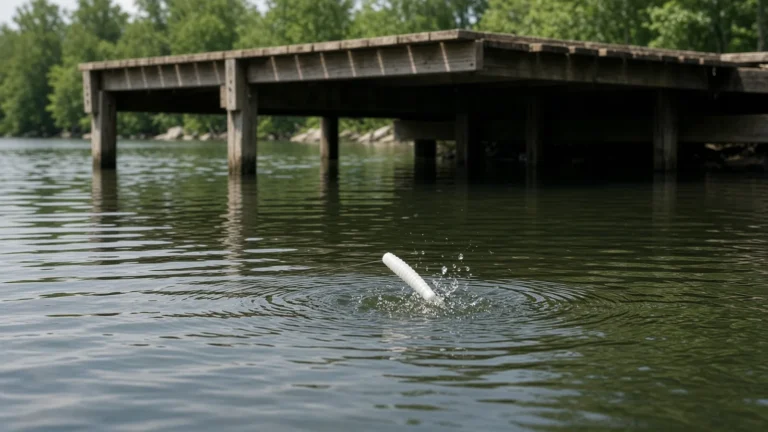
- Shooting docks. A 1/32 or 1/16 oz jig with a compact tube body, slung under walkways and pontoons. The bite comes on the fall. See our dock shooting guide.
When the Bite Gets Tough
Go smaller, slower and stiller, then add bait, in that order. Drop to 1/32 oz, switch to a hair jig, hold it longer, and hook a small minnow through the lips on the jighead. You keep the jig’s control and add live scent and wiggle. Short strikes or nipped tails mean you should change size or slow down before you change color.
Fishing with a partner? Start with different jigs and let the fish pick the winner, then both switch to it.
Frequently Asked Questions
What size jig is best for crappie?
A 1/16 oz jighead is the best all-around choice for casting and float fishing. Drop to 1/32 oz for cold water, spooky fish and tough bites, and go up to 1/8 oz for water 15 feet or deeper, wind or current.
What are the best crappie lures?
Jigs are the go-to crappie lure. Three body styles cover nearly everything: curly-tail grubs, paddle tails or shad shapes, and tubes or marabou hair jigs. A minnow-tipped jig is the best choice when the bite gets tough.
How fast should you retrieve a crappie jig?
Much slower than for bass. Count the jig down to depth, then crawl it back with an occasional pause or soft twitch. Most bites come on the pause or as the jig settles.
What color jig should I use for crappie?
Pick color by water clarity: natural and translucent in clear water, chartreuse combinations in stained water, and bright solids or dark silhouettes in muddy water. Get location, depth, speed and size right before you change color.
Tight lines,
— David