Crappie Jig Colors by Water Clarity: A Simple Selector
Walk down the crappie aisle and you’ll see hundreds of jig colors. You need about five. Color does matter, but far less than most anglers think, and only after a few other things are right. Here’s a simple selector for crappie jig colors, based on water clarity and light, from our complete crappie fishing system.
Crappie Fishing Mastery: the complete system this article comes from, as an instant PDF. Get the guide — $17
Rule Zero: Color Is the Last Dial
Before you change colors, run through this order: location, then depth, then speed, then size, then color.
The classic blank day looks like fourteen color changes at the same dead brush pile. Before any lure change, ask four questions. Am I in the right area for the season? On the right piece of cover? At the right depth? Am I slow enough? One depth adjustment routinely out-fishes every color in your box.
That said, when fish are clearly looking at your jig and not eating it, a color change is the cheapest experiment you have. So here’s how to make it a smart one.
Why Clarity Drives Color
Crappie are sight feeders with large eyes. In clear water they see your jig in detail, so natural, translucent colors look like real food. In stained or muddy water, visibility is the limit, so brighter, higher-contrast colors become the default because the fish has to find the jig first.
Check clarity every trip. One storm can move a lake two categories overnight.
The Color Selector by Water Clarity
Clear water (you can see 4 feet down or more)
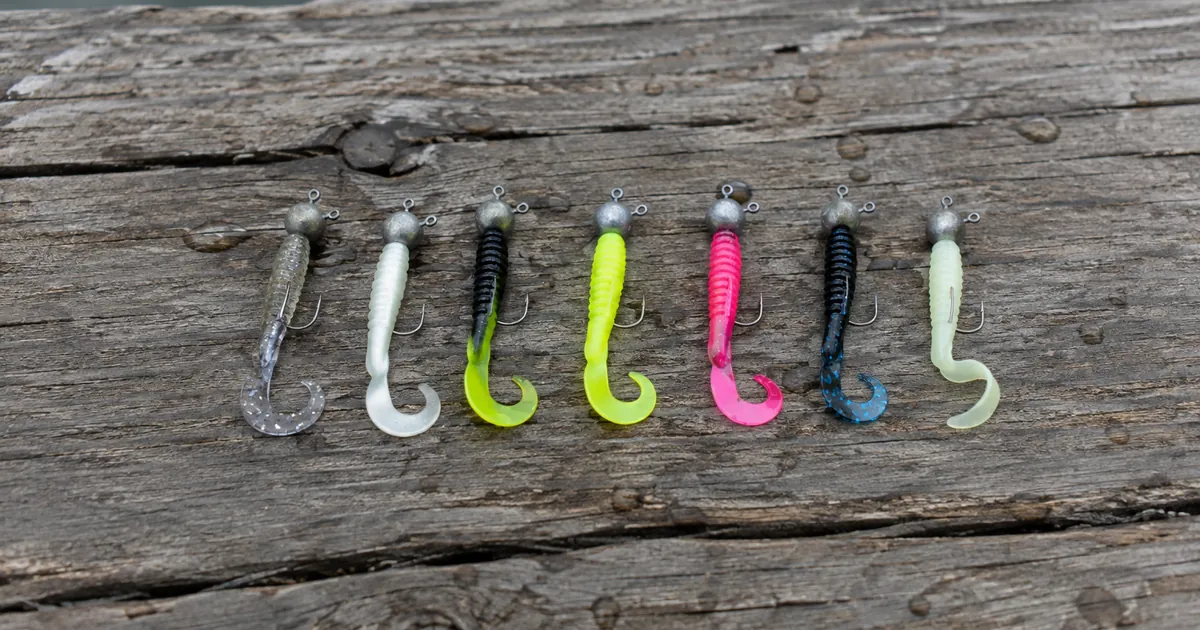
- First choice: smoke, pearl or white, silver flake, ghost or translucent minnow patterns.
- Second choice: light blue with pearl, natural shad.
- Approach: longer casts, lighter line, subtler action. Clear-water fish are spooky.
Stained water (1 to 4 feet of visibility)
- First choice: chartreuse combos. Black and chartreuse, blue and chartreuse, orange and chartreuse.
- Second choice: white and chartreuse, pink and white.
- Approach: this is the workhorse zone, and contrast is king.
Muddy water (under 1 foot)
- First choice: solid chartreuse, hot pink, bright orange, white.
- Second choice: solid black or black and blue. Dark colors create a strong silhouette.
- Approach: fish closer, use bigger bodies that thump, and add scent or a minnow tip. In muddy water, crappie lean on their lateral line, so a paddle tail or a breathing marabou skirt gives them something to track besides sight.
Adjust for Light and Sky
- Bright sun: natural and translucent colors in clear water, the standard brights in stained water.
- Overcast: go one notch brighter. White and chartreuse shine.
- Dawn and dusk: high contrast, like black and chartreuse or pink and white.
- Night under lights: white, glow and smoke, fished at the edge of the beam. Our night crappie fishing guide explains why the edge holds the bigger fish.
- Deep water or ice: glow finishes, recharged often. See our ice fishing for crappie guide.
The Field Rules
- Two anglers, two colors. Start with different colors and let the fish vote. When one color clearly wins, both switch to it.
- Confidence beats theory. A color you believe in gets fished better, and a jig that’s fished better catches more.
- Short strikes or nipped tails? Change size or slow down before you change color. The fish found the jig. Something else is off.
- Carry few colors, but deep stock. It’s better to have plenty of the five colors that work than one of everything.
The 5-Color Box That Covers Most Days
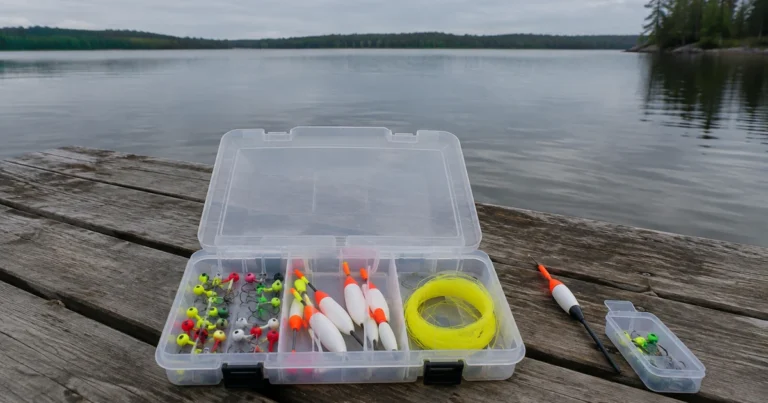
You can fish the vast majority of days with just these:
- One clear-water natural: smoke, pearl or a ghost minnow.
- One chartreuse combo: black and chartreuse is the classic.
- One solid bright: solid chartreuse or hot pink.
- One dark: black and blue.
- One glow.
Stock them on 1/16 oz heads, the workhorse weight, with some 1/32 oz for tough bites and shallow fish, and some 1/8 oz for deep or windy days. Light-wire hooks help you hook crappie and bend free of snags.
Color Is Only Half the Jig
The body shape matters as much as the color. Curly-tail grubs swim at dead-slow speeds. Paddle tails and shad shapes give a tighter baitfish thump when crappie are on shad. Tubes and marabou jigs are the subtle end: a marabou jig “breathes” while it sits still, which makes it the best choice in cold water and for dead-sticking.
And whatever color you choose, the presentation still rules: bait at or just above the fish, slow, with a firm lift instead of a swing. A slip bobber is an easy way to hold that jig right in the strike zone while the fish decide.
Tight lines,
— David