Winter Crappie Fishing: Go Deep, Go Small, Go Slow
Winter crappie fishing comes down to three words: deep, small and slow. Once the water drops below about 50°F, crappie pack into the deepest comfortable water in the lake and feed on small meals with tiny bites, but they keep feeding all winter. This page is the open-water winter chapter of our complete crappie fishing system. If your lake freezes, the hardwater version is further down.
Crappie Fishing Mastery: the complete system this article comes from, as an instant PDF. Get the guide — $17
When Winter Starts for Crappie
The calendar doesn’t decide, the thermometer does. Northern and southern lakes can sit four to six weeks apart, so one lake’s December pattern can be another lake’s November. Read the water every trip and watch which way it is moving.
The handover from fall is the part most anglers miss. In the 50s and falling, the creek arms empty out toward channel structure at 12 to 20 feet, and the schools tighten up. If the whole creek arm suddenly goes dead, the water has likely dropped below what the shad tolerate. Move out to the first channel structure toward the main lake and fish mid-column. Our fall crappie fishing guide covers the weeks before this, and the rule for the switch is simple: move out a week early rather than a week late.
Winter Crappie by Water Temperature
Use this as your first guess, then let the graph and the fish correct it.
| Water temperature | Where they are | Typical depth | How to fish |
|---|---|---|---|
| 50-60°F, falling | Creek arms emptying toward channel structure | 12-20 ft | Vertical on brush and timber; schools tightening |
| 40-50°F | Deep channel bends, deep timber, basin edges | 15-30 ft | Small, slow, vertical; minnows earn their keep |
| Below 45°F | The deepest water on the lake, tight mega-schools | 20-30+ ft | Smallest jig you own, dead slow, or live minnows |
| 45-55°F, warming (late winter) | First staging spots on the route to the creeks | 10-20 ft | Slow vertical, slow trolling the channels |
One more rule from the same chart: air temperature lies. Three cold nights in a row pull real heat out of a lake, and one warm afternoon barely touches it. Trust the water.
Where Winter Crappie Hold
Winter is the most extreme version of the oldest crappie rule: 90 percent of the fish sit in 10 percent of the water. That is good news. Find one school and you may have found the day.
- Deep channel bends. The old creek channel is the crappie highway all year. In winter, the bends and junctions in deep water are where the schools stop.
- Basin edges. Where a deep flat meets the first slope, fish gather more than in the featureless middle.
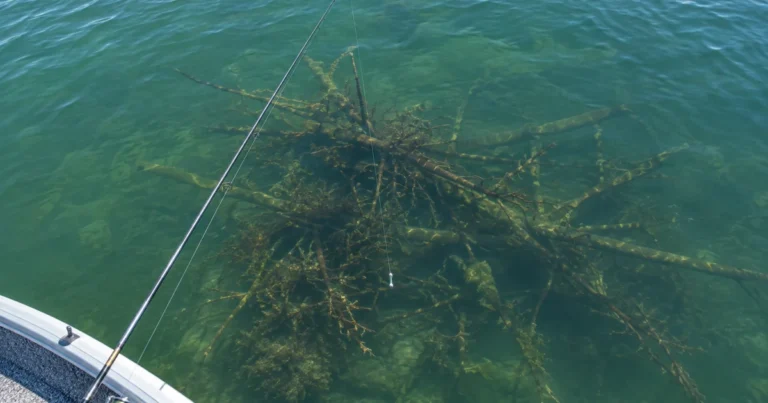
- Deep timber and brush. Cover on the right structure at the right depth is still the formula. A brush pile at 25 feet in January can hold a whole school.
- Humps. An underwater high spot surrounded by deep water gives a winter school a shallower feeding option without leaving home.
- Marinas, where fishing is allowed. Docks, depth, shade, brush and bait in one place make them winter gold.
Above all, find the bait. Crappie live where they eat. If a perfect-looking spot shows no bait on the graph, trust the empty screen and move.
How to Fish Winter Crappie
Vertical jigging is the winter foundation, because the fish are concentrated and you can sit right on top of them.
- Find the school first. Idle your milk run before you fish. Winter crappie usually suspend, so look for marks off the bottom, often near a bait cloud.
- Fish at their level or just above. Crappie feed up. A jig two feet under a school is invisible to it.
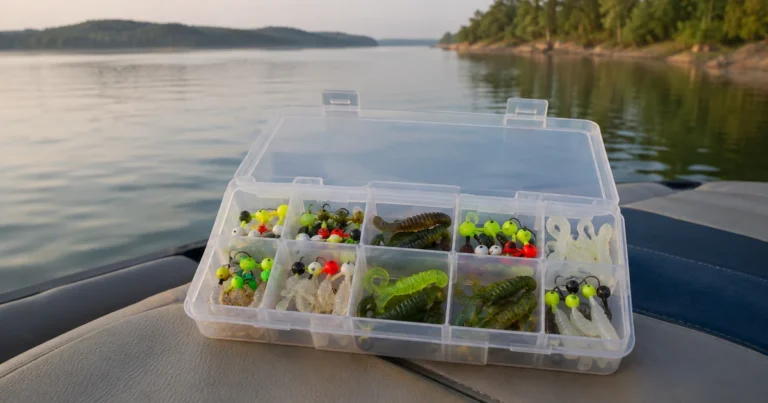
- Choose the right weight. A 1/32 oz head falls slower and suits tough, cold bites. A 1/8 oz head gets down and stays vertical past 15 feet or in wind. A 1/16 oz falls roughly a foot per second on light line, so you can count it down.
- Hold still. Let the jig hang for 20 to 30 seconds, then a slow lift of 6 to 12 inches. Most bites come on the settle or the dead hang.
- Read the screen. Fish holding high over the brush are feeders, so drop on them now. Fish buried inside the pile are neutral. Finesse them or come back at a better window.
Jigs and minnows in cold water
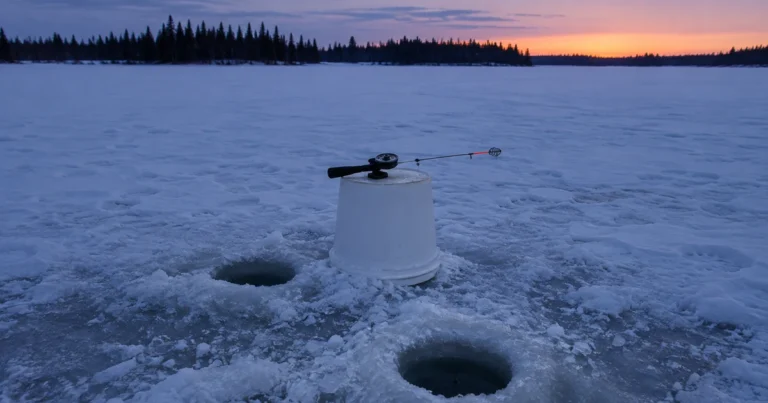
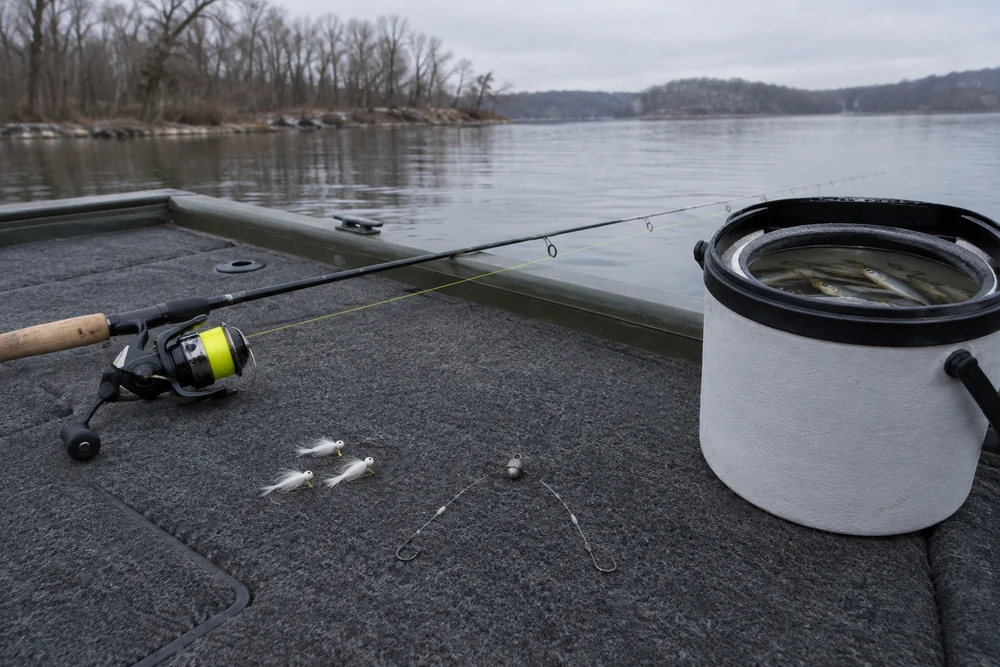
A marabou or hair jig breathes while it sits still, which makes it the king of cold water. Live minnows shine in winter because cold fish want a meal delivered slowly to their nose. Use smaller minnows in cold water. Hook them behind the dorsal fin for a still, struggling bait, or through the tail when fish nip and won’t commit. A double minnow rig fishes two depths at once and is the standard for deep vertical work. Read the ice fishing for crappie guide too, even if your lake never freezes: the vertical lessons transfer straight to the boat.
See the bite
Winter bites are often nothing more than a half-inch of line movement. Fish 4 to 6 lb high-visibility line and watch where it enters the water. A tick, a sideways slide or sudden slack is a fish. Strike with a firm lift, never a swing. Papermouths tear.
Worked example: a 44°F reservoir in early January
Say your reservoir reads 44°F at midday in early January. Below 45°F, the crappie are on the deepest water in the lake, packed into tight schools, and their bites are tiny. Here is how the day plays out with the system.
- Pick the water at home. On the contour map, mark the deep channel bends, the basin edges and any deep timber in the 20 to 30 foot range. That is your milk run.
- Launch late. No need for a dark-thirty start. You aim to be over the first spot around late morning, so the best of the midday sun lands while you are fishing.
- Idle before you fish. You graph the first channel bend and see a cloud of bait with a stack of small marks suspended at about 18 feet over 26 feet of water. That is the school, and it is not on the bottom.
- Drop to the right depth. You tie on a 1/8 oz jig, because you are fishing past 15 feet. Count it down and stop it at 17 feet, one foot above the marks, never below them.
- Do almost nothing. Hold it dead still for 20 to 30 seconds, give it a slow 6 to 12 inch lift, let it settle, and watch the line where it enters the water. A half-inch tick or a sudden slack line is a fish. Lift firmly, no swing.
- Adjust depth before lures. No bite in fifteen minutes? Go a foot deeper, then a foot shallower. Still nothing? Lower a double minnow rig with small minnows onto the same school before you leave.
- When it goes quiet, look up. If the school stops biting, come up a foot before you go down. Nine times out of ten they rose.
Nothing in that day is fancy. Temperature picks the zone, the graph finds the school, and stillness at the right depth does the catching.
Timing and Weather
- Midday is prime. The warmest hours produce the most willing fish, so there is no reason to freeze at dawn.
- Warm, stable spells give the best bites. Three steady days beat one pretty day.
- After a cold front, fish tighter to cover, one zone deeper, with the smallest jig or a minnow, dead slow, in the warmest window of the afternoon. Eight fish is a good day. Plan for it.
- Late winter warming trends start pulling the first fish up toward the creek mouths. Three sunny days can move them noticeably shallower.
Winter Crappie From the Bank
Winter narrows the bank game to places where deep water comes within a cast: bridges and causeways, marinas where allowed, dam faces and steep banks. On a farm pond, the deepest water is almost always at the dam, and that is your winter spot. A slip float set to the school’s depth is the closest a shore angler gets to vertical jigging. Our bank fishing for crappie guide has the full access list.
Winter Crappie Fishing, Summed Up
Read the water temperature, go to the deepest comfortable water, find the bait and the suspended school, and fish at their level or just above with a small bait held still. Fish the middle of the day and the stable spells. And bring a cooler of ice: cold-water crappie are the best-eating fish of the year. Deep, small and slow is the whole of winter crappie fishing.
Frequently Asked Questions
Where do crappie go in the winter?
Once the water drops below about 50°F, crappie move to the deepest comfortable water in the lake: main-lake basins, deep channel bends, and deep timber and brush. That is often 15 to 30 feet or more, depending on the lake. They pack into big, tight schools, so most of the lake is empty and a few spots hold almost everything.
How deep are crappie in the winter?
As a starting band, figure 15 to 30 feet in December and 20 to 30-plus feet in January. That band is your first guess, not your answer. Winter schools often suspend well off the bottom, so find them on the graph and fish at their level or a foot above.
What is the best bait for winter crappie?
Small and slow wins. A light jig with a marabou body breathes while it sits still, which makes it the classic cold-water lure. Small live minnows, fished vertically or on a double minnow rig, are often even better when the bite is tough. A minnow-tipped jig gives you both.
What time of day is best for crappie in winter?
Midday. Once the sun has had a few hours to warm the water, the bite usually beats dawn. Warm, stable spells produce the best days. After a hard cold front, expect a tough bite and fish the warmest window of the afternoon.
Can you catch crappie from the bank in winter?
Yes, but only where deep water comes to you. Bridges, causeways, marinas where fishing is allowed, dam faces and steep banks all give a shore angler access to winter depth. On a small pond, the deepest water is almost always at the dam.
Tight lines,
— David