Winter Bass Fishing: Find the School, Then Fish Painfully Slow
A technique that catches 20 bass in October may not get a single bite from the same lake in January. Winter bass aren’t gone and they aren’t impossible. They’re schooled up, their metabolism is at its lowest point of the year, and they feed in short, predictable windows. Winter fishing is about accepting that and adjusting everything to it, which is the approach we use throughout our complete bass fishing system.
Bass Fishing Mastery: the complete system this article comes from, as an instant PDF. Get the guide — $17
What Cold Water Does to Bass
When the water sits in the upper 30s and 40s, bass are tightly schooled in the deepest water where the temperature stays stable. They feed infrequently, but predictably: short, intense feeding windows during the warmest part of the day, followed by long periods of doing nothing.
That has one big consequence: finding the school is 90 percent of the battle. Once you locate it, you can often take several fish from the same small area. When you find one, you’ve likely found 20, so work the spot thoroughly before you move.
Where Winter Bass Hold
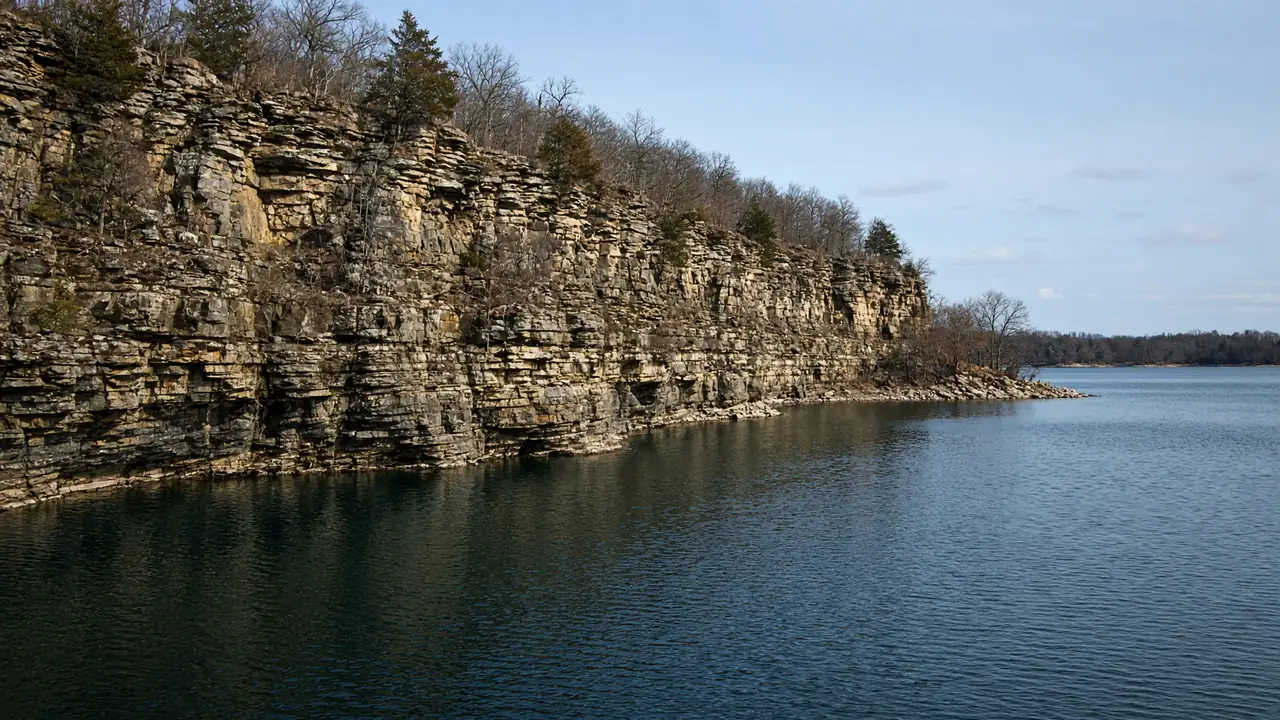
- Primary locations: the deepest stable structure with the least temperature change. That’s typically 20 to 40 feet on Southern reservoirs, and shallower in Northern lakes. Look at creek channel bends, main lake humps and steep bluff walls.
- Docks with deep water access: bass use the dock cables and floats as structure.
- Warm water discharges: areas near power plant and industrial outflows.
- Banks on the north side of the lake, which receive the most winter sunlight.
In winter, bass also hold tight against wood cover, where the bottom temperature is marginally warmer. On rivers, look for the wintering holes: the deepest, slowest pools, often on outside bends and in deep eddies, where fish stack tightly. One pool can hold the whole neighborhood.
The Lures That Work in Cold Water
- Blade baits, jigged vertically over the school.
- Jigging spoons, fluttered up and allowed to fall.
- A slow finesse jig.
- A drop shot with a finesse worm, which keeps the bait in front of a cold fish for as long as it needs. Our drop shot guide walks through the rig step by step.
- A suspending jerkbait, with long pauses (see below).
How Slow Is Slow Enough
Winter retrieves should feel impossibly slow. A cold bass may need 10 to 15 seconds to move and commit to a bait. If your retrieve feels slow, cut it in half.
The jerkbait shows how far this goes. The bass strikes on the pause, when the lure hangs perfectly still like an injured baitfish, and water temperature sets the length of that pause:
- Below 50°F: 8 to 12 second pauses.
- 50°F to 60°F: 3 to 5 seconds.
- Above 65°F: 1 to 2 seconds.
If you’re not getting bites, lengthen the pause before you change lures.
The Winter Clock: Fish the Middle of the Day
Forget the dawn bite. In winter, the best window is the warmest part of the day, from around noon into the mid-afternoon, when accumulated sunshine has warmed the surface water slightly and nudged bass metabolism up. That’s also good news if you don’t enjoy freezing at the ramp at first light.
Winter Month by Month
- December (about 44°F to 54°F): a transition month. The fall shad pattern ends once the water drops below 52°F to 55°F, and bass move back toward deep structure. Depending on the day, fall or winter tactics can both work. Finesse jig, drop shot, blade bait.
- January (about 38°F to 48°F): the deepest structure, 20 to 40 feet. Blade baits, jigging spoons, slow jigs.
- February (about 42°F to 52°F): deep points and channel bends. Slow finesse jig, blade bait, drop shot.
Those temperatures are a guide, not a promise: always go by your own water. When it starts climbing through the low 40s toward the mid-50s, the fish start waking up and moving toward the spawning areas. That’s the beginning of the pre-spawn, and some of the biggest fish of the year.
Winter From the Bank
You don’t need a boat for this. Pick your spots by access to depth: bluffs, dam faces and marina edges. Fish the warm afternoons, and fish them slow. You’ll make fewer trips, but the fish that eat in winter are quality fish.
Tight lines,
— David