Summer Crappie Fishing: Find the Thermocline
Summer crappie fishing is a depth problem with one answer: find the thermocline and fish at or just above it. Once the surface heats into the upper 70s, crappie in most lakes drop onto deep structure or bury in shade, and they lock to a single depth band across the whole lake. That makes them look like they vanished, when really they got easier to predict. This page is the short version of the summer chapter of our complete crappie fishing system.
Crappie Fishing Mastery: the complete system this article comes from, as an instant PDF. Get the guide — $17
What the Thermocline Does to Your Lake
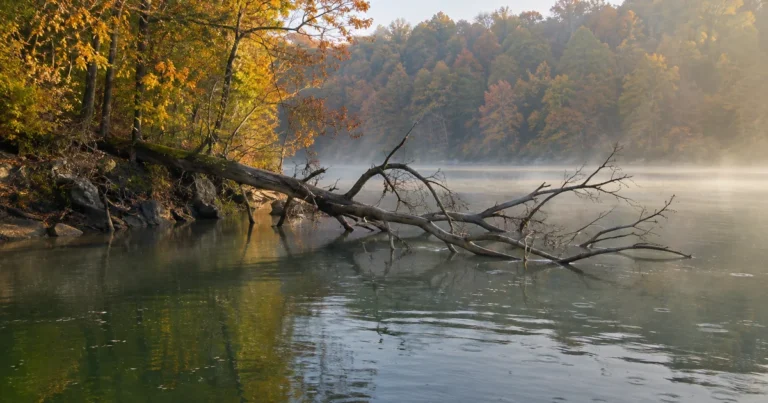
In lakes that stratify, a boundary forms between the warm surface layer and the cold water underneath. Below that boundary oxygen becomes scarce, so crappie stack in the comfortable band just above it. They are not scattered through the water column. They are pinned between a ceiling of hot water and a floor with no air in it.
Find the depth of that band once and you have found the productive depth for the entire lake that day. It is the single most useful number in July.
How to Find the Band
- Idle across deep open water and watch for a faint fuzzy horizontal line at a consistent depth. That is the thermocline on ordinary 2D sonar, and almost every unit shows it.
- Confirm it with the bait. Shad clouds stack at and above the line, and crappie show as dashes and small arches around them.
- Write the number down. If it sits at 16 feet, 16 feet is your floor on every spot you fish.
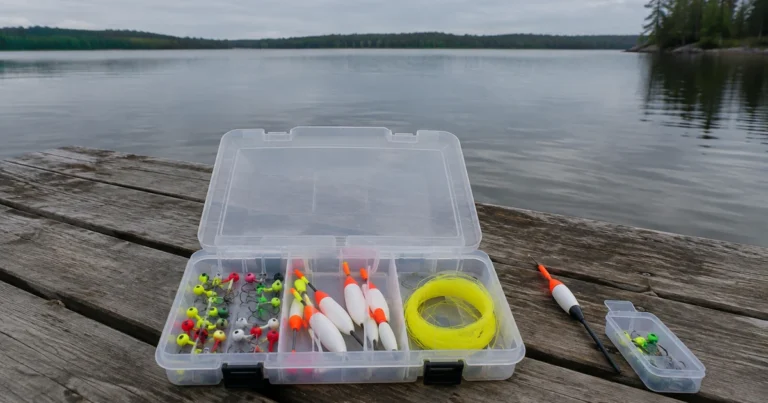
- No electronics? Work a counted jig or a slip float down in two-foot steps on a bridge piling or a deep dock end until you get bit, then carry that depth across the lake.
Turn the cartoon fish symbols off and read raw returns. The icons lie; dots and arches tell the truth.
Where Summer Crappie Hold
- Brush piles in 12 to 25 feet, especially on channel-related structure. Depth beats everything: a dozen piles at the right depth out-produce a hundred at the wrong one.
- Channel ledges, worked in three zones, the lip, the base and suspended off the face.
- Bridge pilings, which give a school every depth on one piece of concrete.
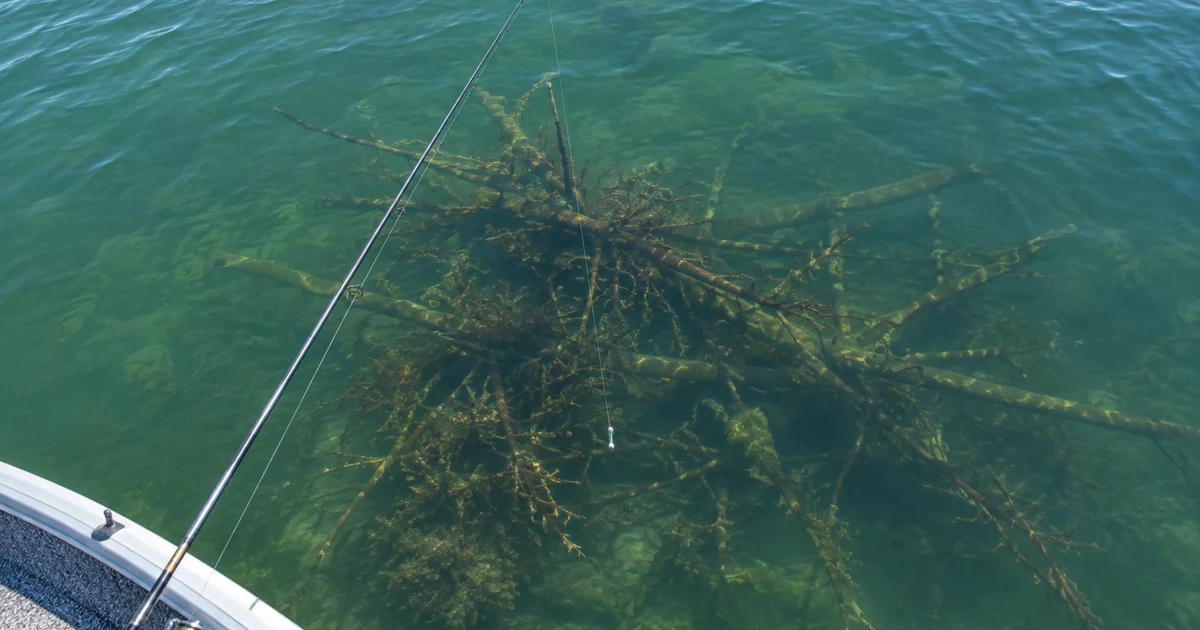
- Standing timber, fished along the edges of the field and the interior lanes rather than randomly among identical trees.
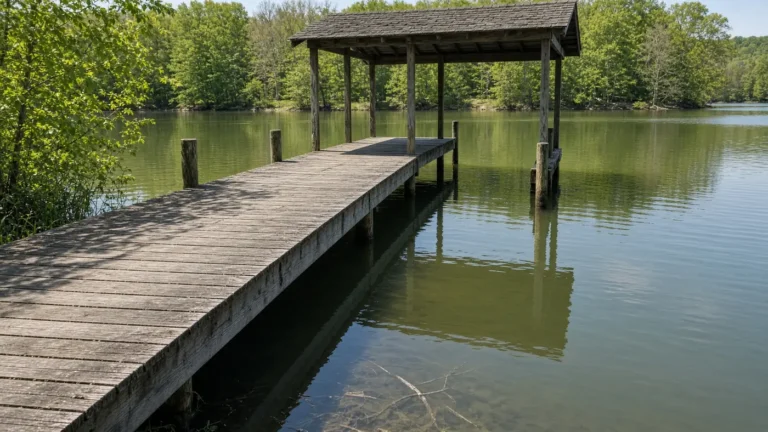
- Deep dock ends, with 6 feet or more underneath and a wide shade footprint.
- Suspended schools, a group hovering at 14 feet over 30 feet of water, related to nothing but the thermocline and a ball of shad.
Over all of it, the bait rules. A textbook brush pile with no bait anywhere near it is furniture. A bait cloud with a few arcs under it in open water is worth stopping for.
The Summer Day, Window by Window
| Window or depth | Where to look | Presentation |
|---|---|---|
| Dawn to mid-morning | Tops and shallow edges of deep cover, dock ends, brush crowns | Cast and count down over the cover, 1/16 oz, slow crawl with pauses |
| Mid-morning through late afternoon | Brush and ledges in 12-25 ft, at or above the thermocline | Precision vertical jigging, 1/8 oz, held still with a slow lift every 20-30 seconds |
| Bright midday, docks on the lake | The darkest shade at the back of pontoons, walkways and lifts | Shoot a compact 1/32 to 1/16 oz jig; the bite comes on the fall |
| Dusk | Bridge pilings, steep points, deep dock ends | Vertical jig or slip float set just above marked fish |
| After dark under lights | Bridges, main-lake brush 12-25 ft, marina edges where permitted | Lively minnow on a slip float; jig worked along the rim of the glow |
| Suspended fish over open water | 10-18 ft over 25-35 ft, wherever the bait is | Slow-trolled jigs 40-80 ft behind the boat at 0.5 to 1.2 mph |
Worked example: a thermocline at 16 feet in late July
Say it is late July, the surface reads 86 °F, and one idle pass across the main lake shows a faint fuzzy band at 16 feet with bait stacked just above it.
- Treat 16 feet as the floor for the whole lake that day. Your target band is roughly 12 to 14 feet.
- Run your waypoints for brush in 15 to 20 feet. Drop a 1/8 oz jig to 13 feet, hold it still, and lift it 6 to 12 inches every 20 to 30 seconds.
- First fish: note the exact depth, then fish that same depth on every similar piece of cover you have marked. Crappie hold at the same depth lake-wide on a given day.
- When the bite dies around mid-morning, shift to the darkest dock shade, then come back at dusk with lights and start your baits just above the visible bait flickers.
The Golden Rule Matters Most Now
Crappie feed upward. A crappie will rise two or three feet for a meal and almost never drop for one, so a jig two feet under a school might as well be in another lake. In summer, when every fish in the lake is depth-locked, that error costs you the whole day.
Practical habits: start high in the water column and step down, never the reverse. Set the bait at the level of the marks or a foot above. When a school goes quiet, come up before you go down, because nine times out of ten they rose.
Shade Is the Other Answer
On a bluebird afternoon the fish that will still eat are the ones in heavy shade. Rank the docks on your lake by depth underneath, shade footprint, age and isolation, then fish the top five and skip the rest. The ones with rod holders and a fish light belong to someone who sinks brush. Getting a jig into the dark back corner takes a slingshot cast, which is covered step by step in our dock shooting guide.
Then There Is the Night Shift
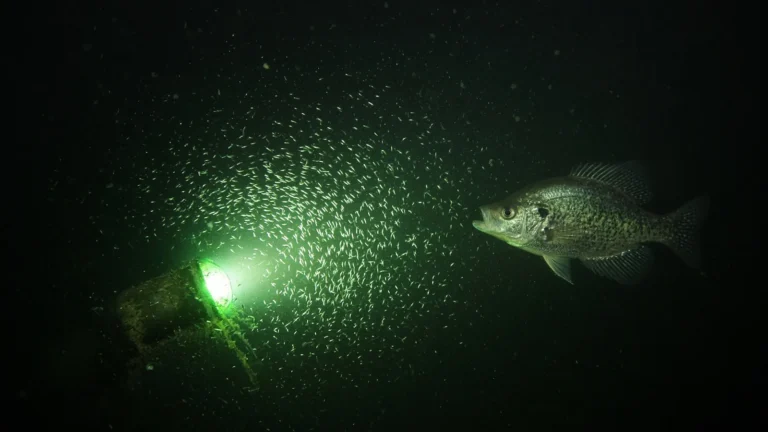
Through the hottest weeks the best summer fishing happens after sunset. A submersible light starts a food chain on demand: plankton, then bait, then crappie, usually assembling within thirty to sixty minutes. Fish the center of the glow for numbers and the rim, where light fades to dark, for the better fish. The full setup, locations and safety list are in our night crappie fishing guide.
Weather and Wind in the Heat
- Overcast extends dawn conditions. Fish hold looser off the cover and range a little shallower, so spread your casts wider.
- Bluebird skies after a front mean tighter to cover, one zone deeper, smallest jigs, dead slow, and the warmest calm window.
- A steady breeze helps. It breaks up surface light and pushes plankton and bait against wind-facing banks and cover.
- Too much wind flips the sign the moment you cannot hold position or keep a float honest. A well-fished calm pocket beats a badly fished windy point.
- Lightning ends the trip, immediately, every time.
When the Lake Starts to Cool
Late in the season the surface cools, the thermocline breaks down and the lake turns over. That brings a week or two of off-color water and a tough bite you simply ride out. After it, the fish are freed to roam and they follow the young shad into the creek arms, which is a different game entirely: see our fall crappie guide for where they go next.
The Short Version
Take one idle pass, find the band, and let that number pick your depth on every brush pile, ledge and piling you touch. Fish shade at midday, fish the dark hours when it is brutally hot, and keep every bait above the fish. Done in that order, summer crappie fishing stops being the hardest season and becomes the most predictable one.
Frequently Asked Questions
Where do crappie go in the summer?
Deep, shaded, or both. In most lakes they settle onto brush piles in 12 to 25 feet, channel ledges, bridge pilings, standing timber and deep dock ends, and they stack in the comfortable band just above the thermocline where oxygen runs out below.
What depth should I fish for crappie in summer?
Start at the thermocline depth and work upward from there, never below it. If the band sits at 16 feet, fish 12 to 14 feet and treat 16 as the floor. Suspended schools over much deeper water follow the same rule.
What is the best time of day for summer crappie?
Dawn, dusk and after dark. Midday belongs to precision vertical work on deep cover and to shooting the darkest dock shade. Through the hottest weeks, night fishing under lights is the most productive window of the day.
How do you find the thermocline for crappie fishing?
Idle across deep open water and watch for a faint horizontal band at a consistent depth on 2D sonar. Bait clouds stack at and above it. Write the number down, because it sets the productive depth ceiling for the whole lake that day.
Why do crappie stop biting in hot weather?
Usually because the bait is below them or in the wrong band. Hot-weather crappie are depth-locked and tight to cover, and a jig two feet under a school is invisible. Reset above the fish and fish the cooler hours.
Tight lines,
— David