Winter Catfish Fishing: Deep, Slow and Patient
Winter catfishing isn’t impossible. It’s just different. Once the water drops below about 50°F, catfish metabolism slows dramatically and they stop roaming. You won’t get as many bites, but the ones you get often come from bigger, less-pressured fish. The anglers who catch them change their whole approach. Here’s the winter side of our complete catfish fishing system.

Catfish Fishing Mastery: the complete system this article comes from, as an instant PDF. Get the guide — $17
What Cold Water Does to Catfish
Catfish feed hardest when the water is 70 to 85°F. Below 50°F, feeding slows way down. They become sedentary, hold in deep water where the temperature stays stable, and feed in short, predictable windows instead of all day.
That changes three things: where you fish, what you use, and how long you wait. Go by water temperature, not the calendar. A warm spell can wake fish up, and a hard cold front can push them back into deep winter mode.
Where Catfish Hold in Winter
Winter catfish go to the deepest, most stable water available:
- Main lake and river channels. In reservoirs, the old channel is the winter address.
- Deep holes near the dam. Often the deepest water in a reservoir or pond.
- Deep holes on river bends. The outside of a bend scours out a hole with stable temperature and slower current near the bottom. Our guide to where catfish hold in a river shows how to find them.
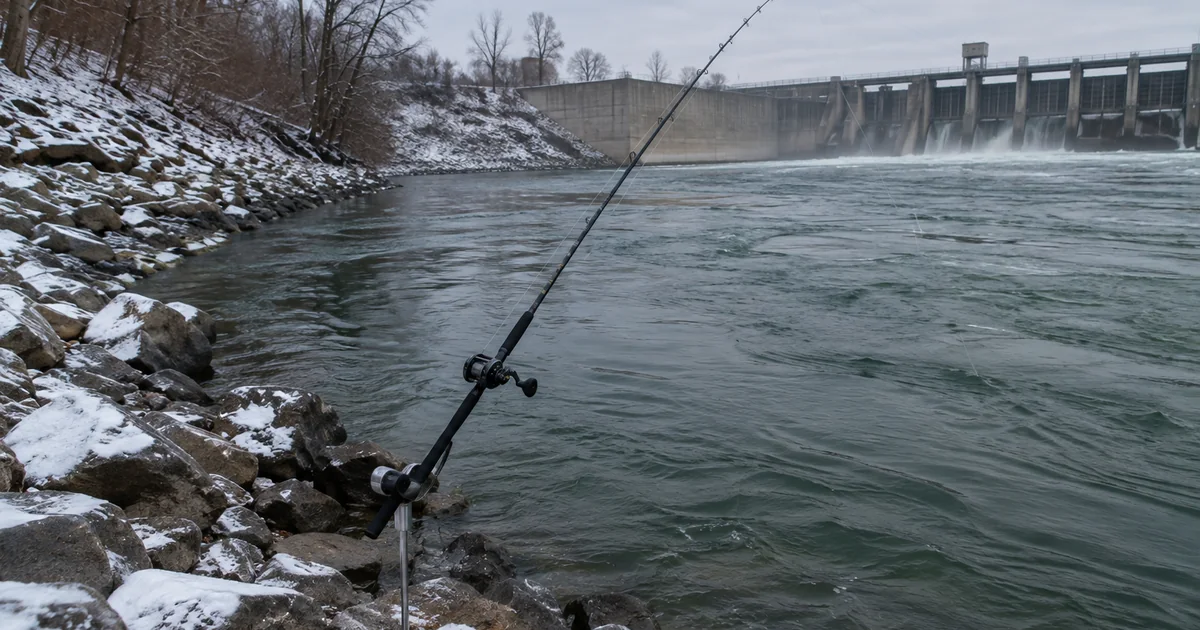
- Tailwaters below dams, for blue catfish. Year-round current and concentrated baitfish keep forage available even in cold months.
On a pond, the deepest spot is usually near the dam. On a big lake, a depth map pays for itself in winter: find the channel and the holes near it, and skip everything else.
Bait: Fresh Cut Bait Wins
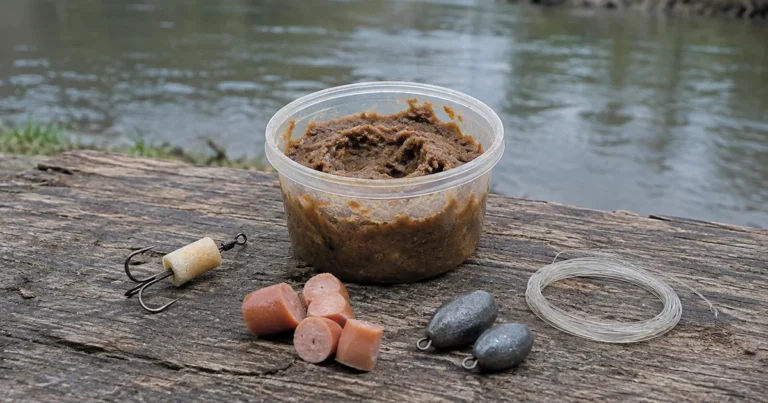
In winter, fresh cut bait tends to outfish stink bait. Stink baits work through fermentation and bacterial processes, and cold water slows those down. Fresh cut bait’s blood and oil keep working no matter how cold it gets.
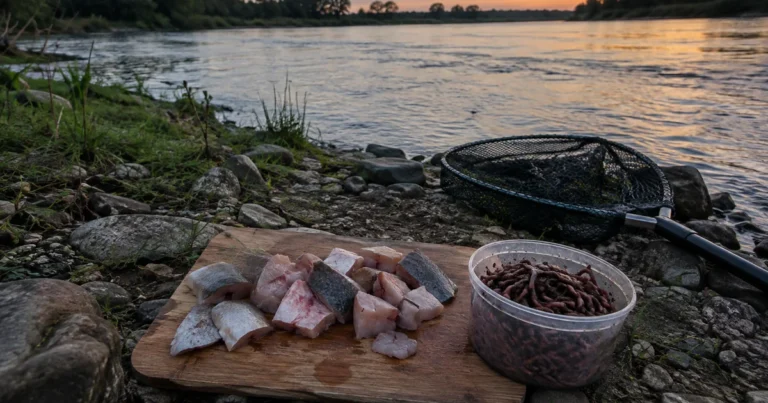
- Use fresh shad or skipjack herring where legal and available. They’re oily and leave a strong scent trail.
- Cut at an angle and slit the skin side so the scent releases faster in slow, cold water.
- Keep the bait fresh. On a long winter soak, a fresh piece gives off more scent than one that’s been in the water for hours.
How to Fish Winter Catfish
- Choose fewer spots. Winter catfish aren’t actively roaming, so moving every 20 minutes just means leaving fish that haven’t found your bait yet. Pick a few deep, carefully chosen spots.
- Stay longer. Serious winter anglers fish those spots for long periods. The biggest, most cautious fish often take longer to commit.
- Use the right rig. A slip sinker rig lets a slow, cold fish pick up the bait and move without feeling the weight. In strong current or tailwaters, switch to a three-way rig.
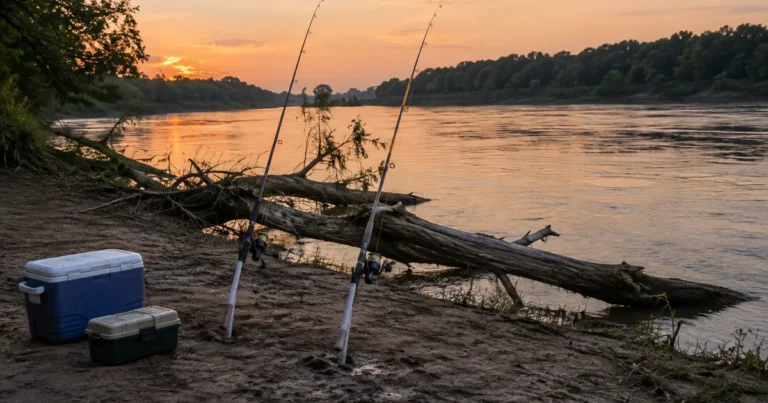
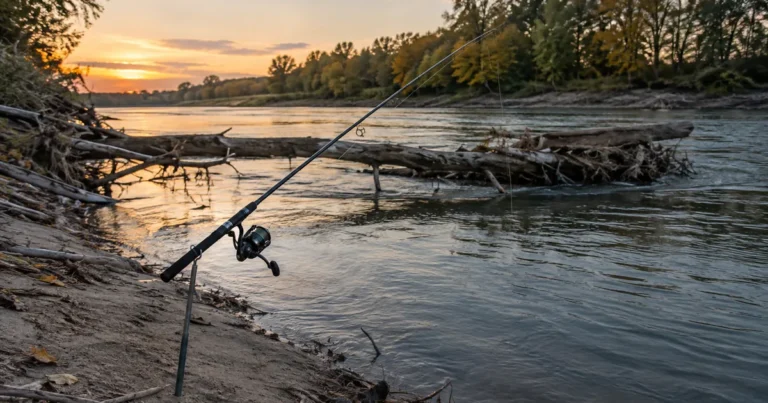
- Put the rod in a holder angled at 30 to 45 degrees, tip slightly downstream or across the current, so you can see light bites.
- Read the tip. Light, repeated taps mean a fish is testing the bait with its barbels. Wait. When the rod loads up and stays loaded, reel steadily into the fish. With circle hooks, never swing.
Timing in Winter
- Watch for warm spells. In late winter, look for the first pulses of warmer water. A few mild days can start fish feeding.
- Use the pressure. Falling pressure ahead of a front often triggers feeding. The day or two right after a front, when pressure rises fast, is usually the slowest.
- Keep a log. Date, spot, water temperature, pressure trend, bait and result. Winter bites are rare enough that every one tells you something.
Cold-Weather Safety
Winter water is less forgiving. Wear a life jacket in the boat, especially in current or cold water. Below dams, water levels can rise fast and without warning when generation changes. Respect current around bridge pilings and dam discharges, and tell someone where you’re going and when you’ll be back, especially on solo trips.
Winter Quick Reference
- Water: below 50°F.
- Depth: the deepest available water.
- Bait: fresh cut bait.
- Approach: fewer spots, longer soaks, slow and patient.
- Activity: the lowest of the year, but quality fish.
If you still have water in the 50s and 60s, you’re in the fall window instead. See our fall blue catfish guide.
Tight lines,
— David