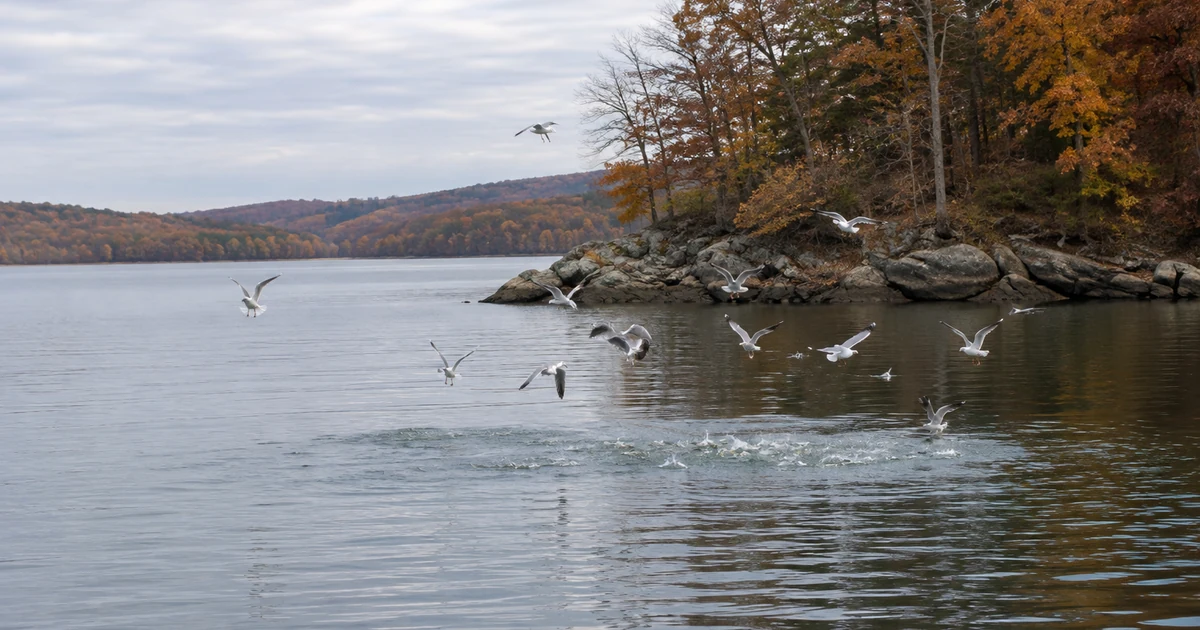
Fall Blue Catfish: The Underrated Trophy Window
Plenty of anglers put the catfish rods away when the leaves turn. That’s a mistake, and for blue catfish it’s a big one. As the water cools, blues go through a strong feeding period to build reserves before winter, and the biggest fish in the system key in on dense schools of shad. October in particular is an underrated trophy blue month. Here’s how to fish it, straight from our complete catfish fishing system.

Catfish Fishing Mastery: the complete system this article comes from, as an instant PDF. Get the guide — $17
Why Fall Is a Trophy Window
Catfish feed hardest when the water sits between 70 and 85°F, and they slow way down below 50°F. Fall is the stretch in between: water dropping from summer highs through the 60s toward 50. In that window, catfish feed actively to store energy for the slow months ahead.
Blue catfish add one more factor. They’re highly mobile and often follow baitfish schools, especially shad, for long distances. In fall, shad become more vulnerable and more concentrated. Big blues know it, and they stay on the bait.
Track water temperature, not the calendar. The same month can be early fall on one lake and late fall on another.
Where Fall Blues Hold
In fall, catfish sit in transitional water: between summer’s deep haunts and the shallower feeding flats, moving day to day with the temperature. For blues, focus on:
- Points and secondary creek channels in reservoirs. The old flooded creek channels act as highways blues use to move between deep and shallow water.
- Deep channel edges and humps near bait.
- Tailwaters below dams. Turbulence disorients baitfish and draws blues, often the biggest fish in the system. Watch for sudden water-level rises when generation schedules change.
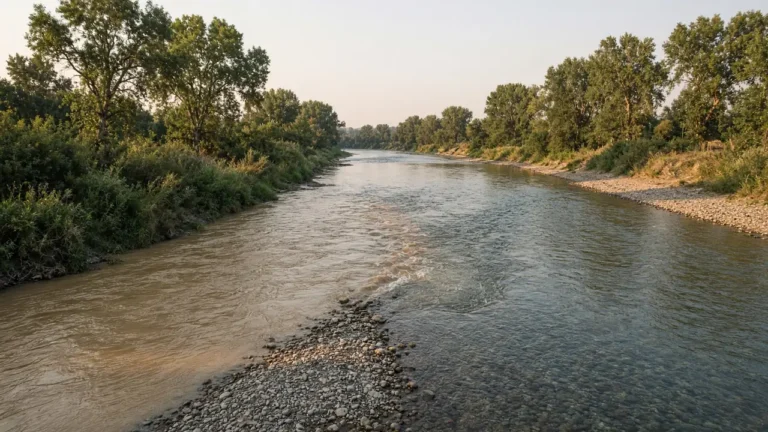
- Deep main-channel holes in big rivers, especially next to a strong baitfish population. Our guide to where catfish hold in a river covers the five spots to check.
One rule beats all the others in fall: look for structure with bait on it. Textbook structure with no shad nearby is far less likely to hold feeding blues than average structure with a baitfish school next to it. If you have sonar, scout for bait before you drop a line.
The Bait: Match the Shad
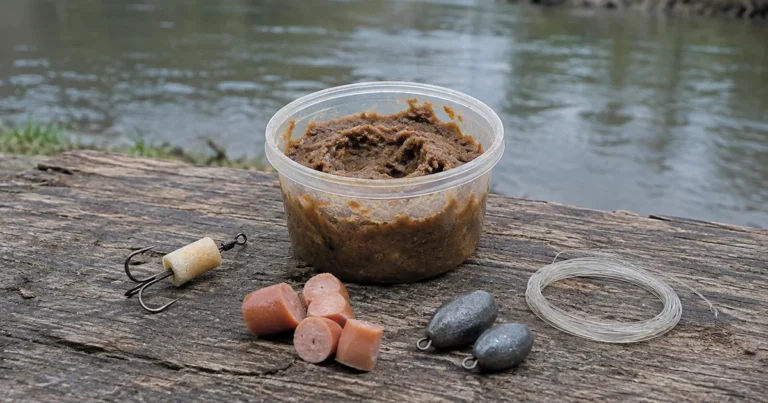
Cut bait is the fall bait, because it matches what blues are eating. The top choices:
- Fresh-cut shad (gizzard or threadfin), where legal. It’s their main natural forage.
- Skipjack herring, where present. The oily flesh leaves a strong scent trail.
Size it to the fish you want. For larger blues, use 2 to 4 inch chunks or a whole 5 to 7 inch baitfish cut to open the gut cavity. Cut at an angle to expose more flesh, and slit the skin side to release scent faster. For trophy hunting, one big, fresh bait beats several small ones. For a full rundown by species, see the best catfish bait for each species.
Many serious blue cat anglers catch and cut their own shad instead of relying on the bait shop. Freshness is an edge.
Rigs and Tackle
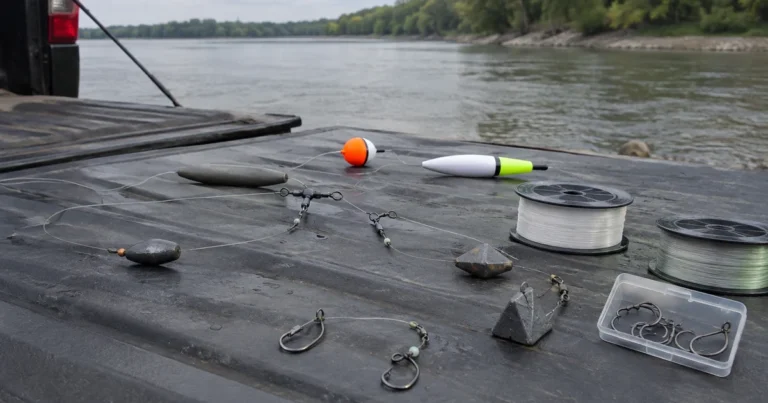
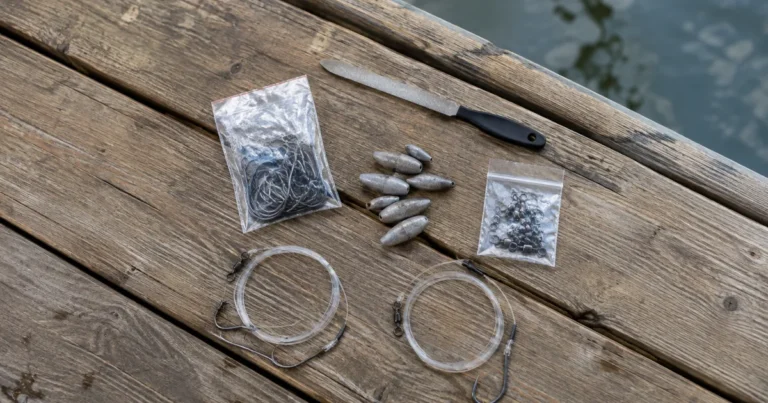
- Slip sinker rig for most spots: sliding sinker, swivel, 12 to 24 inch leader, circle hook.
- Three-way swivel rig for strong current and tailwaters. The sinker hangs on a short, slightly lighter dropper, so if it snags, only the dropper breaks.
- Hooks: 3/0 to 5/0 circle hooks for larger channel cats and smaller blues, 6/0 to 8/0 for trophy blues on big cut bait.
- Weight: 1 to 2 oz in light to moderate current, 3 to 6 oz or more in big rivers and tailwaters.
- Tackle: for real trophy blues, a heavy 7’6″ to 8’6″ rod, a baitcasting or conventional reel with 20 lb or more of drag, and 50 to 80 lb braid with a 40 to 65 lb leader. Undergunned tackle risks the fish and a fight so long it’s unsafe to release.
With circle hooks, never swing. When the rod loads up and stays loaded, reel steadily into the fish and let the hook turn into the corner of the mouth.
How to Fish a Fall Day
- From a boat, drift to find them. Blues can be scattered in fall. Drift with slip sinker or three-way rigs heavy enough to touch bottom now and then, rods fanned at different angles. Use a drift sock or the trolling motor to slow down if you’re moving too fast.
- Mark every bite. Save a GPS point the moment you get bit. A bite during a drift often means a loose school or a feeding area.
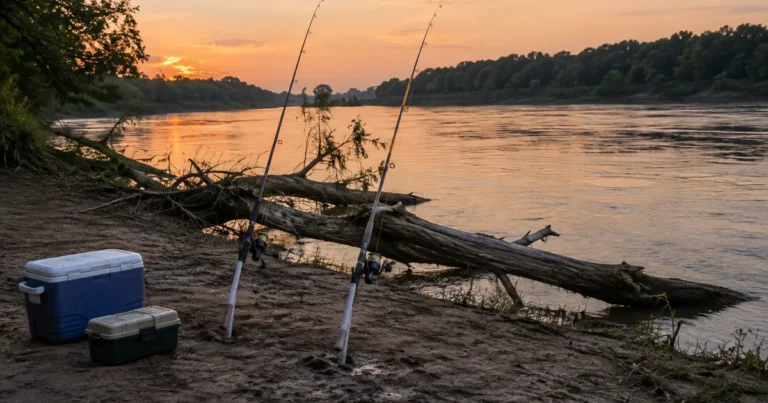
- Then anchor on it. Set up slightly upcurrent or upwind of the spot and let the boat settle back so your baits land on the target. Fan several rods at different distances.
- Give it time, then move. Blues roam, so if a spot gives you nothing in 30 to 45 minutes, try the next one. If you’re trophy hunting a proven spot, let the baits soak longer.
Weather That Helps
- Falling pressure 6 to 24 hours ahead of a front often triggers a strong feed. Plan trips around it if you can.
- Right after a front, rapidly rising pressure usually brings the slowest fishing. It rebounds within 24 to 48 hours.
- Rain that raises and stains the water is a trigger serious blue cat anglers target on purpose. Light to moderate runoff washes in food and plays to the catfish’s sense of smell. A blown-out, flooding river is a different story: stay safe.
Release the Big Ones
Trophy blues take many years to reach that size. Use a cradle for fish over 25 lbs, keep them out of the water for less than a minute, support them horizontally, and revive them facing into the current before letting go. A photo and a careful release keep the fishery producing fish like that one.
As the water drops below 50°F, the pattern shifts again. Our winter catfish fishing guide picks up from there.
Tight lines,
— David


One Comment
Comments are closed.