River Walleye Below Dams: How to Fish the Fall Run
Rivers hold enormous walleye populations, stay open and fishable when the lakes lock up, and host the biggest concentrations of the year below dams in fall and before the spawn. River walleye also bite more reliably: current makes them commit fast, before the meal washes away. If you’ve never fished a river for walleye, this opens a second season on your calendar, and it’s a key part of our complete walleye fishing system.
Walleye Fishing Mastery: the complete system this article comes from, as an instant PDF. Get the guide — $17
The One Rule of River Walleye
Walleye hold in slack or slow water next to current, facing upstream, and let the river deliver the food. So fish the seams: the visible lines where fast water meets slow. Fish the seams, not the flow.
The Five River Spots
- Tailraces below dams: the crown jewel. A wall that stops migration and a food conveyor running around the clock. Fish the seams beside the main flow, the slack pockets along the walls and the first big eddies. Respect posted safety zones and boils; tailwater current kills the careless.
- Wing dams and current breaks: rock structures that create a slack cushion in front, a scour hole at the tip and an eddy behind. Work all three.
- Holes, and their heads and tails: any depression about one and a half times deeper than the surrounding river. Fish stack at the head, where food funnels in, and at the tail-out, their first stop when moving.
- Inside bends and sandbar edges: the slow, deep side of every bend and the seam along the bar.
- Tributary mouths: current, a clarity edge, warmth and bait in one spot. Automatic after rain and in spring and fall.
River Presentations: Heavier, Brighter, Tighter
- Vertical jigging the holes: the river standard. Let the boat slip downstream at current speed, keep the line vertical, and let the jig tick the bottom on every lift. Weights run 1/4 to 5/8 oz, heavier than your lake instinct says. Use ringworms, paddle-tails or minnows, in brighter colors than the same clarity would call for on a lake: current gives the fish a half-second decision, so help them find it.
- Pitching jigs to shoreline breaks: cast up-current at 45 degrees and hop the jig back through the seam.
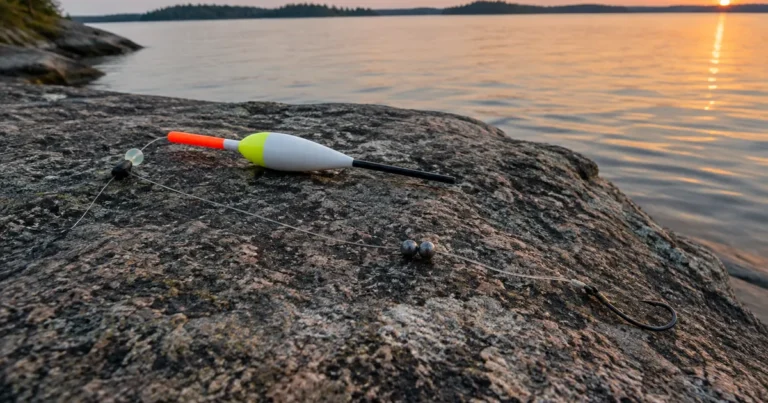
- The three-way rig: a three-way swivel, an 8 to 12 inch dropper of lighter line to a sinker (it breaks off in a snag and saves the rig), and a 2 to 4 foot leader to a floating stickbait or a plain hook and minnow. Troll it slowly upstream or hold it in the current. It’s the tailrace classic.
Baits that fight the current at barely-moving ground speed trigger river fish. For hooking and working the minnow itself, see jig and minnow for walleye.
The Fall Run
From the first cold snaps, walleye migrate upstream and pile into wintering holes below dams and in deep bends, building all the way to the pre-spawn concentrations of spring. From October through April, a river tailrace is the closest thing walleye fishing has to a sure thing, and it’s frequently best in the coldest, emptiest months. It lines up with the fall trophy window on the lakes, and it keeps going when the lakes freeze and anglers turn to ice fishing.
Read the Water Level
- Rising, dirty water: fish shove to the banks and slack edges. Fish tight, bright and shallow. High, dirty water concentrates river walleye better than any other condition.
- Falling, clearing water: fish slide back to the holes and seams.
- Stable flow: a stable pattern.
The clock still rules on rivers: dawn and dusk peaks hold, though stained current keeps daytime bites alive far better than on lakes.
From the Bank
Tailraces and dam pools are walleye highways with public access built in. From shore, a 1/8 to 1/4 oz jig with a ringworm, cast up and across and ticked along the bottom through the seam, is pure river-shore bread and butter.
One more note: in rivers you may also catch sauger. If you’re catching only sauger, moving shallower or to slower current often finds the walleye. And always check your local regulations: some rivers have special seasons and limits.
Tight lines,
— David