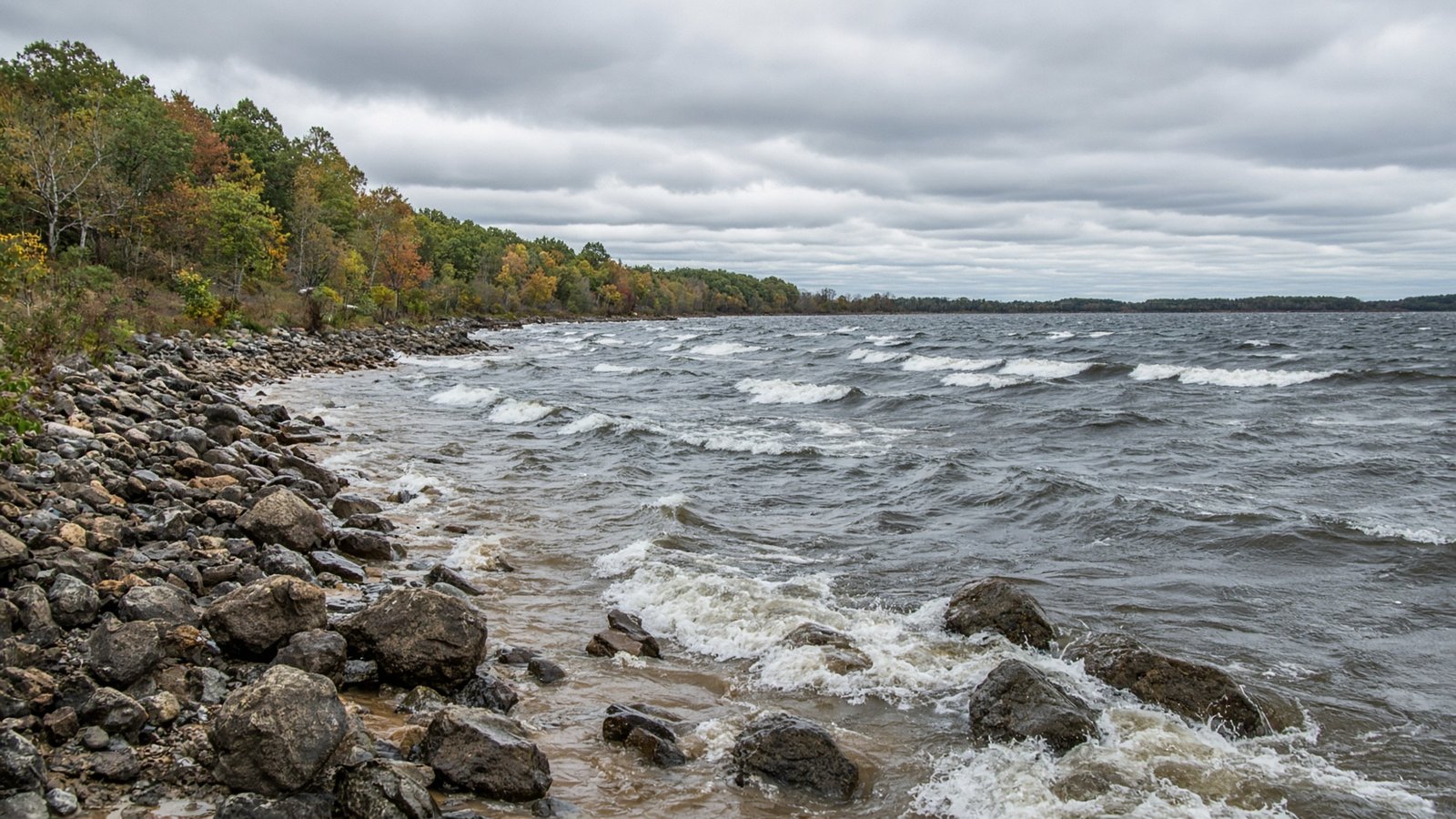
Why Bass Stack on the Windblown Bank (And Why You Keep Fishing the Wrong Side)
Most anglers pull up to a lake, feel the wind in their face, and drive straight to the protected side. It is more comfortable. It is easier to hold position. And it is usually the emptiest water on the lake for a reason: the bass are not there.
If you fish one thing differently this season, make it this. When the wind is blowing, fish the bank it is blowing into. Not the calm side. Not the point in between. The ugly, choppy, mud-streaked shoreline that looks like hard work. Reading the wind is one of the location rules at the heart of the complete bass fishing system.
The Rule
The windblown bank outproduces the calm bank on the same lake, on the same day, under the same sky. This is not a preference or a style choice. It is a repeatable pattern that holds across reservoirs, natural lakes, and farm ponds, and it holds for most of the open-water year.
The stronger the wind has been blowing on that bank, and the longer it has been doing it, the more the pattern separates. A shoreline that has taken a steady 12 mph wind for six hours is a different fishery than the same shoreline was at dawn.
Why It Works
Four things stack up on the windward shore, and they stack up in order.
The food chain gets pushed
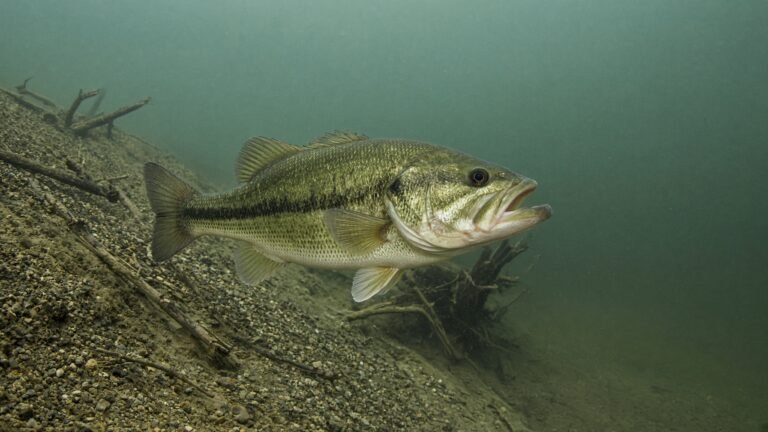
Plankton has almost no ability to swim against moving water. Wind-driven surface current carries it across the lake and piles it against the downwind bank. Baitfish follow the plankton. Bass follow the baitfish. By the time you are looking at a choppy shoreline, the bottom of the food chain has been delivered there for you.
Oxygen goes up
Wave action mixes air into the water column. In summer, when oxygen is the limiting factor in a lot of lakes, the windblown bank holds measurably more of it than the slick side. Fish tolerate more, feed longer, and hold shallower.
Visibility goes down
Chop breaks up the light penetrating the surface, and wave energy stirs sediment along the bank. Bass lose the ability to inspect a bait for three full seconds before committing. They get a silhouette and a decision window, and they take it. This is the single biggest reason the windblown bank forgives a bad presentation.
Current sets up
Enough wind on a long fetch creates a genuine current along the bank. That current positions fish the way river current does, on the down-current side of every rock, stump, dock post, and point. It turns a random shoreline into a shoreline with predictable ambush points.
Working the whole windblown bank the right way — and knowing which stretch of it to skip — is Chapter 17 of Bass Fishing Mastery. The bank angler system in there covers positioning, casting angles, and the exact lure sequence for wind, all from the shore. Get Bass Fishing Mastery here.
How to Fish It, Step by Step
1. Read the fetch before you read the bank. Fetch is the open distance the wind has traveled before it hits that shoreline. A bank with two miles of open water in front of it is worth ten times a bank with two hundred yards. Find the longest fetch on the lake and start there.
2. Start on the leading edge. Do not begin in the middle of the blown bank. Start where the wind first makes contact — usually a point or a corner — and work downwind. That first contact point concentrates bait harder than anywhere else on the stretch.
3. Get close. Chop and stained water mean you can work much tighter than you could on the calm side. From the bank, this is a gift: fish that would be unreachable on a slick day are sitting inside easy casting range.
4. Cast with the wind, not across it. Casting into the wind kills distance and destroys your ability to feel the bait. Position so the wind is at your back or over your casting shoulder, and let it carry the cast. Your line will bow; take up the slack with the rod tip low.
5. Work perpendicular to the bank, then parallel. Make your first passes straight out from the shoreline to find the depth they are holding. Once you get a bite, switch to parallel casts that keep the bait in that exact depth band the entire retrieve.
6. Fish the down-current side of every piece of cover. Where the wave energy wraps around a rock or a laydown, there is a calm pocket behind it. That pocket is where the fish is sitting, facing into the current, waiting for something to tumble past.
Lure Selection
Wind rewards moving baits and punishes finesse. The water is moving, the bait is moving, and the fish have a short decision window. Give them something to react to.
- Squarebill crankbait — the single best wind bait for the first pass. It deflects off cover and triggers reaction strikes in low visibility.
- Spinnerbait — a double Colorado blade throws the most vibration, which matters when they are hunting by feel rather than sight.
- Chatterbait — the middle ground when the chop is moderate and there is grass on the bank.
- Lipless crankbait — for covering a long featureless windblown flat quickly.
- Jig — the follow-up when you get a reaction strike but no hookup. Pitch back to the same spot and let it sit in the calm pocket.
One calibration that matters more than most anglers realize: when the grass is standing above your bait, go to a single-hook lure. Treble hooks in wind-blown grass turn a good bank into an hour of cleaning your lure.
Seasonal Timing
Spring. Wind on a northern bank is worth chasing hard. That shoreline warms first, and wind-driven warm surface water piles onto it. Pre-spawn fish stage there earlier than anywhere else on the lake.
Summer. The oxygen advantage is at its maximum. A windblown bank during a hot, still-air week is often the only shallow water holding active fish. Fish it early and late, but do not write it off at midday.
Fall. The strongest window of the year. Bait is schooled, wind pins it to the bank, and bass feed hard. Downsize your crankbait to match the shad-of-the-year size rather than reacting to the front itself — the size of the bait matters more than the weather that arrived with it.
Winter. The one time the rule weakens. Wind on cold water can pull the surface temperature down on that bank and push fish off it. In genuinely cold conditions, the protected side is worth checking first.
Three Mistakes That Kill the Pattern
Fishing it too briefly. The windblown bank is often slow for the first twenty minutes because you have not found the depth yet. Anglers leave before the pattern shows itself.
Using line that is too light. Wind means bow in the line, deflection off cover, and fish that eat in dirty water close to structure. Heavier line loses you nothing here.
Fishing the calm side because it is comfortable. This is the real one. Comfort is a terrible reason to choose a bank.
The Short Version
Find the longest fetch on the lake. Start at the first point the wind touches. Work downwind with a moving bait, casting with the wind at your back, keeping the lure in the strike zone along the down-current side of every piece of cover. Stay longer than feels reasonable.
It is the least comfortable water on the lake and the most productive. That is not a coincidence — it is the whole reason it stays productive.
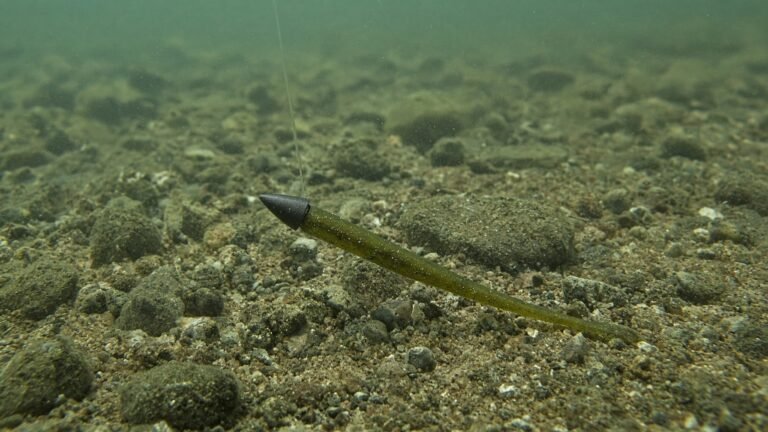
Keep reading: how to rig and fish a Texas rig, the perfect bait for a windblown bank, and summer bass fishing hour by hour, when wind and oxygen matter most.
This is one pattern out of the complete system. Bass Fishing Mastery is 86 pages of field-tested tactics, including the 15-situation playbook that tells you exactly what to throw when the conditions change on you mid-day. Get your copy — $17.
Tight lines,
— David

3 Comments