Summer Bass Fishing: The Time-of-Day Game
Summer bass don’t stop eating. They follow a daily schedule that’s surprisingly predictable: shallow in the first and last hours of daylight, deep and tight to structure in the heat of the day. Plan your fishing around that rhythm instead of fighting it, and summer becomes one of the most consistent seasons of the year. This page is part of our complete bass fishing system.
The Summer Clock
From roughly June through August, here is how the day breaks down.
Dawn to 9 AM: shallow, 1 to 6 feet
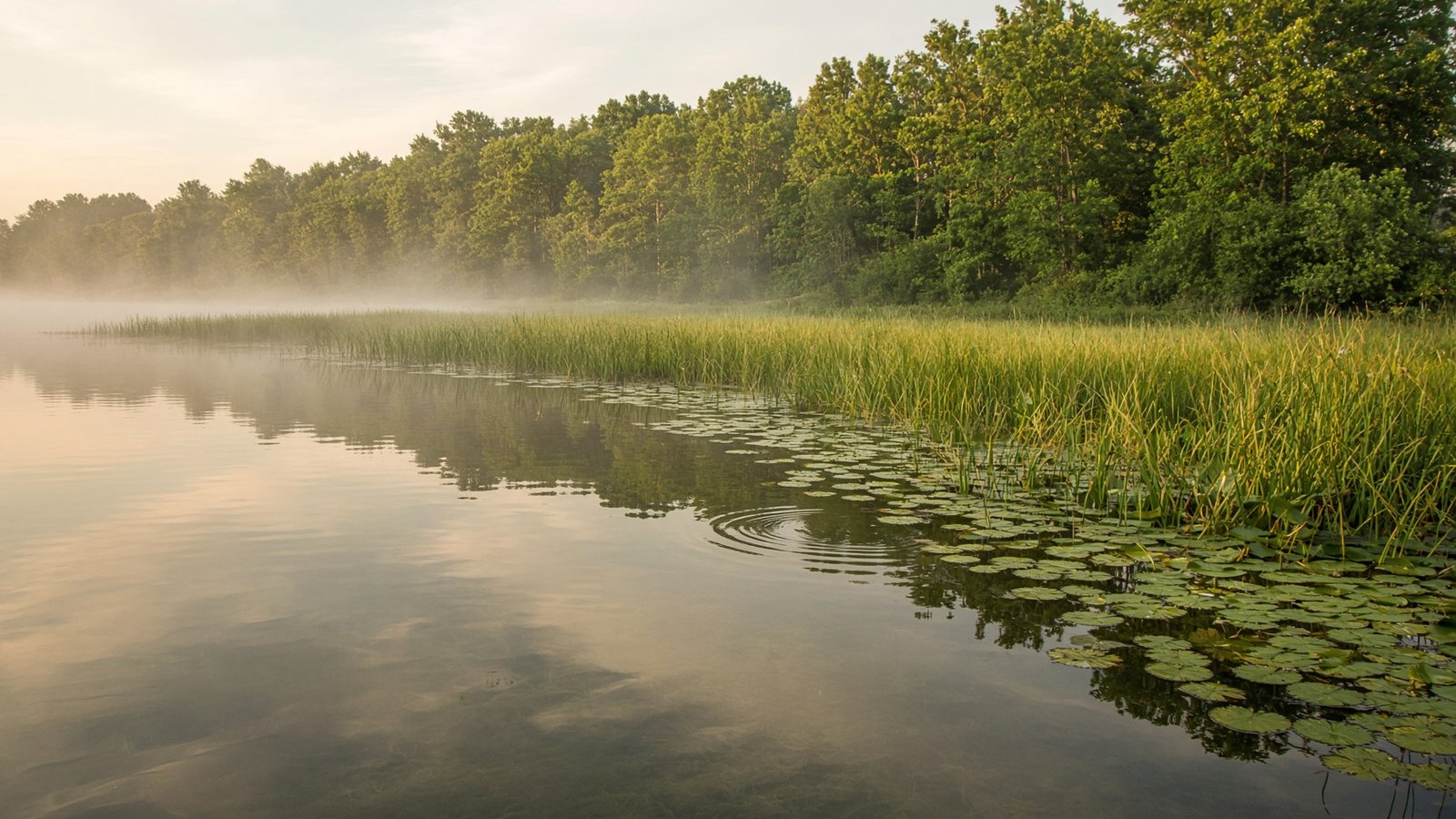
Bass feed shallow along grass edges, docks and rocky banks. This is topwater time: walk-the-dog baits, buzzbaits and hollow frogs, plus spinnerbaits and shallow crankbaits along the cover. The first 90 minutes of light often produce more fish than the next six hours combined.
9 AM to noon: transition, 4 to 12 feet
Bass slide deeper toward mid-depth structure and shaded banks. Switch to a spinnerbait, a medium crankbait or a swim jig. When a morning topwater bite ends abruptly, the fish moved deeper; follow them rather than keep throwing on the surface.
Noon to 5 PM: deep, 15 to 25 feet
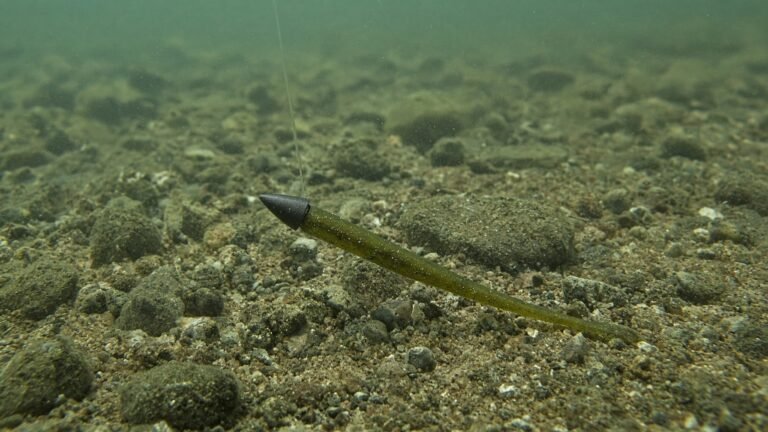
Midday bass hold on ledges, humps and creek channel edges. Fish a football jig, a deep-diving crankbait, a big swimbait or a Carolina rig. When you’re cranking, make contact with the bottom or structure on every cast; if you never snag, you’re not deep enough.
5 PM to dark: back shallow, 2 to 8 feet
The evening feeding window. Go back to the morning areas and grass edges with topwater, a spinnerbait or a swim jig. And don’t leave early: the last 30 minutes of light is a scheduled feeding period.
The Summer Ledge Pattern
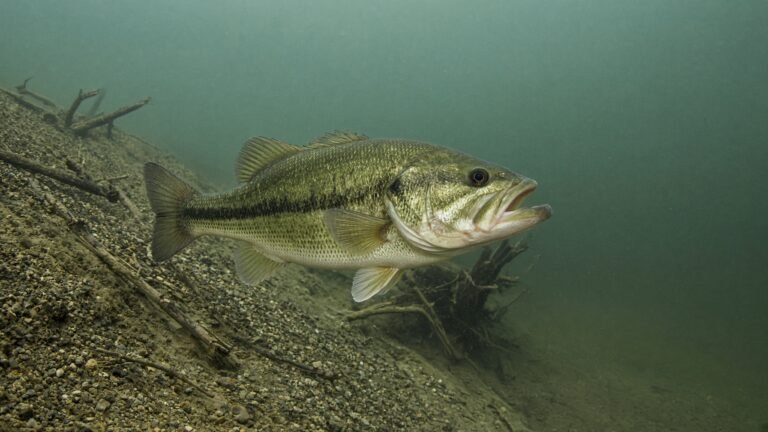
On most major Southern and Midwestern reservoirs, big schools of largemouth stack on creek channel ledges in 18 to 22 feet of water all summer. A ledge is where the bottom drops abruptly from a flat into the channel, sometimes 15 feet of depth in 10 horizontal feet. Bass sit there feeding on passing shad.
Find them by idling slowly along the 18 to 25 foot contour and watching your fish finder for fish and baitfish. Once you find a productive ledge, mark it on your GPS and fish it all season: a single good ledge can give up dozens of fish in a day.
Want the full summer playbook? Bass Fishing Mastery breaks summer down hour by hour, plus the night fishing system and the ledge pattern that produces some of the biggest bags ever caught.
Dead Calm, Bright Sun, Midday
This is the toughest summer situation. Light has pinned the fish to shade and depth, and the open water really is empty. Fish the shadows like structure: dock shade lines, the dark side of laydowns, bluff shade and deep grass edges. You have two honest options: dissect the shade with a slow bait, or go to the first deep drop with a jig. Also watch the sky. The pattern often breaks at the first cloud or breath of wind.
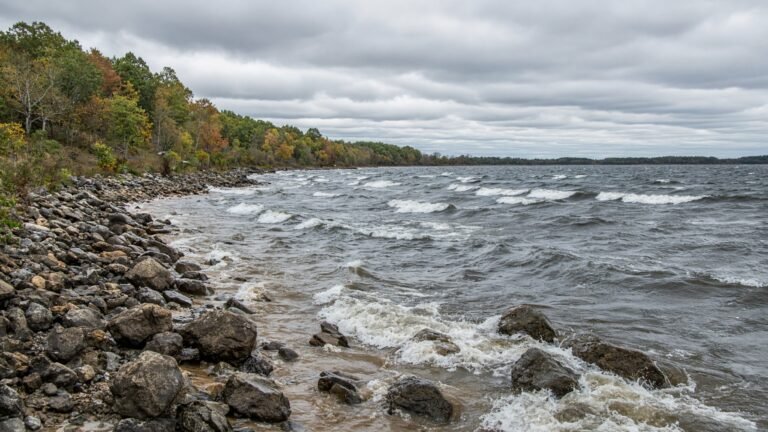
Any wind at all is worth chasing in summer. Wave action mixes oxygen into the water, and the windblown bank holds more of it than the calm side, so fish hold shallower and feed longer. We cover that pattern in why bass stack on the windblown bank.
After Dark: Summer’s Secret Season
When the heat drives most anglers off the water by mid-morning, a different game starts after sunset. Big bass that spent the day in 20 feet or more move shallow to feed, often on the same banks that were empty at noon. Surface temperatures drop 5 to 8 degrees overnight, crawfish and shad are most active, and boat traffic disappears.
- Lures: a large solid-black topwater, a black jig with a craw trailer for maximum silhouette, a large dark worm, a white buzzbait.
- Targets: lighted docks are the number one night target. Lights attract insects, insects attract shad, and shad attract bass. Fish the shadow line where light meets dark.
- Timing: darker nights, around the new moon, are better than full moon nights.
- Safety: wear a life jacket, run slowly, carry a charged phone, and know your route back before dark.
One caveat: night fishing works on clear water. If your lake is stained or muddy, darkness plus murk stacks two blindfolds on the same fish. On stained water, put your effort into dawn, dusk and midday instead.
Keep It Simple
You don’t need to fish all day in summer. Fish the first two hours, rest, and come back for the last two and into dark. If you only learn one rig for the midday deep bite, make it the Carolina rig or a Texas rig dragged along the ledge.
Go deeper with Bass Fishing Mastery. It’s the complete system this article comes from: an instant PDF download that works on your phone, tablet and computer. Nothing ships, and every future update is free.
Tight lines,
— David