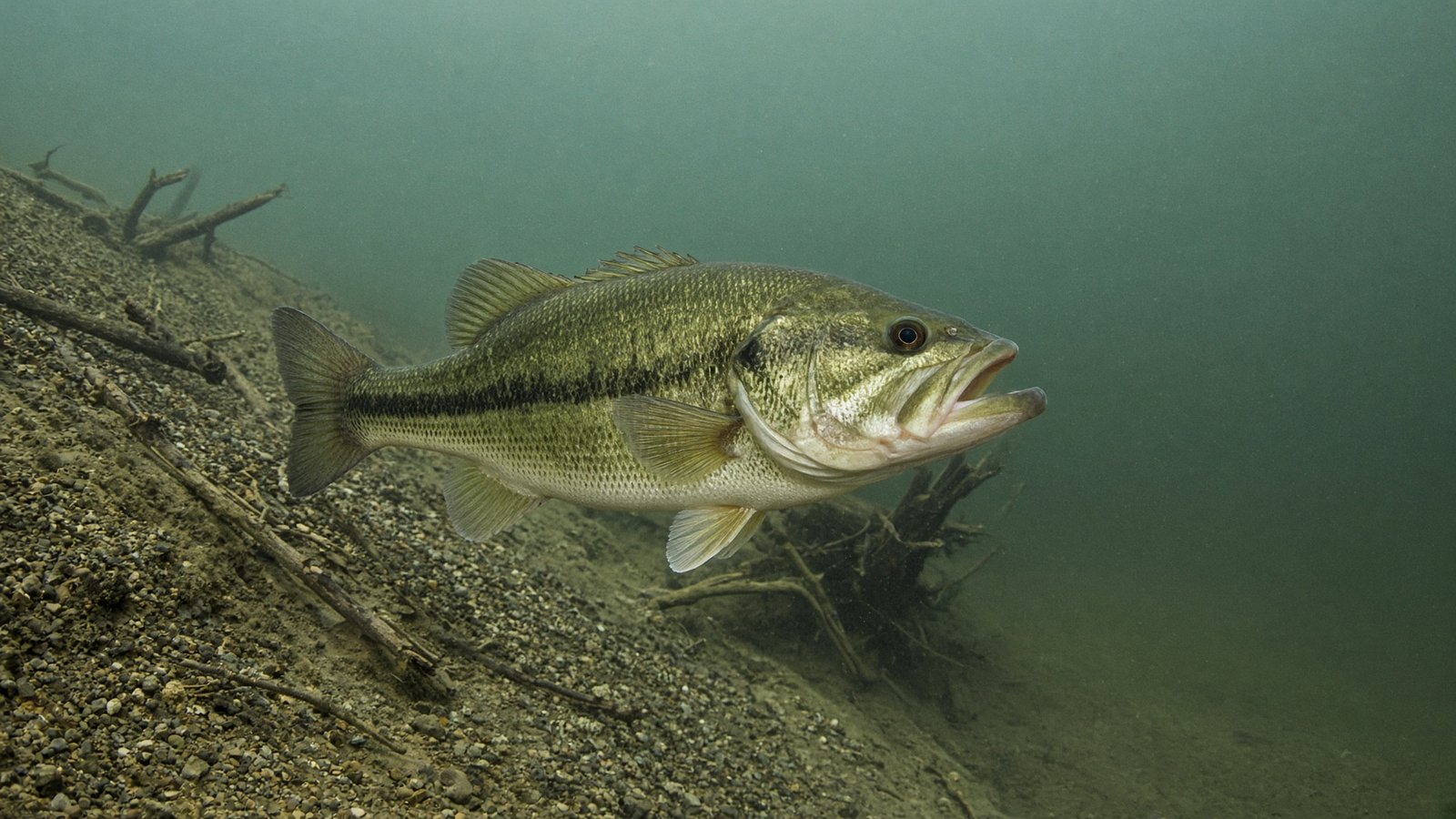
Where Pre-Spawn Bass Stage (And Where the Big Females Wait)
If you want a shot at the biggest bass of the year, the pre-spawn is the window. After a winter of slow metabolism, bass wake up hungry, and the large females feed aggressively to build reserves for the spawn. They also move along predictable routes, which means you can find them. This page breaks down where they stage and what to throw. For the full year, see the complete bass fishing system.
The Trigger Is Temperature, Not the Calendar
Pre-spawn is usually March and April, but the date means nothing on its own. Serious movement starts when the water reaches 53 to 55°F and accelerates toward 60°F. A $10 thermometer tells you which season your lake is actually in.
As the water climbs from the low 40s into the mid 50s, bass leave their deep winter structure and move toward spawning areas along predictable migration routes: creek channel edges, the tips of secondary points, and the transition areas where deep water meets spawning flats.
Where Pre-Spawn Bass Stage
- Secondary creek arm points in 8 to 15 feet of water. These are the first stops on the way in.
- Channel edges next to spawning coves, at 12 to 20 feet. The channel is the highway; the edge beside a cove is the rest stop.
- The first significant depth break below potential spawning flats. Fish hold on it before they commit to the shallows.
Fish the warmest areas first. Protected shallow coves warm fastest, and on a sunny afternoon the water can rise 3 to 5 degrees. Bass respond in real time, so as the day warms, work a little shallower.
What to Throw, by Water Temperature
50 to 58°F
- A jerkbait with long pauses. Jerkbaits suspend motionless, and bass hit them on the pause. In this range, pause 5 to 8 seconds. Below 50°F, stretch it to 8 to 12 seconds.
- A flat-sided crankbait. Its tight, subtle wobble looks more natural in cold water than a wide roll.
- A slow-rolled spinnerbait with a Colorado blade. The round blade turns slowly and puts out a lot of thump.
58 to 65°F
- A lipless crankbait ripped through early grass. Ripping it free of the vegetation triggers reaction strikes.
- A swimbait along grass edges.
- A medium-diving crankbait on points, and a jig on channel edges.

Want the whole spring mapped out? Bass Fishing Mastery covers the pre-spawn, the spawn and the post-spawn transition month by month, with lures and depths for every water temperature.
The Big Fish Pattern
This is the detail most anglers miss. The largest females don’t sit with the males in the shallowest staging water. They hold in the deepest part of the pre-spawn range, on 15 to 20 foot channel edges near major spawning coves.
That’s where big swimbaits and football jigs give you a real trophy chance. Trophy fishing means accepting fewer bites: big bass key on big prey, and a large swimbait or a football jig will be ignored by the small fish that eat everything else. Pre-spawn, from about February to April depending on your latitude, is one of the best trophy seasons of the year because the big females are at their heaviest and actively moving.
Fronts: Same Fish, One Zone Deeper
Spring weather swings hard, and pre-spawn bass move with it. Falling pressure ahead of a front is often the best fishing of the week. A cold front that spikes the pressure pushes bass tight to cover and shrinks their strike zone. They haven’t left: slow down by half, size down, and fish tighter to the best cover on the same structure.
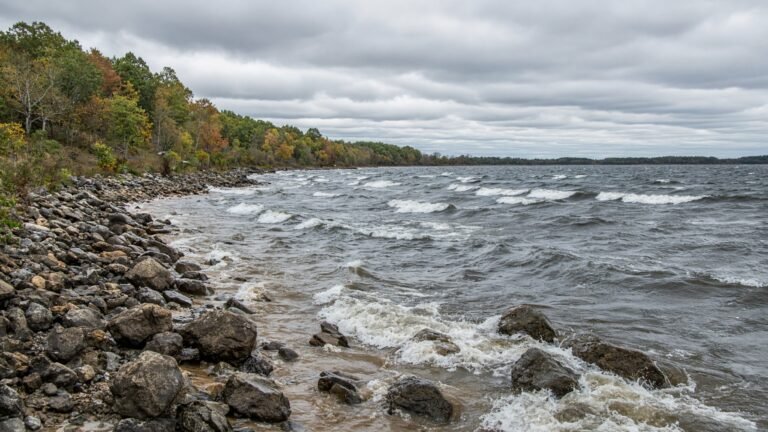
Wind is your friend in spring too. The bank that’s been taking wind has been collecting food, as we explain in why bass stack on the windblown bank.
Next: The Spawn
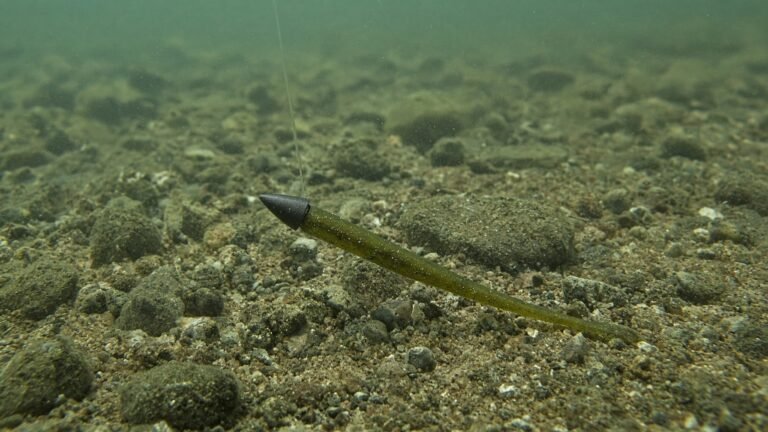
When the water reaches 65 to 75°F, the males move up to fan beds on hard bottom in 1 to 6 feet of water, and the pattern changes completely. Until then, fish the staging structure, fish the warmest water, and give the deep channel edges your biggest baits. If you’re still learning the basics, start with how to rig and fish a Texas rig: a lizard or creature bait on a Texas rig is a classic pre-spawn flipping bait.
Go deeper with Bass Fishing Mastery. It’s the complete system this article comes from: an instant PDF download that works on your phone, tablet and computer. Nothing ships, and every future update is free.
Tight lines,
— David
One Comment
Comments are closed.