Jig Fishing for Bass: Where to Put It, and Why
Jig fishing for bass is a location game first. The jig you tie on is decided by the cover in front of you, and the cover you choose is decided by the shape of the bottom underneath it. Get the spot right and a jig will out-produce almost anything else, which is how it earned its reputation as a big-fish lure. This is the short version of the method in our complete bass fishing system.
Bass Fishing Mastery: the complete system this article comes from, as an instant PDF. Get the guide — $17
Start With the Cover in Front of You
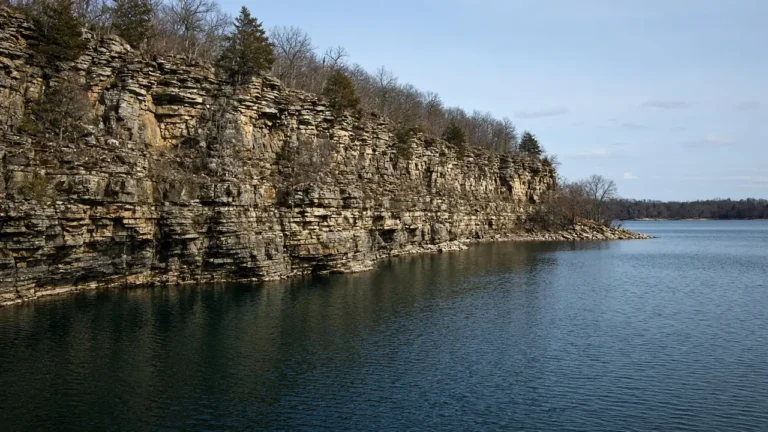
Two words make every jig decision simpler. Structure is the shape of the bottom: points, humps, ledges, drop-offs, channel edges and flats, none of which you can see from the surface. Cover is any object sitting in the water: rock, timber, grass, docks, brush piles and stumps. The best jig water in any lake is where the two overlap, and a rock pile on the tip of a submerged point with a creek channel running past it is the kind of place that holds fish in several seasons. Once you have found one, the cover tells you which jig to tie on.
| What you are fishing | Jig | Weight | Trailer | How to work it |
|---|---|---|---|---|
| Laydowns, docks, brush, grass to flip | Casting jig with a weed guard | 3/8 to 3/4 oz | Beaver-style or craw | Pitch past it, fall on slack line, short hops |
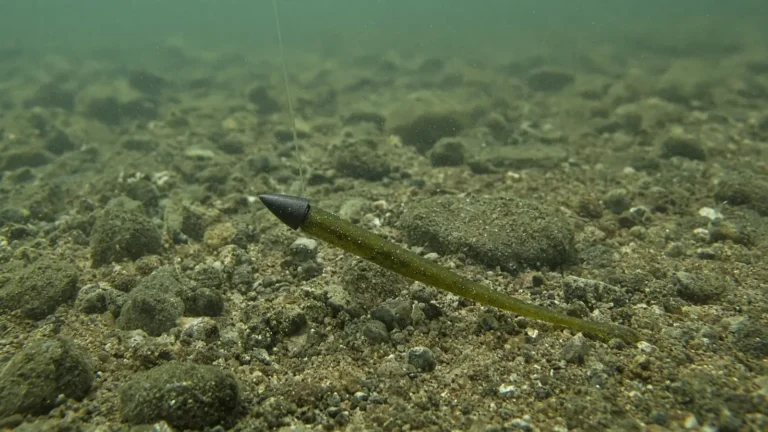
| Rock, gravel bars, ledges, deep structure | Football jig | 1/2 to 1 oz | Large craw or swimbait tail | Drag it slowly along the bottom |
| Grass edges, sparse weeds, visible cover | Swim jig | 3/8 to 1/2 oz | Paddle-tail swimbait | Swim it steadily through the water column |
| Clear or cold water, after a front | Finesse jig on spinning gear | 1/8 to 1/4 oz | Small craw or tiny swimbait | Crawl it, pause long, keep it in one place |
| Matted vegetation on the surface | Punch rig | 1 to 2 oz | Compact creature bait | Punch through, drop, lift and drop again |
Three Jigs Cover Almost Everything
You do not need a drawer of them. A casting jig, a football jig and a swim jig handle the great majority of water, and a finesse jig covers the tough days. The difference between them is the head and the weed guard, not the skirt. A football-shaped head stays upright on rock instead of toppling over. A flat or Arky head slides through wood better than anything else. A round head swims best, and a stand-up head is for finesse work.
Two details that quietly cost fish: trim the skirt so it extends about a quarter to half an inch past the hook bend, because a long skirt hides the hook, and check the trailer is not blocking the hook gap when you rig it.
The Trailer Is Your Speed Dial
The trailer changes how fast the jig falls and how much it moves on the bottom, which matters more than color.
- Cold water or fussy fish: a small craw trailer around three inches. Slow fall, subtle action.
- Warm water or heavy cover: a bigger beaver-style bait, four inches or more. Bigger profile, slower fall through the cover.
- Swimming in open water: a swimbait tail, so the jig reads as a baitfish instead of a crawfish.
Match trailer length to head size. A tiny jig with an enormous trailer looks like nothing in nature.
Getting It There: Pitch, Flip and the Slack-Line Fall
- Pitching, 15 to 40 feet. Hold the jig in your free hand, reel down to 18 to 24 inches of line from the rod tip, then swing the rod forward and release so the jig pendulums at the target. Feather the spool with your thumb to stop it on the spot. You want almost no splash.
- Flipping, 8 to 20 feet. Strip 8 to 10 feet of line into your free hand and use the rod to swing the jig straight to the target, releasing line to extend the reach. It is almost silent, which is what you need when fish are shallow and spooky.
- Then stop. Let the jig fall on completely slack line and watch the line. Most of the biggest fish taken on a jig come on that first unimpeded fall, and if your reel is already engaged you will never know it happened.
For the other half of cover fishing, a weedless soft plastic, see how to fish a Texas rig.
How to Pick the Spot on New Water
This is the part that decides your day, and most of it happens before you tie a jig on.
- Find structure on the map first. Points running into deep water, creek channel bends, ledges, humps. A satellite view or a contour map does this from the couch.
- Then look for cover on it. Wood, rock, grass, docks. The overlap is your target list, not the prettiest bank.
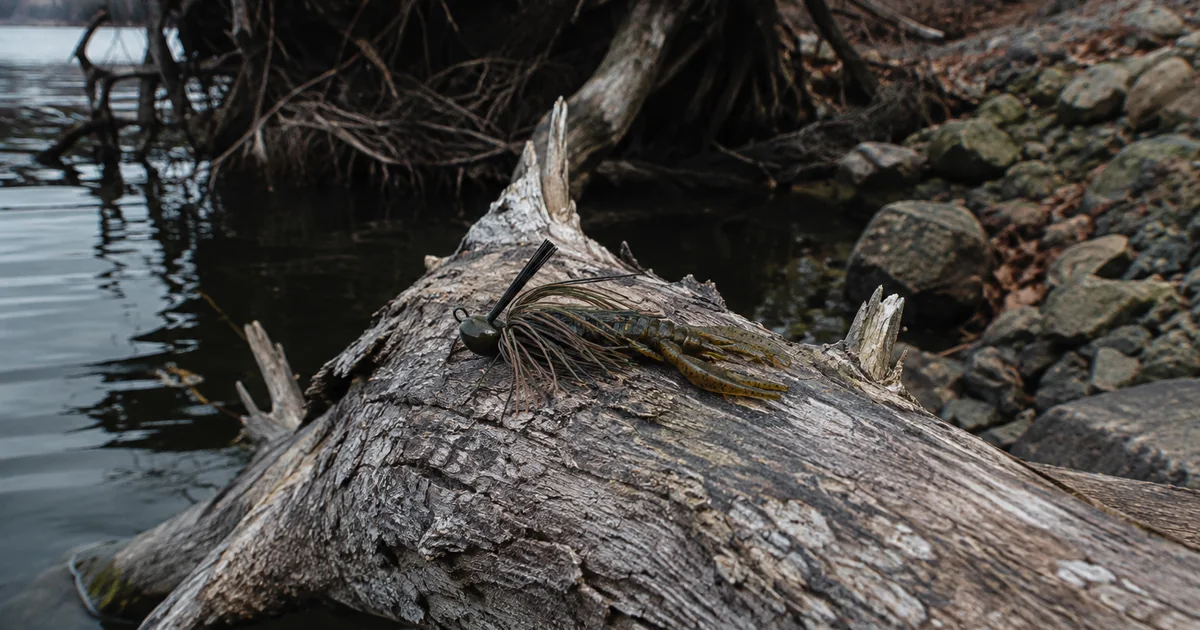
- Attack the complex end. On a fallen tree, start at the root ball, the deepest and most tangled part, where the biggest fish in that tree usually lives, then work out along the trunk.
- Follow the shade. On a bright day bass sit on the shaded side of everything, and shade moves. A dock holding fish on its north side at 8 AM holds them on the south side at 3 PM.
- Make the first cast count. The first cast to untouched cover is the highest-percentage cast of your day, because nothing has been alerted yet. Position before you throw it, not after.
- Turn one bite into a pattern. Note the depth, the cover type and the bottom you caught it on, then fish every place on the lake that matches. Two fish from the same kind of spot is a pattern, and the pattern is worth far more than the spot.
From our readers: what happened when a reader started with structure
A reader on our bass page tried this. In his words: “I used your advice on fishing structure and where to start ..second cast I caught a 5 pounder! That never would have happened if I was fishing structure the old way!!”
One angler, one day — but it’s exactly the mechanism above.
Jig Fishing Through the Year
| Season | Jig and depth | Where |
|---|---|---|
| Winter, below 45°F | Slow finesse jig, 20 to 40 ft on Southern reservoirs | Creek channel bends, main lake humps, bluff walls, noon to 4 PM |
| Pre-spawn, 58 to 65°F | Casting jig or football jig, 8 to 20 ft | Channel edges near spawning coves; the deepest part of the range holds the big females |
| Spawn, 65 to 75°F | Finesse jig around 1/4 oz, 1 to 6 ft | Hard bottom in protected pockets, worked slowly past the bed |
| Summer, midday | Football jig, 15 to 25 ft | Ledges, humps, creek channel edges |
| Fall, once it drops under 58°F | Casting jig, mid depth | Creek arms and flats, after the fast lures stop working |
| Summer nights | Black jig with a craw trailer, 1 to 6 ft | Shallow banks and lighted docks, for maximum silhouette |
Winter deserves its own plan, and winter bass fishing covers the deep schooling pattern in detail.
Reading the Bite and Setting the Hook
A jig bite is rarely a thump. It is a line that slides sideways, a line that jumps, or a sudden feeling of weight that was not there a second ago. Watch where your line enters the water, especially on the fall. When something changes, reel down to take the slack out, feel the weight of the fish, and then sweep the rod hard upward. A bass inhales a jig and often moves with it before it has fully taken it in, so an instant hookset pulls the lure away before the hook finds the hard roof of the mouth.
For flipping and heavy cover, run 17 to 20 lb fluorocarbon or 50 to 65 lb braid on a heavy, fast rod around 7 feet. For a finesse jig, drop to 6 to 10 lb fluorocarbon on spinning gear.
When a Jig Is the Wrong Tool
A jig is a bottom-contact lure for fish relating to something solid. When bass are suspended out over open water, or sitting in clear water staring at your lure without committing, a weight on the bottom is not the answer. That is the moment for a drop shot, which holds a small bait at a fixed depth in front of their faces for as long as you can stand it.
The Short Version
Pick the water before you pick the lure. Find where structure meets cover, start at the deepest and most tangled part of it, pitch past the target, let the jig fall on a slack line and watch for the line to move. Match the jig to the cover and the trailer to the water temperature. In that order, jig fishing for bass becomes the most dependable way to catch the better fish in your lake.
Frequently Asked Questions
Where should you throw a jig for bass?
Where the shape of the bottom meets something solid: a rock pile on the tip of a point next to a creek channel, a laydown on a steep bank, a dock with deep water under it, the outside edge of a grass bed. Start with the deepest, most complex part of the cover, which is where the biggest fish in that spot usually sits.
How do you know when a bass bites a jig?
Usually you see it rather than feel it. Let the jig fall on a slack line and watch the line itself: a sideways slide or a sudden jump upward is a fish. If you feel something odd instead, reel down until you feel the weight, then sweep the rod hard upward.
Is a jig good for bass in winter?
It is one of the few things that is. Bass school on the deepest stable structure, 20 to 40 feet on Southern reservoirs and shallower up North, and a slow finesse jig crawled through that school works when faster lures do nothing. Fish noon to 4 PM, and expect a cold bass to take 10 to 15 seconds to decide.
How long should you fish one piece of cover with a jig?
Three to five good casts from your best angle, then one from a different angle, then move. If an active bass lived there it would have shown itself. The exception is when you already know fish are there, which is the only time patience beats coverage.
Tight lines,
— David