Spinnerbait Bass Fishing: Pick the Blade First
Spinnerbait bass fishing comes down to one decision you make before the first cast: which blade. Blade shape sets how much flash and how much vibration the lure puts out, and that has to match the water color and the speed you intend to fish. Get it right and a spinnerbait becomes the fastest way there is to find fish, which is why it is the search tool in our complete bass fishing system.
Bass Fishing Mastery: the complete system this article comes from, as an instant PDF. Get the guide — $17
Pick the Blade Before Anything Else
| Water color | Blade | Depth and speed | Color |
|---|---|---|---|
| Muddy, under a foot of visibility | Single Colorado | Shallow, tight to cover, slow-rolled | Black and blue, solid black, or hot chartreuse |
| Stained, one to two feet | Colorado or Indiana | Mid depth, steady to slow | Chartreuse and white, painted blades |
| Lightly stained to clear | Indiana, or tandem | Any depth you can keep it turning | Chartreuse and white, or natural |
| Clear, two to five feet | Willow, or tandem willow | Faster, deeper on a long cast | Natural shad, hammered nickel blades |
| Night | Single Colorado | Shallow banks, 1 to 6 feet, slow | Solid black for silhouette, or white for flash |
If you only want to make the choice once, make it a tandem: a Colorado or Indiana blade up front and a willow behind. That gives you flash and vibration together and covers most conditions, which is why it is the standard setup.
Why a Blade Works at All
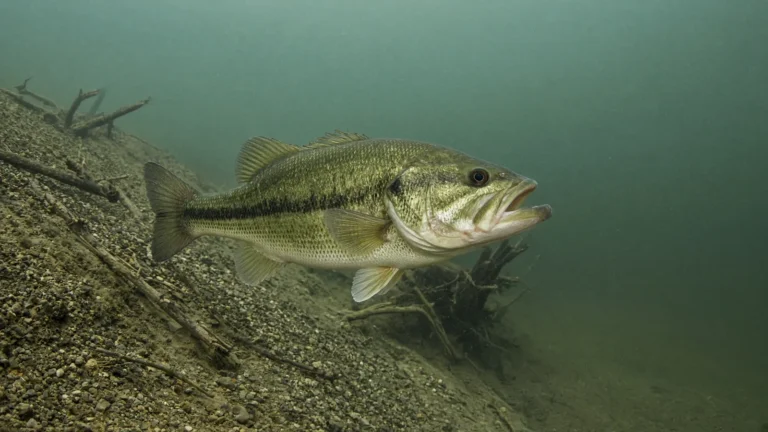
A bass has a lateral line running the length of its body, a network of sensory cells that reads pressure changes and vibration with real precision. It is how a bass feels a struggling baitfish or a crawfish scuttling over gravel in total darkness or zero visibility.
A spinning blade is built for that sense. The thump of a big Colorado blade reaches fish well beyond the range at which they could ever see your lure. That is the whole argument for a spinnerbait in dirty water: you are not hoping a bass spots it, you are setting off an alarm.
Speed: Slow-Roll or Burn
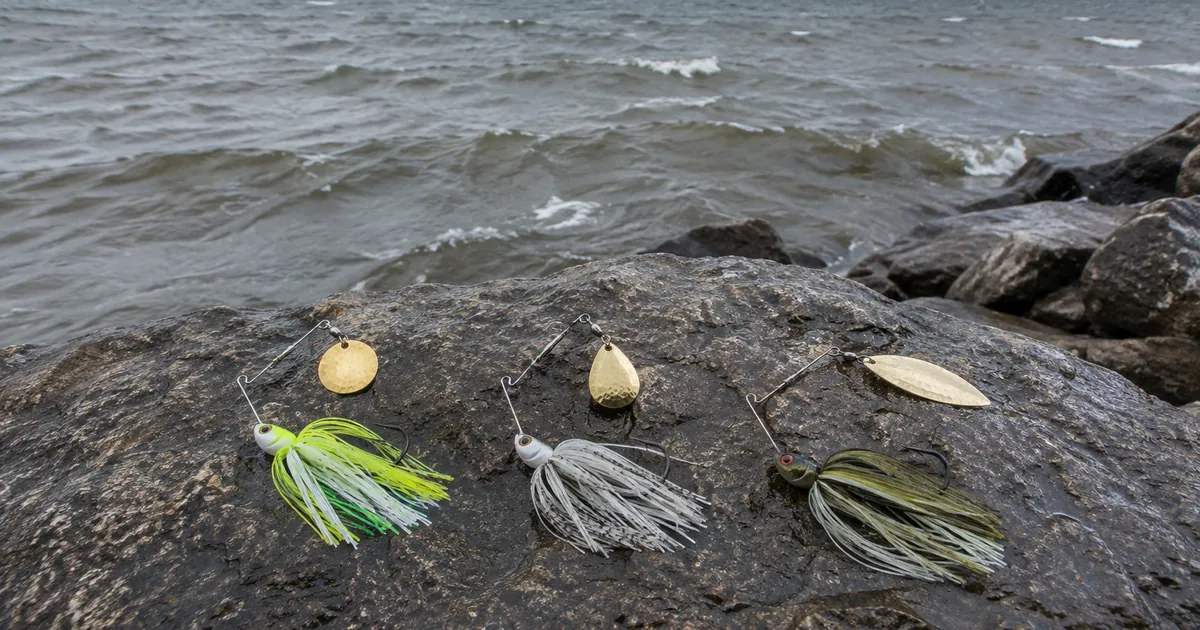
- Colorado is round and turns slowly, throwing off the most water displacement and the hardest thump. It still works at a crawl, which makes it the cold-water and dirty-water blade.
- Willow is long and narrow and spins fast and tight. Maximum flash, minimum vibration. It wants to move, so it belongs in clear water and on fast retrieves when bass are after running shad.
- Indiana sits between the two, with moderate flash and moderate thump. When you have no idea which to use, this is the honest answer.
One rule for cold water: slow your retrieve by about a third, then slow it by another third. A cold bass needs the lure in front of it for a long time before it commits.
Wind Is Not a Problem, It Is the Pattern
Light to moderate wind is some of the best spinnerbait weather you will get. Moving water activates bass, the chop hides your mistakes, and the bank the wind has been pushing onto has been collecting food all day. The calm bank behind you is a waiting room.
The highest-percentage version is a wind-driven point with cover on it. Bass stack there, and they are in a mood to react rather than inspect, so fish fast. Our guide to the windblown bank covers how to work one. Over about 20 mph, either go heavier for control or fish the first protected water down-current of the blown bank, where the wind is delivering everything it picked up.
Where to Aim the Cast
- Parallel, not across. Along a dock, a grass edge or a laydown, a parallel cast keeps the blade in the productive strip for the whole retrieve. A perpendicular cast crosses it in two seconds.
- Up the point and back down. Sit off the tip in deeper water, cast up shallower than you expect fish to be, and retrieve down the slope. One cast covers the whole depth range.
- Isolated cover first. A lone stump on a bare flat beats a bank lined with identical cover, because bass pile onto the one thing that is different.
- Past the target. Land the lure six to ten feet beyond the fish and swim it by, so the splash happens where it does no harm.
- Three to five casts, then move. If an active bass was there, it has already shown itself.
Worked example: a stained point at 56F with the wind on it
Say it is late March. The lake came up and stained after two days of rain, the surface reads 56°F, and the wind has been pushing onto a secondary point inside a creek arm all morning. That is about as good as a spinnerbait day gets.
- Blade. Stained water and water in the mid 50s point the same way: a round Colorado blade, slow-rolled. Maximum thump, minimum speed.
- Color. Stained water takes chartreuse and white. Save natural shad for clear water.
- Depth. Pre-spawn fish stage in 8 to 15 feet on secondary creek arm points. Keep the blade turning in that band rather than up on the bank.
- Angle. Cast up onto the point and bring the lure back down the slope, and run casts parallel to the edge rather than straight across it.
- Multiply it. When the second fish comes off the same depth on the same kind of point, stop guessing and fish every secondary point in the lake that looks like it.
One Spinnerbait Through the Year
- Pre-spawn, 50 to 58°F. Slow-rolled Colorado on channel edges and secondary points, 8 to 15 feet. One of the year’s best windows for a big female.
- Summer. Shallow at first light along emerging cover in 1 to 6 feet, then 4 to 12 feet through the morning as fish pull out, then shallow again from 5 PM to dark.
- Fall. The spinnerbait’s season. Bass push into creek arms and creek backs behind the shad and fast presentations win. Match the size of this year’s bait and lean on shad colors. See fall bass fishing for where the migration goes.
- After heavy rain. A Colorado blade slow-rolled tight to cover is the classic chocolate-milk answer, alongside dark plastics.
Two Tweaks Worth Making
- A trailer hook. A short-shank treble added to the main hook with a small loop of line catches the fish that nip the back of the skirt. Most useful in warm water, when bass slash instead of eating.
- A soft plastic trailer. A paddle-tail swimbait or a curly-tail grub on the hook adds bulk, slows the fall and gives a fish something to hold on to.
You can also bend the wire arm. A wider angle rides the blades higher for more lift; a narrower angle rides them lower, which helps when slow-rolling near the bottom.
When to Put It Away
A spinnerbait is a reaction lure, so it fails where reaction fails. The morning after a cold front, with a spiked barometer and a bluebird sky, bass sit tight against the densest cover with a strike zone the size of a dinner plate. That is a day for a finesse jig, a shaky head or a drop shot worked slowly, and our cold front guide lays out the adjustments. Deep winter is the same story: the fish are schooled on the deepest stable structure and want something that barely moves.
The Short Version
Read the water color, choose the blade that matches it, let the blade pick your speed, and fish the bank the wind is hitting. Cast parallel, land the lure past the target, give each spot three to five good casts, and when two fish come from the same kind of place, go find ten more like it. That is spinnerbait bass fishing in one paragraph.
Frequently Asked Questions
What blade should I use on a spinnerbait in muddy water?
A round Colorado blade, slow-rolled. It turns slowly and pushes the most water, which is what a bass hunting by lateral line needs when it cannot see. Go dark for silhouette or bright chartreuse for contrast, keep the lure tight to cover, and work it slower than feels right.
How fast should you reel a spinnerbait for bass?
Let the blade set the speed. A Colorado blade is built to turn at a crawl, so slow-roll it in cold or dirty water. A willow blade needs speed to spin properly, so move it faster in clear water when bass are chasing shad. In cold water, cut whatever speed feels right by a third, then cut it again.
Is a spinnerbait good for bass in cold water?
Yes, if you slow it down. A slow-rolled Colorado-blade spinnerbait is one of the three main pre-spawn lures from roughly 50 to 58°F, alongside a jerkbait and a flat-sided crankbait. Fish it along channel edges and secondary points in 8 to 15 feet, where bass stage before moving up.
Should I add a trailer hook to my spinnerbait?
Add one when fish are nipping the back of the skirt without getting hooked. A short-shank treble attached to the main hook with a small loop of line converts most of those short strikes, and it matters most in warm water, when bass are aggressive and slashing.
Tight lines,
— David