What Do Crappie Eat? Diet by Season and Size
Crappie eat small baitfish, insect larvae, zooplankton and small crustaceans, and they eat almost all of it by looking upward. The menu is the easy part of what crappie eat. The upward part is the part that changes your fishing, because it sets how deep you hang a bait. Our complete crappie fishing system starts with this behavior for exactly that reason, and this page breaks the diet down by season and by fish size.
Crappie Fishing Mastery: the complete system this article comes from, as an instant PDF. Get the guide — $17
The Three Things on the Menu
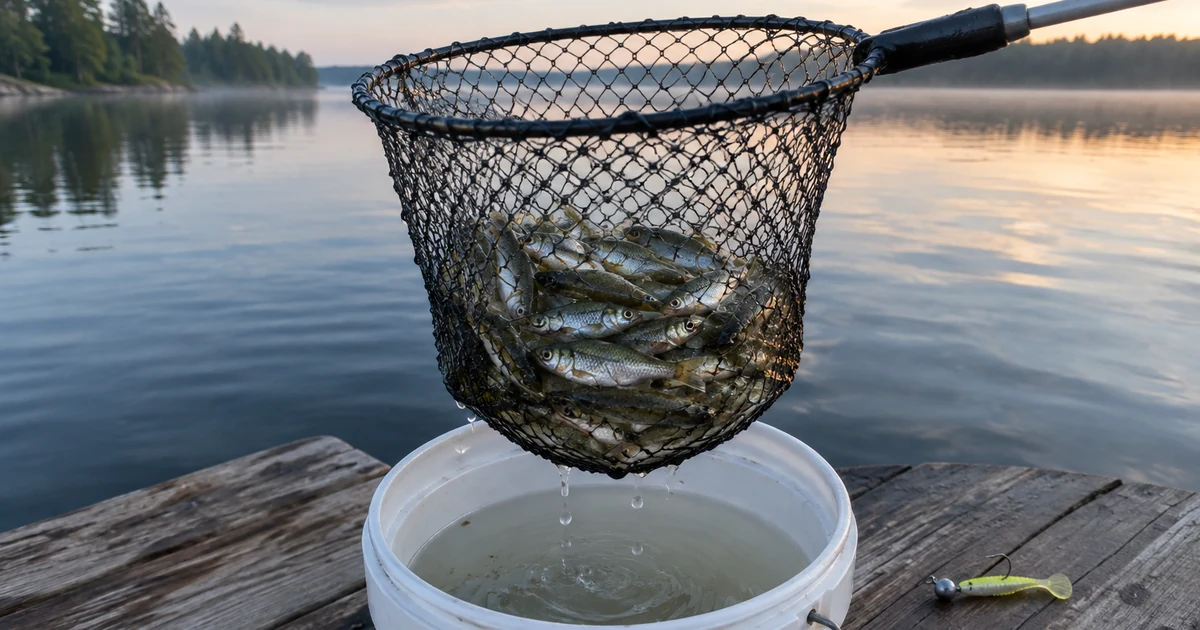
- Small baitfish. Shad in reservoirs, assorted minnow species in natural lakes and ponds. This is the main course for adult fish.
- Insect larvae and zooplankton. Especially important for smaller crappie and through winter, when meals are small and the fish move slowly.
- Small crustaceans and other invertebrates. The filler that keeps a school fed between pushes of baitfish.
That is a narrow diet by predator standards, and it explains why a small jig and a live minnow cover the species so completely.
They Feed Up, and That Sets Your Depth
A crappie’s eyes sit high on its head. Its natural motion is to look up, drift beneath prey and rise to take it. A crappie will come up two or three feet for a meal. It will almost never dive for one.
So a jig hanging three feet under a school might as well be in another lake. Two habits follow from that, and they are worth more than any lure in your box:
- When you are unsure of the depth, fish too shallow rather than too deep. Start high in the water column and step down.
- When you can see fish on a graph, put the bait level with them or a foot above, and leave it there.
How They Take It
Crappie are ambush-and-suck feeders, not chasers. A crappie hovers, eases forward and inhales the bait with a flare of its gills, often while the bait is sitting nearly still. That is why holding a jig motionless out-fishes hard jigging on most days.
It also explains the bite. Many crappie bites never register as a thump at all. The line ticks sideways, the float shivers instead of plunging, or the jig suddenly feels weightless because a fish rose, inhaled it and is now swimming up with it. Watch where your line enters the water and lift on anything different. A false strike costs you nothing.
Vision is the primary sense, but the lateral line fills the gaps. In muddy water or at night, a body that displaces water, such as a paddle tail or a marabou skirt, gives fish something to home in on beyond sight alone.
Diet by Fish Size
Schools sort themselves by year-class, and the smallest fish lean hardest on zooplankton, larvae and invertebrates. Keeper-class fish of 9 to 12 inches run mostly on baitfish, and the heaviest fish are the ones with the most forage available to them. Growth rate depends overwhelmingly on forage and water fertility, which is why fertile southern reservoirs with huge shad populations grow heavier crappie than cold, infertile northern lakes.
Two things that gives you on the water. Upsizing your bait filters for better fish, at the cost of fewer total bites. And if every fish you catch is a 6-inch paper, that school will not improve by lunchtime: go a foot deeper, then tighter to the cover, then leave.
Worked example: a fall creek arm at 63 °F
Say it is October, a creek arm reads 63 °F, and your graph shows a dense cloud of young-of-year shad at 7 feet over 12 feet of water, with a few arcs beside it.
- Size the lure to the forage. Young-of-year shad in fall are small, so a 1/16 oz head with a compact paddle tail matches the meal. A long body is the wrong size of prey.
- Set the depth above the cloud, at about 6 feet. The fish under that bait are looking up, so a jig at 10 feet is invisible to them.
- Pick color from clarity, not from the forage. A stained creek arm calls for a chartreuse combination; clear water calls for a translucent minnow pattern.
- If fish follow and quit, go smaller and stiller before you change color, then tip the jig with a small minnow and give the spot ten more minutes.
Diet by Season, and What to Tie On
Forage changes through the year, and so does how hard the fish chase it. Water temperature tells you which row you are on.
| Season | Dominant forage | Lure size and color |
|---|---|---|
| Winter, below about 50 °F | Zooplankton, larvae, small invertebrates; small meals | 1/32 oz, smallest bodies, hair jigs, glow finishes, or a small live minnow |
| Pre-spawn, mid-50s to low 60s °F | Baitfish, eaten hard to fuel the spawn | 1/32 to 1/16 oz, subtle colors, minnow-tipped when it is slow |
| Spawn, roughly 56-68 °F | Little real feeding; guarding males strike to defend the nest | 1/16 oz under a float, hovered beside cover: aggression, not appetite |
| Post-spawn, upper 60s to mid-70s °F | Light feeding while fish recover, then baitfish again | 1/32 oz, downsized and dead-sticked, fished in shade |
| Summer, above 75 °F | Shad and minnows suspended in the thermocline band | 1/8 oz deep, paddle tail or shad shape, natural in clear water |
| Fall, cooling 70s through 50s °F | Massive schools of young-of-year shad and minnows | 1/16 oz paddle tail or grub, chartreuse combination in stained water |
Notice what the right column does not do: it does not try to copy the forage species. Size tracks the forage, and color tracks water clarity. Our crappie jig color selector handles the second half, and the order stays the same all year: location, then depth, then speed, then size, then color.
Find the Food, Find the Fish
The most useful thing this diet tells you is where to stop fishing. Crappie live where they eat, and in reservoirs shad schools move constantly, so the fish move with them. A perfect brush pile at the perfect depth with no bait around it is usually empty. A bait cloud with a few arcs under it in the middle of nowhere is worth a stop.
You can read forage without electronics too. Dimpling minnows on a calm surface, bait flicking against riprap, diving birds over a creek arm: all of it says the same thing. From shore that matters even more, because you cannot idle around looking, so walk the route and let the visible bait pick your stop. Our bank fishing guide for crappie covers how to work that on foot.
Turn the Diet Into a Plan
- Take the water temperature and find your row in the table above.
- Go to cover at the depth that goes with that row, and look for bait before you make a cast.
- Size the lure to the forage, then set the color from clarity.
- Put the bait at the level of the fish or a foot above it, and hold it nearly still.
- Watch the line, and lift firmly rather than swinging, because a crappie mouth is thin and tears easily.
That sequence is covered end to end in how to catch crappie, which is the next page to read if you are building a system rather than fixing one trip.
The Short Version
Baitfish, larvae, zooplankton and small invertebrates, eaten from below by a fish that rises to its food and sucks it in without moving much. Match the size, let clarity pick the color, keep the bait above them, and look for forage before you look for cover. That is the whole practical value of knowing what crappie eat.
Frequently Asked Questions
What is a crappie’s main food?
Small baitfish: shad in reservoirs and assorted minnow species in natural lakes and ponds. Insect larvae, zooplankton and small crustaceans fill out the diet, and they matter most for small crappie and in winter.
Do crappie eat worms?
They will, but worms and crickets invite every bluegill in the county to strip your hook first. Use them when panfish variety is the goal and stick to minnows or jigs when you are targeting crappie.
Do crappie feed up or down?
Up. A crappie’s eyes sit high on its head and its feeding motion is to look upward, slide beneath prey and rise to take it. It will come up two or three feet for a meal and almost never drop for one.
What do crappie eat in winter?
Small meals. Zooplankton, insect larvae and small invertebrates carry a lot of the load, so the smallest jigs and small live minnows fished slowly out-produce anything larger.
Does matching the forage matter for lure choice?
It sets your size more than your color. Match lure size to the baitfish in the lake, then pick color by water clarity. Location, depth and speed still outrank both.
Tight lines,
— David