Bank Fishing for Crappie: Where to Go and How to Fish It
Crappie fishing is not a boat sport with a walking option. Some of the most consistent crappie anglers in the country fish from the bank on purpose, because for long stretches of the year the fish are within a cast of shore. The bank angler who understands access, timing and mobility quietly out-fishes a lot of the boats at the ramp. This is the shore program from our complete crappie fishing system.
Crappie Fishing Mastery: the complete system this article comes from, as an instant PDF. Get the guide — $17
The Bank Angler’s Real Math
A boat reaches everything. You reach maybe five percent of the lake. That sounds like a big handicap until you look at it another way: your job isn’t to reach more water. It’s to stand at the right five percent at the right time. And crappie come to you on a schedule:
- Pre-spawn through the spawn is the bank angler’s best season. Fish flood shallow, protected, walkable water for weeks. In tight back coves, being on foot can even beat a boat that can’t sneak in.
- Fall brings schools back within range as they follow the bait into the creek arms. More on that in our fall crappie fishing guide.
- Summer and winter pull fish deep. The bank game narrows to places where deep water comes close to shore: bridges, marinas, dams, steep banks and lighted docks at night. Harder, but far from hopeless.
The 6 Best Bank Spots for Crappie
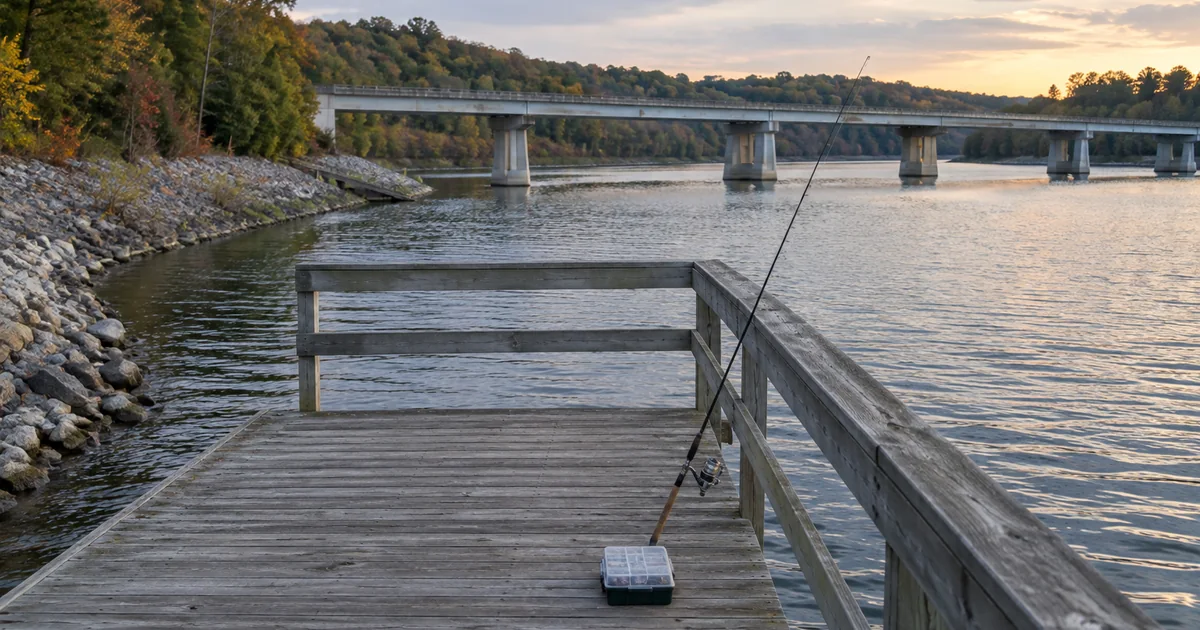
- Bridges and causeways. The best year-round bank platforms there are: deep water, vertical pilings, current that funnels bait, and legal public access at most crossings. A causeway with riprap and a channel underneath is a four-season spot.
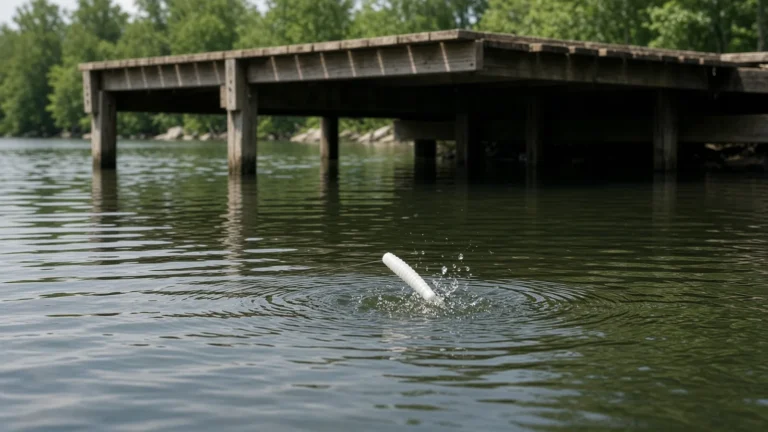
- Fishing piers and public docks. Many sit near brush piles that state agencies planted for shore anglers, and some are lighted at night. Check your state wildlife agency’s fish-attractor maps. It’s free, official homework that most bank anglers never do.
- Riprap banks and dam faces. They warm early in spring, hold bait, and give you access to deep water at the dam end.
- Marinas, where fishing is allowed. Shade, depth, brush and bait, with good winter concentrations.
- Creek inlets and back-cove pockets. The spawn-season goldmine, often easier to fish on foot than by boat.
- Park shorelines with visible cover. Laydowns, stake beds and weed edges within casting range.
Scout with satellite view and a lake map before you walk anywhere. Look for places where the contour lines pinch close to a walkable shoreline. That’s deep water within casting distance, the bank angler’s holy grail.
The Mobile Mindset
The biggest difference between bank anglers who catch crappie and those who don’t isn’t tackle. It’s movement. The angler camped in a chair with two rods is betting the day on the fish coming to him. Crappie school, and empty water is truly empty, so the fifteen-minute rule still applies on foot:
- Travel light. One rod, maybe two, a small tray box or sling bag, floats, jigs, maybe a small bait bucket. If packing up takes ten minutes you won’t move. If it takes thirty seconds, you will.
- Fish a route, not a spot. Link four to six access points into a walking milk run. Give each one a focused fifteen minutes, then walk.
- Cover the clock face. Shore anglers get stuck casting straight out. Crappie often cruise parallel to the bank, so cast up and down the shoreline, tight to your own bank’s cover, before you bomb one toward the horizon.
The 5 Best Techniques From Shore
1. The slip bobber
The bank angler’s number one tool. It delivers a jig or a minnow at an exact depth, at distance, and holds it in the strike zone. It’s the closest a shore angler gets to fishing straight down. Slide the stop knot deeper through the day until the fish answer. Full setup in our slip bobber guide for crappie.
2. Cast and count down
Your search tool along riprap, points and open banks. Count every fall, crawl the retrieve, and let the count that gets bit tell you the depth for the whole shoreline.
3. Dipping with a long rod
A 10 to 12 foot pole turns every walkable laydown, brush top and dock corner into vertical-jigging water. In spring coves it’s lethal: quiet feet, vertical drops, a few seconds per pocket.
4. Shooting from shore
Dock shooting doesn’t need a boat. Walkable docks, low walkways and overhanging trees all give way to the slingshot cast. The skill transfers completely.
5. Night fishing from banks, piers and bridges
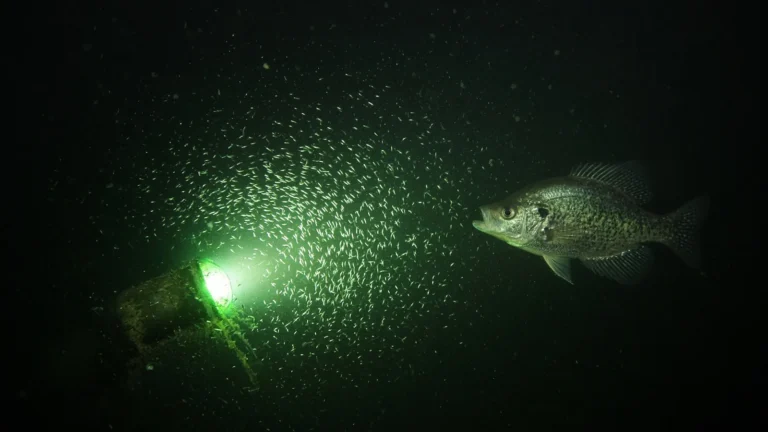
A submersible or floating light off a pier piling builds the same food chain it does under a boat. Summer bank fishing is hard at noon and outstanding at midnight. Our night crappie fishing guide covers the full system.
One more tool worth knowing: a castable sonar, a ball you throw out that graphs to your phone. For about a hundred dollars, it lets you see depth, cover and fish from the bank.
Bank-Specific Craft
- Stealth matters more on foot. You’re closer to shallow fish than any boat, with heavy footsteps and a tall silhouette. Walk softly, stay low near spawning pockets, keep your shadow off the water, and make the first cast count.
- Beat the snags. You can’t motor over to free a jig. Weedguard jigheads, light-wire hooks that bend free, and a float that keeps the bait above the junk save you money and a lot of retying.
- Respect access. Private land, posted areas and marina rules all count. Pack out your line and trash. A clean spot stays open.
- Keep a log. Bank patterns repeat with great precision: the same laydown, the same week, the same fish, year after year.
Small Water and Rivers
On a farm pond, everything compresses. The deepest water is almost always at the dam, and that’s your summer and winter spot. The shallow end with any cover is your spring and fall spot. Walk the bank and fish every piece of cover.
On a river, current overrides everything. Crappie sit behind things, out of the flow: the eddy behind a bridge piling, the slack water below a laydown, the inside of a bend, the mouth of a backwater slough. Fish the down-current side and let your bait drift toward the fish the way food would.
Your Bank Plan This Week
- Build a walking route of 4 to 6 access points for the current season, with at least one bridge or pier.
- Check your state agency’s fish-attractor map and fish the planted brush closest to public access.
- Strip your kit to one bag and one or two rods. If moving takes more than a minute, keep cutting.
- Give each stop fifteen minutes, cast both parallel and straight out, try at least two depths, then walk.
Tight lines,
— David