Circle Hooks for Catfish: Sizes, Drag and No Hookset
Circle hooks for catfish work on one condition: you stop setting the hook. The point curves back toward the shank, so when a fish takes the bait and swims off, the hook rides along and locks itself into the jaw hinge once the line comes tight, with no help from you. Your job is the size, the drag and the rod angle, and then steady pressure at the right moment. That trade is why they are the default hook across our complete catfish fishing system.

Catfish Fishing Mastery: the complete system this article comes from, as an instant PDF. Get the guide — $17
What the Shape Actually Does
A J-hook needs you. You feel the bite, you snap the rod, the point drives home. It hooks aggressively when it connects, but it needs your hands on the rod and good timing, and it gut-hooks more often if you wait too long.
A circle hook works the opposite way. Because the point is turned inward, it will not bite into the first thing it touches. It rides along the inside of the mouth as the fish moves away, finds the hinge at the corner of the jaw, and rotates in there under steady tension. Two things follow. First, far fewer deep-hooked fish, which matters every time you release one. Second, it suits the way catfishing is actually done: a baited rod sitting in a holder while you watch three others. You do not have to be holding the rod the instant a fish eats.
The rule that comes with it is absolute. Never strike a circle hook the way you would strike a J-hook. Yanking pulls the hook out of the mouth before it can turn into position, and it is one of the most common reasons anglers decide circle hooks “don’t work” for them.
Pick the Size From the Bait and the Fish
Size the hook to the mouth you are feeding and the bait you are hanging on it, then match the drag to the line on that reel.
| Target and bait | Circle hook size | Line and drag setting |
|---|---|---|
| Bullheads and small channels on worms or small cut pieces | #4 to #2 | 8 to 10 lb mono, about 2 to 3 lbs of drag |
| Average channel cats on cut bait, liver, stink or dough bait | #1 to 2/0 | 20 to 30 lb mono, about 5 to 10 lbs |
| Large channels and smaller blues on big chunks or live bait | 3/0 to 5/0 | 30 to 40 lb braid with a 30 lb leader, 10 to 13 lbs |
| Trophy blues on whole or large cut bait | 6/0 to 8/0 | 50 to 80 lb braid with a 50 to 65 lb leader, 15 to 20 lbs |
| Flatheads on live bluegill, shad or crawfish | 4/0 to 7/0, wide-gap style | 50 to 80 lb braid with a heavy leader, 15 to 20 lbs |
When you are between two sizes, take the bigger one. A catfish’s mouth is large for its body, and a hook that is too small gets swallowed deep far more often, or bends open on a heavy fish, than an oversized one costs you a bite. Match the bait itself to the species first, as covered in the best catfish bait for each species, then size the hook to it.
Set the Drag Before You Cast
The drag is what lets a big fish pull line under control instead of breaking something. Set it before you fish, because adjusting a knob with a fish on and adrenaline up never goes well.
- Pull line off the reel by hand, against a scale or a partner holding steady tension, while you turn the drag knob.
- Aim for the line to start giving at roughly a quarter to a third of its rated breaking strength.
- Test it: it should pay out smoothly under hard pressure, without locking solid and without slipping under a light pull.
Too tight, and a sudden run snaps the leader or pulls the hook before it has rotated. Too loose, and you spend the fight being towed around. Recalculate whenever you change line strength.
Where the Rod Goes
A circle hook needs the fish to load the rod, so the rod has to be set up to show that and to stay put while it happens.
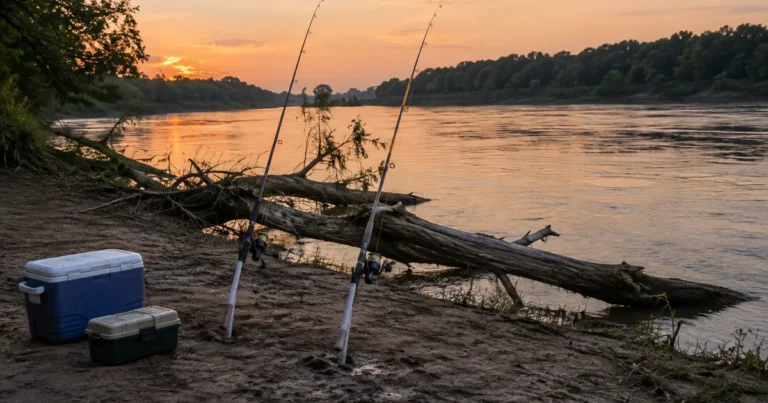
- In the holder: a spike pushed into the bank at roughly 30 to 45 degrees, tip up, so you can read the tip and still have your hands free.
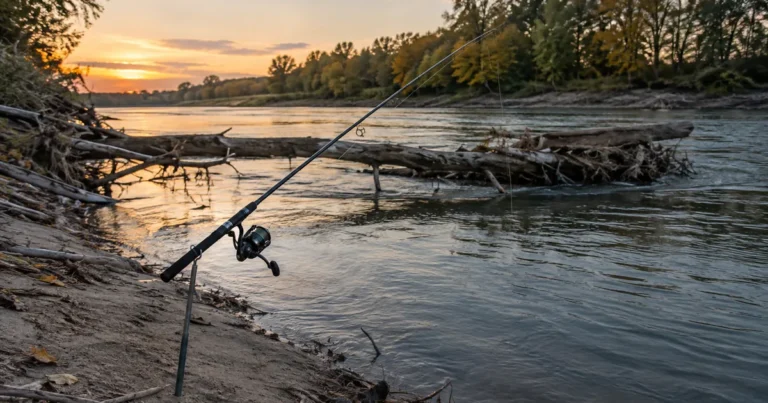
- In current: point the tip slightly downstream or across rather than straight upstream. That keeps the slack out, so a light bite shows as tip movement instead of disappearing into a belly of line.
- In the fight: keep the rod up at about 45 degrees. The flex absorbs the sudden moves and keeps steady pressure on. Pointing the rod straight at the fish sends every shock directly to your line and hook.
The Bite Sequence: Taps, Load, Reel
Catfish check a bait with their barbels before they commit, so the bite usually arrives in stages. Reading them in order is most of the skill with circle hooks.
- A steady bend in the tip is just current or wind. That is your baseline, and you need to know what it looks like at that spot.
- Light, repeated taps mean a fish is inspecting the bait. Watch it. Do not touch the rod.
- The tip loads and stays loaded. That is the fish moving off with the bait. Lift the rod and reel steadily into it.
- Then let it run. Big blues and flatheads will take line in hard, sustained bursts. Let the drag work and gain line back during the rests, not during the runs.
- Stay patient at the end. Most big fish are lost in the final seconds, when anglers lean on a fish that still has one burst left.
Worked example: a 2/0 circle hook on 30 lb mono for average channel cats
Say you are set up on the outside bend of a river for average channel cats, 3 to 10 lb fish, with cut bait on 30 lb mono. Here is the whole setting, start to finish.
- Hook: 2/0 circle, the top of the #1 to 2/0 band for average channels. Check the point on a thumbnail before you tie it on.
- Drag: a quarter to a third of 30 lb is roughly 8 to 10 lbs of pull. Set it at home or on the bank, before the first cast, not mid-fight.
- Rod: in a spike holder at 30 to 45 degrees, tip up, pointed slightly downstream rather than straight up into the current, so there is no belly of line hiding a bite.
- The bite: a few light taps come first. Leave the rod alone. When the tip loads and stays loaded, lift it out of the holder and reel steadily.
- The result: the hook slides to the corner of the mouth and locks there, which is also where your pliers can reach it in five seconds.
On 40 lb line that drag number becomes 10 to 13 lbs, and on 60 lb it becomes 15 to 20. Redo the math whenever you change spools instead of reusing an old setting.
The Rigs That Let a Circle Hook Do Its Job
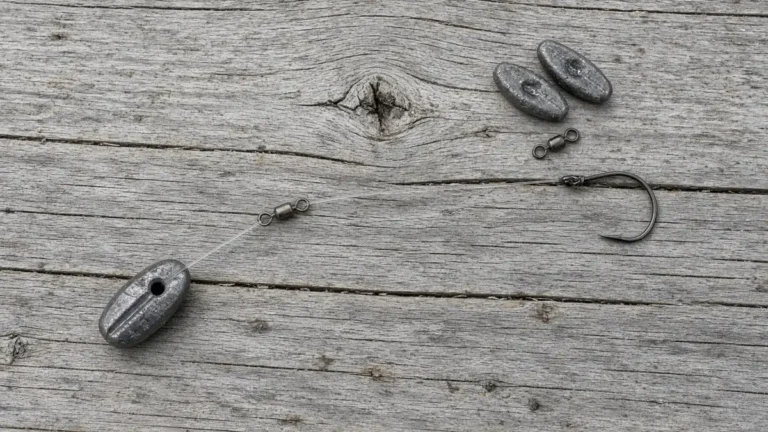
A circle hook needs a little freedom to slide before it catches, which is why rig choice and hook choice are the same decision. The slip sinker rig is the natural partner: the line runs through the sliding sinker, so a fish can pick the bait up and move off without feeling the weight, and that movement is exactly what rotates the hook home. Our step-by-step slip sinker rig guide has the build.
On a three-way rig in heavy current, the 18 to 24 inch leader does the same job by letting the bait and hook travel away from the fixed weight. On a slip float rig, the fish moves off against a float that offers almost no resistance. In every case, the principle is identical: anything that makes the fish feel a dead stop early works against the hook.
Sharp Points and the Two Mistakes That Cost Fish
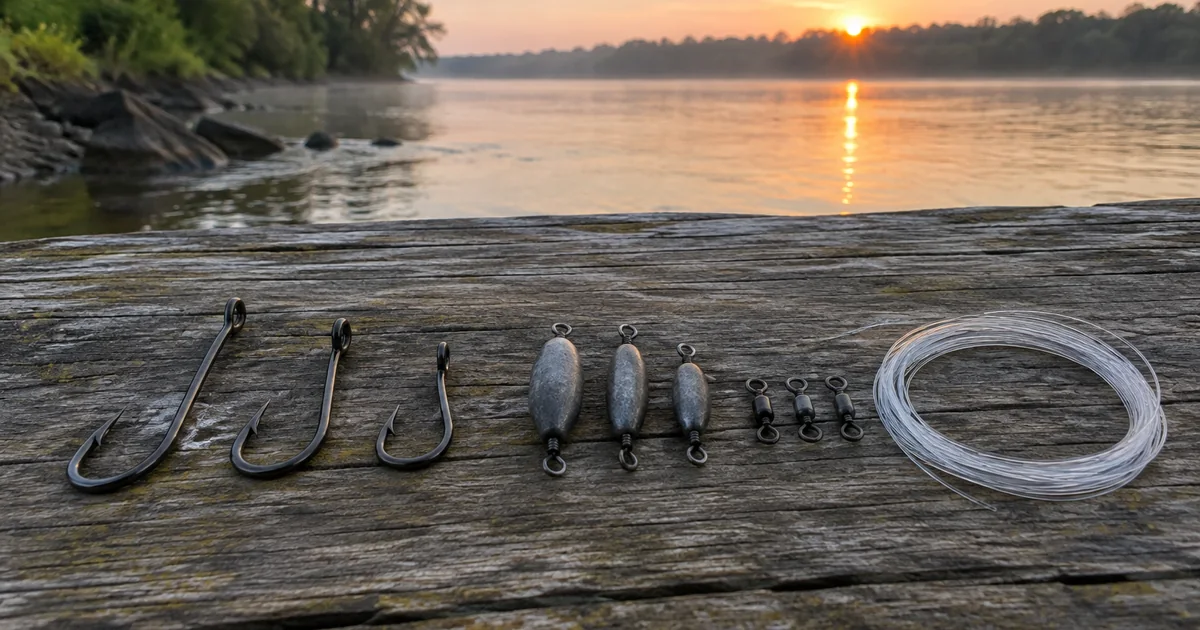
Drag the point lightly across your thumbnail before every trip. A sharp point bites in and refuses to slide. A blunt one glides straight across, and that one is costing you hooksets you will never know about. Sharpen it or swap it. Carry a hook file, and keep circle hooks in three sizes in the box so you are never forcing the wrong one onto the bait.
The two mistakes behind most complaints are simple. One is mismatching the hookset to the hook: steady reel pressure for circle hooks, a firm and timely snap for J-hooks, and never the two swapped. The other is a point that was blunt before the fish ever found it. Fix both and the rest of the system, covered in our guide to catching catfish, starts producing. Used the way the shape intends, circle hooks for catfish hook more fish in the corner of the mouth and lose fewer of them on the way in.
Frequently Asked Questions
Do you set the hook with a circle hook for catfish?
No. When the rod tip loads up and stays loaded, pick up the rod and reel steadily into the fish. The hook slides to the corner of the mouth and catches as the line comes tight. A hard snap usually pulls it out before it can rotate into place.
What size circle hook is best for channel catfish?
Use #1 to 2/0 for average channel cats on cut bait, liver or dough bait, and 3/0 to 5/0 for larger channels and smaller blues on bigger chunks or live bait. Drop to #4 to #2 for bullheads and small fish on worms.
Are circle hooks better than J-hooks for catfish?
Circle hooks are the better default, especially for fish you plan to release and for rod-holder fishing where you are not always holding the rod when a bite comes. They hook in the corner of the mouth far more often and cut gut-hooking sharply. A J-hook can bite more aggressively, but it needs you there to set it.
Why do I keep missing fish on circle hooks?
Three causes cover nearly all of it: a dull point, striking on the early taps instead of waiting for the rod to load, or yanking instead of reeling. Run the thumbnail test before every trip, and if the point slides across the nail instead of catching, sharpen it or change it.
How tight should the drag be for catfish?
Set it to release line at roughly a quarter to a third of your line’s rated breaking strength: about 10 to 13 lbs on 40 lb line, 15 to 20 lbs on 60 lb. Too tight snaps line or pulls the hook on a hard run, too loose and you never get control of the fight.
Tight lines,
— David