How to Rig and Fish a Texas Rig, Step by Step
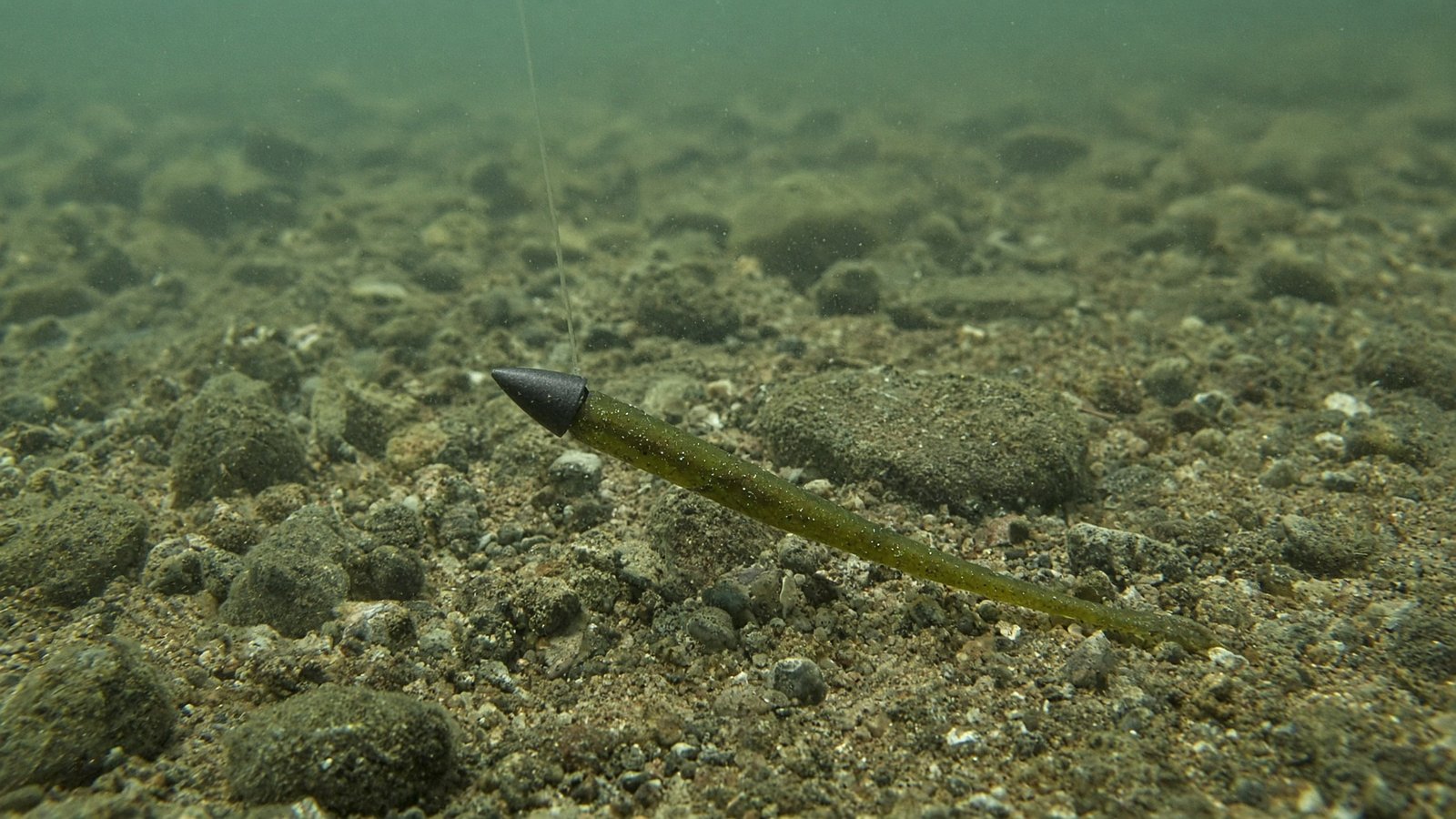
The plastic worm has caught more bass than any other lure in history, and the Texas rig is how most of those worms were fished. It’s weedless, it works in almost any cover, and it’s the one rig every bass angler should be able to tie with cold hands. It’s also the first technique in our complete bass fishing system, because it teaches you the two skills everything else builds on: feeling the bottom and recognizing a bite.
Here is the full setup, the retrieve, and the one mistake that costs more Texas rig fish than anything else.
What You Need
- A bullet weight, tungsten if you can. Tungsten is smaller than lead for the same weight, so it’s more sensitive and gives you better bottom feel.
- An offset EWG hook (extra wide gap), matched to the plastic.
- A soft plastic. A straight-tail worm in green pumpkin, watermelon red or black is the universal starting point.
- A bobber stopper if you plan to flip into heavy cover.
Step 1: Choose the Weight
Use the lightest weight that does the job:
- 3/16 oz for shallow, calm water and a slow fall.
- 3/8 oz for moderate depth or a little wind.
- 1/2 to 3/4 oz for deep water, heavy cover or strong wind.
Then decide pegged or free-sliding. Peg the weight against the bait with a bobber stopper when you’re flipping into heavy cover, so the weight and bait enter as one unit. Leave it free-sliding in open water: on the fall, the bait separates from the weight and flutters down more slowly and naturally, and many more bites come on that fall.
Step 2: Match the Hook to the Plastic
A hook that’s too small bunches the worm; one that’s too large snags weeds. The simple guide:
- 6-inch worm: 3/0 EWG
- 8-inch worm: 4/0
- 10-inch and up: 5/0
- 3 to 4 inch creature bait: 3/0; 4 to 5 inch: 4/0 to 5/0
Step 3: Rig It Straight and Weedless
- Slide the bullet weight onto your line, point first. Add a bobber stopper if you’re pegging.
- Tie on the hook with an improved clinch or Palomar knot. Wet the knot before you cinch it.
- Push the hook point about 1/4 inch into the center of the worm’s head and bring it out the side.
- Slide the worm up the shank to the eye, rotate the hook 180 degrees, and push the point back into the body so it sits just under the surface of the plastic.
- Hold the rig up and check it. The worm should hang perfectly straight. A bent or bowed worm spins unnaturally and gets fewer bites.
Hook point depth matters: it should sit just under the skin. Too deep and your hookset won’t penetrate; too shallow and the “weedless” rig snags constantly.
Step 4: Fish It
Cast beyond your target, not on top of it. Then watch your line as the rig falls, because a meaningful share of bites come on the initial fall. When the weight hits bottom you’ll feel slight slack or a small change in tension.
The primary retrieve is simple: lift the rod from 9 to 11 o’clock in a slow drag, reel up the slack as you drop the rod back to 9 o’clock, pause 2 to 4 seconds, and repeat. Vary the cadence. Sometimes a single sharp hop followed by a long pause is what triggers a reluctant fish.
Fish it near every piece of visible cover you can find: docks, rocks, logs and grass edges. Where structure meets cover, like a rock pile on the tip of a point, is where it earns its keep.
Want every rig dialed in? Bass Fishing Mastery includes a full rigging workshop: Texas, Carolina, drop shot, wacky and jig setups, with hook and weight charts for each.
The Mistake That Costs the Most Fish
Setting the hook the instant you feel a tap. A bass often picks up a plastic worm and moves with it before it fully engulfs it. Set on that first tap and you pull the worm out of its mouth before the hook ever touches the jaw.
When you feel something different, reel down to take out the slack, feel the weight of the fish, and then sweep the rod hard upward. On a Texas rig, the hookset is an upward sweep. And keep your hooks sharp: run the point across your thumbnail, and if it slides instead of catching, sharpen or replace it.
Your First Two Trips
If you’re new to this, keep it simple. Bring one 7-inch green pumpkin worm, a 3/8 oz tungsten bullet weight and a pack of 3/0 offset EWG hooks. Fish nothing else. Cast near every piece of visible cover on a pond, a public lake bank or a dock, let it sink, drag it slowly, and repeat.
The goal isn’t a fish count. It’s learning to feel the difference between hard and soft bottom, to detect a bite, and to set the hook on a soft plastic. After two trips of doing only that, you’ll fish every other technique better.
When you’re ready for more, the same wind that stacks bass on a bank makes the Texas rig even better: see why bass stack on the windblown bank. And if you’re heading out in spring, read where pre-spawn bass stage before your next trip.
Go deeper with Bass Fishing Mastery. It’s the complete system this article comes from: an instant PDF download that works on your phone, tablet and computer. Nothing ships, and every future update is free.
Tight lines,
— David


One Comment
Comments are closed.