What Do Bass Eat? Forage by Season, and Why
What do bass eat? Almost anything they can trap, but on most waters the real list is short: shad and other baitfish, crawfish, bluegill and other small sunfish, and whatever juvenile fish the lake produced that year. A largemouth is a pure ambush predator and an opportunist. Which of those meals is actually on the menu changes with the season, and that one fact decides the size, shape and color of what you tie on. The forage calendar below comes from our complete bass fishing system.
Bass Fishing Mastery: the complete system this article comes from, as an instant PDF. Get the guide — $17
The Short List on the Menu
- Shad. Threadfin and gizzard shad are the main forage on most large reservoirs. They school, they move, and bass follow them with real single-mindedness.
- Crawfish. A staple anywhere there is rock or gravel, and the specialty of smallmouth, which are crawfish specialists by nature.
- Bluegill and bream. Small sunfish, a primary food source for largemouth, and one of the two forage types a lake needs in quantity to grow big fish.
- Juvenile fish, including young bass. On lakes with dense bass populations, especially in the South, a lure shaped like a small bass is a recognised big-fish pattern.
Notice what is not on that list: nothing exotic. The plastic worm has caught more bass than any other lure in history and it imitates none of these. It works because it moves slowly and naturally, which tells you something useful: matching the forage matters most when bass are actively feeding on one thing.
How a Bass Finds and Takes a Meal
A bass does not bite the way you picture. It flares its mouth and gill covers to create an explosive vacuum that sucks prey in within milliseconds. That is why hookset timing matters: the fish has to engulf the lure before the hook can reach the hard, bony roof of its mouth.
Finding the meal uses two systems. Bass see color reasonably well and are especially sensitive to contrast and silhouette, and their vision peaks in low light, which is why dawn, dusk and overcast days are their most confident feeding windows. Alongside the eyes runs the lateral line, a strip of sensory cells down the body that reads pressure and vibration. It lets a bass feel an injured baitfish or a crawfish crossing gravel in total darkness or in water with no visibility at all.
Forage by Season
| Season and temperature | What they are eating | Lure shape and color |
|---|---|---|
| Winter, below 45°F | Very little. Short, intense windows, usually noon to 3 PM | Small, slow and deep. Nothing to match, it just has to hang in their faces |
| Pre-spawn, low 40s rising to 60°F | Feeding hard to build reserves. Baitfish, and crawfish as the rock warms | Jerkbaits, swimbaits, lipless cranks in 8 to 15 ft. Brown and orange, watermelon red |
| Spawn, 65 to 75°F | Barely feeding. Strikes are territorial, not hungry | Anything that looks like a threat over the nest, worked slowly and repeatedly |
| Post-spawn, around June | Males guard fry balls, clouds of juvenile bass, in 1 to 4 ft | Small baits that look like an intruder near the fry |
| Summer, 75 to 90°F | Shad schools passing deep structure by day, crawfish at night | Deep crankbaits and football jigs by day, dark craw-trailer jigs at night |
| Fall, cooling 70s into the 50s | Shad, almost exclusively, and shallow | Fast reaction lures in chrome and blue, white and silver, pearl |
| Below 52 to 55°F | The shad pattern ends abruptly | Back to jigs, Texas rigs and mid-running crankbaits |
Shad: The Rule That Decides Lure Size
From September into November bass enter their most aggressive feeding period of the year. Shad school heavily and move shallow, and bass go with them into the backs of creek arms, onto flats beside creek channels, and anywhere you can see baitfish. Find the bait and you have found the fish. Where that migration goes week by week is in our guide to fall bass fishing.
The trap is size. This year’s shad are often only 2 to 3 inches long, and bass locked on them will swipe at an oversized lure without ever eating it. If you are getting short strikes and swirls, do not change spots and do not change color. Change size. Dropping to a lure that matches the juvenile bait turns half-hearted swipes into solid hookups more reliably than anything else you can do in fall.
Crawfish: Spring, Rock and After Dark
- Spring. As pre-spawn fish move up along rocky banks and channel edges, brown and orange, watermelon red and green pumpkin with orange come into their own. Where those staging fish sit is covered in pre-spawn bass fishing.
- Rock, any season. A tube bait on an internal jig head falls in a spiralling, crawfish-like motion, which makes it the premier smallmouth lure and a good largemouth bait on rocky banks. A craw-shaped plastic doubles as its own rig and as a jig trailer.
- Night. Crawfish and shad are both at their most active after dark, and a black jig with a craw trailer gives a bass the maximum silhouette to find.
Worked example: the first hard cold snap drops the lake from 72F to 66F
Say the first real cold snap of fall takes your lake from 72°F down to 66°F over three days. The bait feels it before the bass do, and this is what follows.
- Shad gang up and slide toward creek arms, pockets and the backs of creeks. The bass go with them, which is the most reliable thing in fall.
- Find the bait, not the bank. Any area holding visible baitfish is a target. Diving birds are free scouts, and bait jumps away from the predator, so the bass are coming from the opposite side.
- Match the size. If this year’s shad are 2 to 3 inches, a magnum lure gets slapped and not eaten. Short strikes mean change size, not spot.
- Match the color. Shad patterns take over: chrome and blue, white and silver, pearl.
- If you find dying bait flickering on the surface, stay all day. A hard front can kill threadfin shad in numbers, and bass gorge on the easy calories.
- For the biggest fish, put something under the surface chaos rather than in it. The largest bass often sit just below a feeding school or patrol its edges.
Bluegill and Young Bass: The Big-Fish Forage
Trophy bass have trophy requirements, and one of them is forage. A lake that produces fish over 7 or 8 pounds needs abundant deep structure nearby and large populations of bluegill and shad to feed on. Big bass key on big prey, which is the logic behind the whole large swimbait category, the 10 to 12 inch ribbon-tail worm and jigs with oversized trailers. If you want one big fish instead of a dozen average ones, feed it something worth a big predator’s effort, and accept one to three bites in a day.
Reading the Bait on the Water
- Watch the birds. Terns, gulls and herons find baitfish before you do, and following them to feeding activity is a legitimate tactic.
- Watch which way bait jumps. Baitfish flee away from the predator, so if the splashes run one way, the bass are behind them.
- Read the bait on sonar. Clouds of fuzz are baitfish. Bait pushed down near the bottom usually means bass are already feeding on it from above, and bait scattering in all directions means they are being attacked right now. Target the depth of the bass, not of the bait.
- Look under the chaos. When a school is busting on the surface, something that sinks below the frenzy often finds the biggest fish in the group.
- No bait, no bass. A perfect-looking brush pile with nothing around it is usually just furniture, and that matters most in fall and winter.
What It Changes in Your Tackle Box
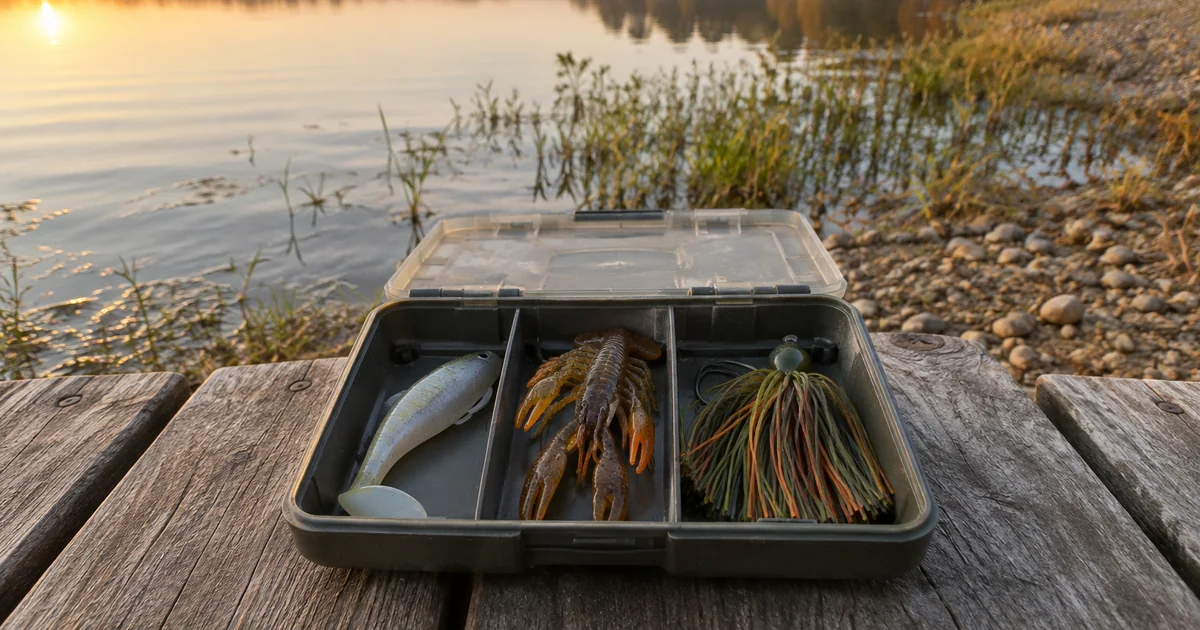
You do not need a lure for every creature in the lake. You need three silhouettes and the discipline to match the size.
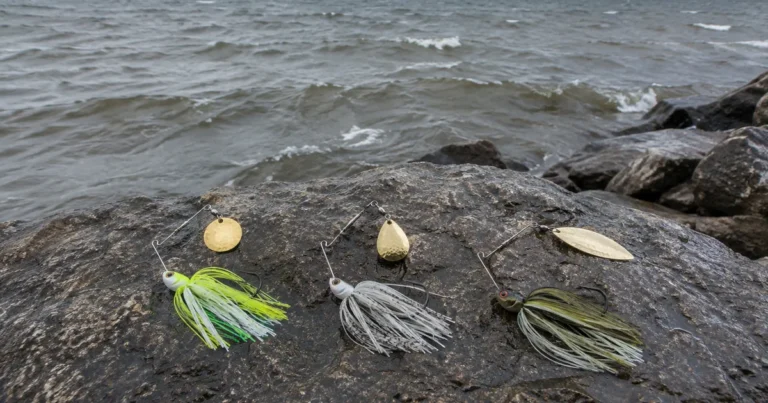
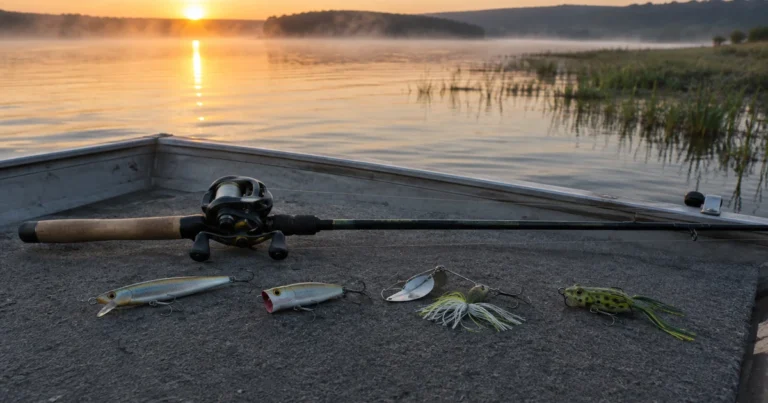
- A baitfish shape: paddle-tail swimbait, lipless crankbait, jerkbait or spinnerbait in shad colors. Fall and pre-spawn.
- A crawfish shape: craw plastic, tube, or a jig with a craw trailer, in brown, orange, green pumpkin or black and blue. Spring, rock, night and cold water.
- A nothing-in-particular shape: the plastic worm, which draws every kind of strike precisely because it imitates no single prey item.
Then let clarity set the color and the local bait set the size. More habits like these are in our bass fishing tips.
The Short Version
Shad in fall and winter, crawfish in spring and on rock, bluegill and juvenile fish for the biggest fish, and almost anything the rest of the time. Read your water temperature, work out which of those is the current meal, then match its silhouette and, above all, its size. That is really all there is to knowing what bass eat and what to do about it.
Frequently Asked Questions
What is the main food source for bass?
On most large reservoirs it is shad, threadfin and gizzard, and where those shad go in fall and winter largely decides where the bass are. Crawfish and bluegill are the other two staples, and a largemouth is an opportunist that will take almost anything it can trap.
Do bass eat crawfish?
Yes, and for smallmouth they are the specialty. A bass can feel a crawfish scuttling across gravel with its lateral line before it ever sees it. That is why craw-shaped plastics, jig trailers and tubes catch so well around rock, and why brown and orange tones are a spring staple.
Why will bass not eat my lure when they are busting bait on the surface?
Because they have locked onto one size of prey, and it is almost always smaller than what you are throwing. Downsize hard and match the profile of the bait, cast past the school and work the lure through it and around its rim, and move fast, because a surface blitz closes in minutes.
Do bass eat other bass?
They do. After the spawn, male bass guard dense clouds of their own fry in 1 to 4 feet of water, and on Southern lakes with heavy bass populations, lures that imitate a juvenile bass are a recognised trophy pattern. Big bass key on big prey.
Tight lines,
— David