When Do Crappie Spawn? Water Temperature Decides
Crappie spawn when the water warms into the 56 to 68 °F range, with the peak in the low 60s. That is the real answer, and it is why the same event happens in February in Florida and June in Minnesota: the thermometer decides, not the calendar. Our complete crappie fishing system is built on that number. This page gives you the trigger, the timing and the water to search.

Crappie Fishing Mastery: the complete system this article comes from, as an instant PDF. Get the guide — $17
The Temperature That Triggers It
Three bands run the whole spring, and surface temperature puts you in one of them in ten seconds.
- Mid-50s to low 60s °F: pre-spawn. Fish stage just outside the spawning areas, grouped and feeding hard.
- Roughly 56 to 68 °F: the spawn, peaking in the low 60s. Males on nests, females sliding in and out.
- Upper 60s to mid-70s °F: post-spawn. Spawned-out fish retreat toward summer water.
Take the reading every trip, in the same place, and note which way it is moving. The direction matters more than the number. Three sunny days in late winter pull staging fish noticeably shallower and turn them aggressive. A hard cold front pushes them back down and tightens their mouths. Fish the warming trends and you are fishing the front edge of the spawn.
Timing by Latitude
The temperature band is the same everywhere. Only the week on the calendar changes.
- Florida and the Deep South: first waves can go as early as February.
- Mid-South and lower Midwest: April is the classic window, when lakes run 55 to 65 °F.
- Upper Midwest and the North: May into June, roughly four to six weeks behind the southern reservoirs.
Wherever you live, work from the thermometer rather than the map. A cold April holds a lake at 50 °F and the spawn simply waits.
Water Temperature, Phase and Where to Look
| Water temperature | Phase | Depth and where to search |
|---|---|---|
| 40s to low 50s °F | Late winter staging | 10-20 ft: creek mouths, channel bends, points, deeper brush on the migration route |
| Mid-50s to low 60s °F | Pre-spawn | 4-10 ft: the last cover outside the coves, cove-mouth brush, channel swings, docks in 6-12 ft |
| 56-68 °F, peak low 60s | Spawn | 1-6 ft: protected hard bottom beside cover; 8-10 ft in gin-clear water, inches deep in stained water |
| Upper 60s to mid-70s °F | Post-spawn | 8-15 ft: the staging structure in reverse, plus dock shade |
Inside the spawn itself there is a second layer: males move up first and shallowest, while the bigger females hang one break deeper until conditions are right.
Where They Actually Nest
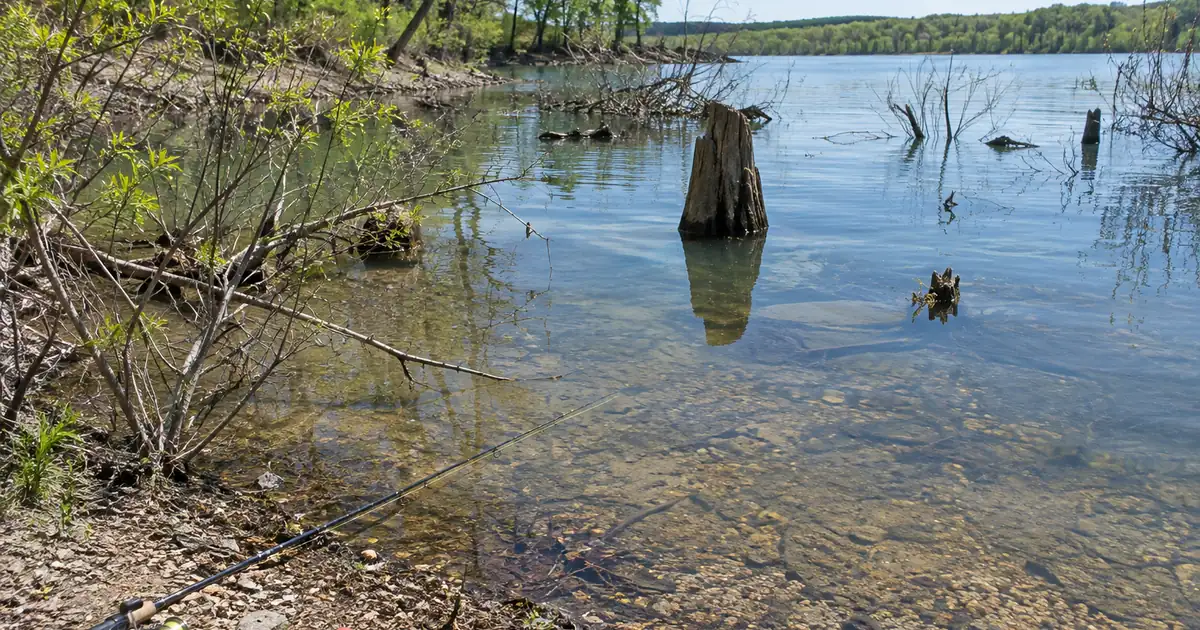
Males fan saucer-shaped nests on firm bottom, which means gravel, sand, clay or chunk rock, in protected water typically 1 to 6 feet deep and tucked against cover: reeds, buck brush, stumps, laydowns, dock posts. Water clarity shifts the depth. In clear lakes they may nest 8 to 10 feet down. In stained water they can be shockingly shallow.
Search the backs of protected coves and the pockets off creek arms, and give the northwest corners first look. They catch the most sun and the least cold wind, so they warm first and they spawn first.
Worked example: a cove at 65 °F in the second week of the spawn
Say the main lake reads 62 °F and the back of a protected northwest-facing cove reads 65 °F, in what looks like the second week of the spawn. Those three degrees decide your morning.
- Fish the warm cove first. Work 1 to 4 feet with a small jig under a fixed float, pitched past buck brush, stumps and dock posts and drawn back to them.
- Count what you catch. All small aggressive males means you are on the nests, and the bigger females are one break out, in roughly 6 to 10 feet on the first cover outside the pocket. Switch to a slip float set at 5 or 6 feet for those.
- Then move to a cove that still reads 60 °F. It is a week behind, so expect pre-spawn fish in 4 to 10 feet rather than spawners in 2 feet.
- If a front knocks the warm cove back to 60 °F before your next trip, check 8 feet before you check 2 feet. The fish did not leave the area, they dropped one zone.
Why It Comes in Waves
The spawn is not one event. Different parts of a lake warm at different rates, so it rolls through in waves over several weeks. Follow the warmth around the lake instead of giving up when one pocket goes quiet.
Pre-spawn fish also yo-yo with the weather. Warm afternoon and they slide up onto the flat. Cold front and they drop back to the adjacent break. Same fish, hundred-yard shift. If Tuesday’s spot is empty on Friday, check deeper first, then shallower.
How to Fish Each Phase
- Staging, 40s to low 50s °F: slow vertical presentations and slow trolling along the creek channels. Work them from the main lake inward, checking every bend and junction.
- Pre-spawn, mid-50s to low 60s °F: almost everything works, which makes this the right two weeks to learn a new technique. Focus on the 4 to 10 foot zone next to spawning banks.
- Spawn, low 60s °F: a small jig under a fixed float, hovered beside visible cover, keeps the bait in a guarding male’s strike window indefinitely. Dipping the pockets with a long pole does the same job. Move quietly and cast beyond the target, because the moment you can see them they can see you.
- Post-spawn, upper 60s and up: back off to the 8 to 15 foot structure next to the spawning areas, slow down and fish shade.
If the fish are where they should be and nothing bites, run the diagnostic in our crappie troubleshooting guide before you change lures. Nine times out of ten the answer is depth, not color.
After the Spawn, Read This Instead
The weeks after the spawn break more anglers than any other stretch of spring, and they deserve their own plan rather than a paragraph here. The retreat route, the shade trick and where the schools end up are covered in where crappie go after the spawn.
Keep the Fishery Good
Those aggressive shallow males are guarding the next generation, so selective harvest matters most right now. Keep a reasonable meal, release the biggest females and do not strip one small spawning pocket bare. Check your state agency for current seasons and limits before you go.
The Short Version
Read the surface temperature, place your lake in one of three bands, and fish the depth that goes with it. If you are new to the species, start with how to catch crappie and come back to this page each spring. Mid-50s means staging outside the coves, low 60s means nests in 1 to 6 feet of protected water, and upper 60s means the retreat has already started: that is the practical answer to when crappie spawn.
Frequently Asked Questions
What water temperature do crappie spawn at?
Crappie spawn in a band of roughly 56 to 68 °F, with the peak in the low 60s. Pre-spawn staging starts in the mid-50s, and by the upper 60s the first waves are already finished and pulling back out.
What month do crappie spawn?
It depends on latitude, not the calendar. The first waves can go in February in Florida, April is the classic window across the mid-South and lower Midwest, and May into June is normal in the upper Midwest and the North. Northern lakes run roughly four to six weeks behind southern ones.
How deep do crappie spawn?
Usually 1 to 6 feet, on firm bottom in protected water. In gin-clear lakes they may nest 8 to 10 feet down, and in stained water they can be shockingly shallow, sometimes barely covering their backs.
How long does the crappie spawn last?
Weeks, not days. Different parts of a lake warm at different rates, so the spawn rolls through in waves. Northwest corners and the backs of protected coves go first, and the cooler main-lake pockets can be two or three weeks behind them.
Where do crappie go right after spawning?
They reverse the migration in stages, starting with the same structure they staged on before the spawn, usually 8 to 15 feet. Dock shade holds a lot of them for the first few weeks.
Tight lines,
— David