Slip Bobber Rig for Crappie: Setup, Depth and Bite Detection
If you could only rig one thing for crappie, the slip bobber would be a strong pick. It fishes a jig or a minnow at an exact depth, at any distance, and holds it in the strike zone for as long as you want. It’s the bank angler’s best friend and the most versatile rig in crappie fishing. Here’s how to set it up and fish it the way it’s meant to be fished, as part of our complete crappie fishing system.
Crappie Fishing Mastery: the complete system this article comes from, as an instant PDF. Get the guide — $17
When the Slip Bobber Wins
- Fish holding at a known depth, away from the boat or the bank.
- Spooky, clear-water fish you can’t approach closely.
- Wind drifting a bait along cover.
- Live minnows, anywhere.
The magic is simple. A fixed bobber limits you to fishing about as deep as your rod is long. A slip bobber slides on the line against a stop knot, so you can set the bait at 2 feet or 18 feet and still cast normally. The stop knot reels right through the guides.
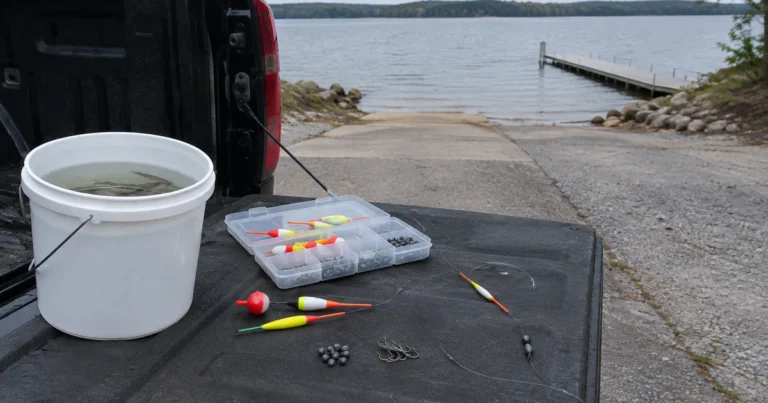
How to Rig It, Bottom to Top
- Jig or hook at the end of the line. A 1/16 oz jig is the default. For live bait, use a light-wire Aberdeen hook in #2 to #6.
- Split shot, only if you’re using a plain hook. For a minnow, put it 8 to 12 inches above the hook to keep the minnow down and the float properly loaded.
- Slip float threaded on the line.
- Bead above the float, so the float can’t slide over the stop.
- Bobber-stop knot on top. Slide it up or down to set your depth.
Pick a Float That Barely Floats
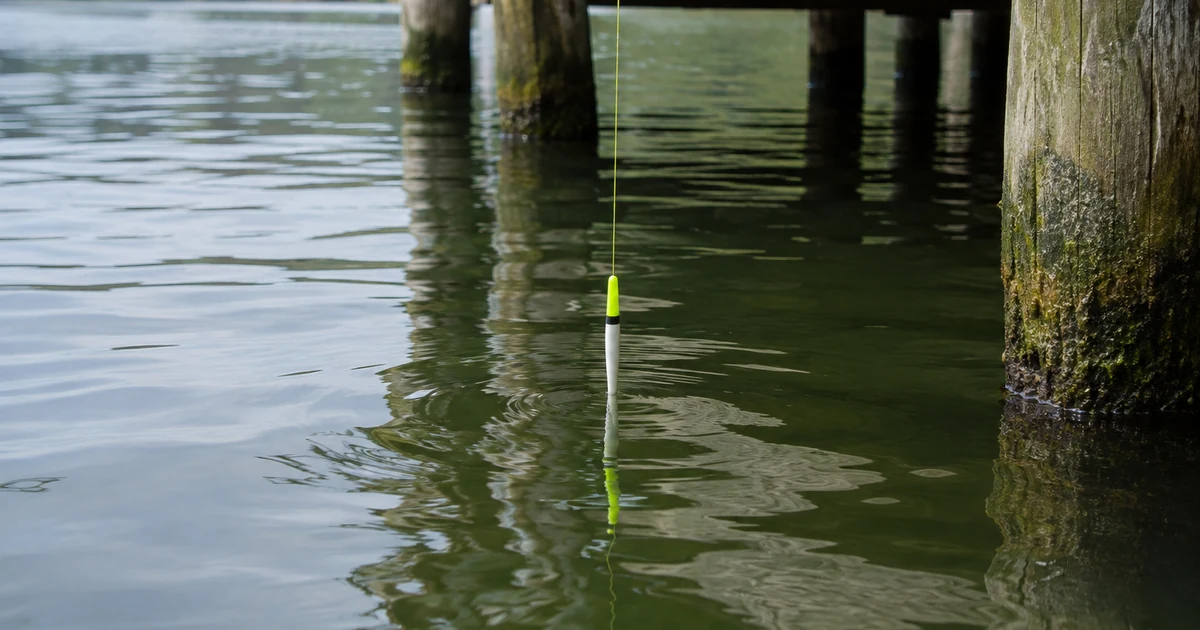
This is the rule most anglers break. The float should be just buoyant enough to hold up the bait. A crappie should be able to sink it with no resistance. If the float is too big, the fish feels it and spits the bait. If waves keep dragging your float under, it’s too big or you have too much bait. Buy several sizes and match the float to the jig or minnow you’re using.
Light line matters too. Four to six pound hi-vis monofilament lets the bait sit naturally and lets you see what the line is doing.
Setting the Depth: At or Just Above the Fish
Crappie feed up. Their eyes sit high on the head, and they’ll rise two or three feet to take a bait but almost never dive for one. So set the stop knot so the bait rides at the fish’s depth or just above it. Never below.
If you’re marking fish, set the bait a foot above the marks. If you’re fishing blind, use the seasonal depth as your first guess: 4 to 10 feet around spawning areas in pre-spawn, 8 to 15 feet on structure after the spawn and in fall, deeper in summer.
How to Fish It, Step by Step
- Set the stop knot so the bait rides at or just above the fish.
- Cast past the target, then draw the float back to it. That way the splash lands away from the fish, not on their heads.
- Let the bait settle straight down under the float.
- Work it with patience. Let it drift in the breeze, or twitch and pause, moving a foot at a time along the cover edge.
- No bites after a proper soak? Move the stop knot a foot deeper or shallower before you move spots. Depth changes catch more fish than lure changes.
The Bites You’re Missing
The classic plunge is only one kind of bite. Crappie often suck in a bait without moving much, so strike on any of these:
- The shiver: the float trembles instead of going under.
- The tilt: the float leans or changes its angle.
- The lie-flat: the float falls over on its side. A fish lifted the bait and took the weight off it.
- The slow cruise: the float slides sideways across the surface.
Assume every irregularity is a fish. A false strike costs you nothing.
With a minnow, count a slow two after the float goes under before you lift. Crappie often grab a minnow, turn and swim before they fully eat it. With a jig, lift right away.
Either way, the hookset is a firm lift, never a swing. Crappie have a paper-thin mouth that tears easily.
Where the Slip Bobber Shines
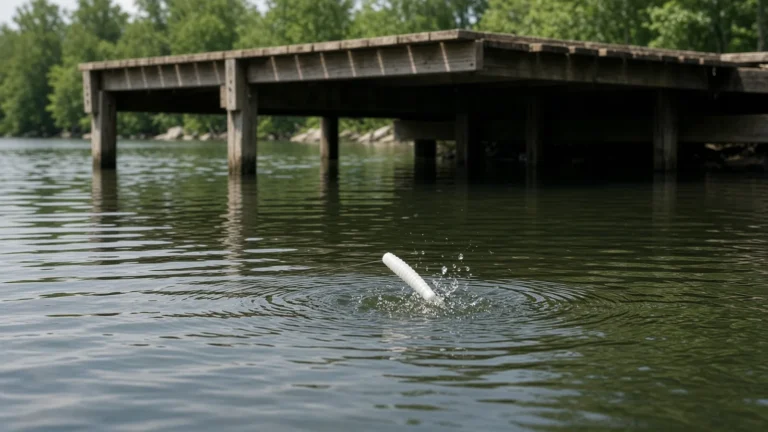
- Dock edges. Suspend a jig or minnow along the shade line. When the fish are tucked deep under the walkway, dock shooting takes over.
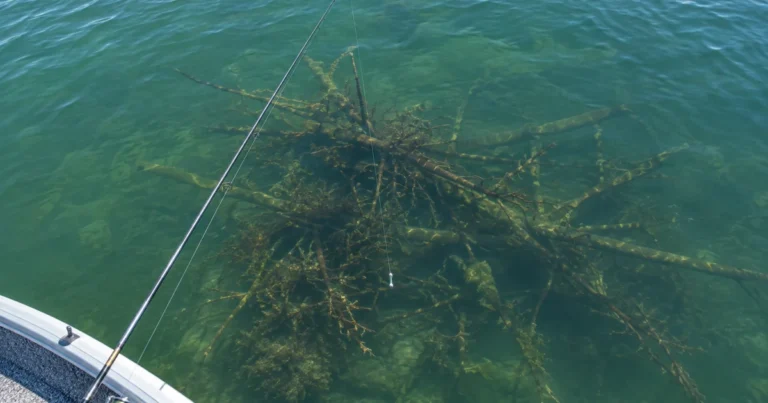
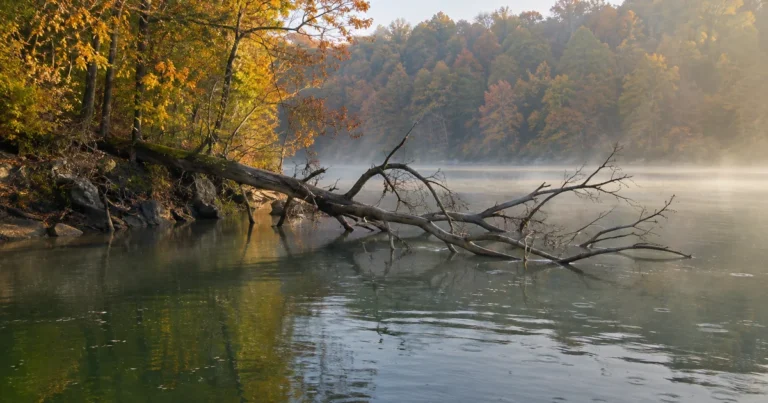
- Brush piles and laydowns, with the bait hovering just over the top of the cover.
- Staging structure after the spawn, when post-spawn crappie are moody and need a bait held still in front of them.
- Bridges, piers and riprap from shore. This is the closest a bank angler gets to fishing straight down. More on that in our bank fishing guide for crappie.
Three Mistakes That Kill the Rig
- A float that’s too big. The crappie feels the resistance and lets go.
- One depth all day. The stop knot is a dial, not a setting. Keep adjusting it.
- Casting straight onto the school. Cast past and bring the bait to them.
Tight lines,
— David