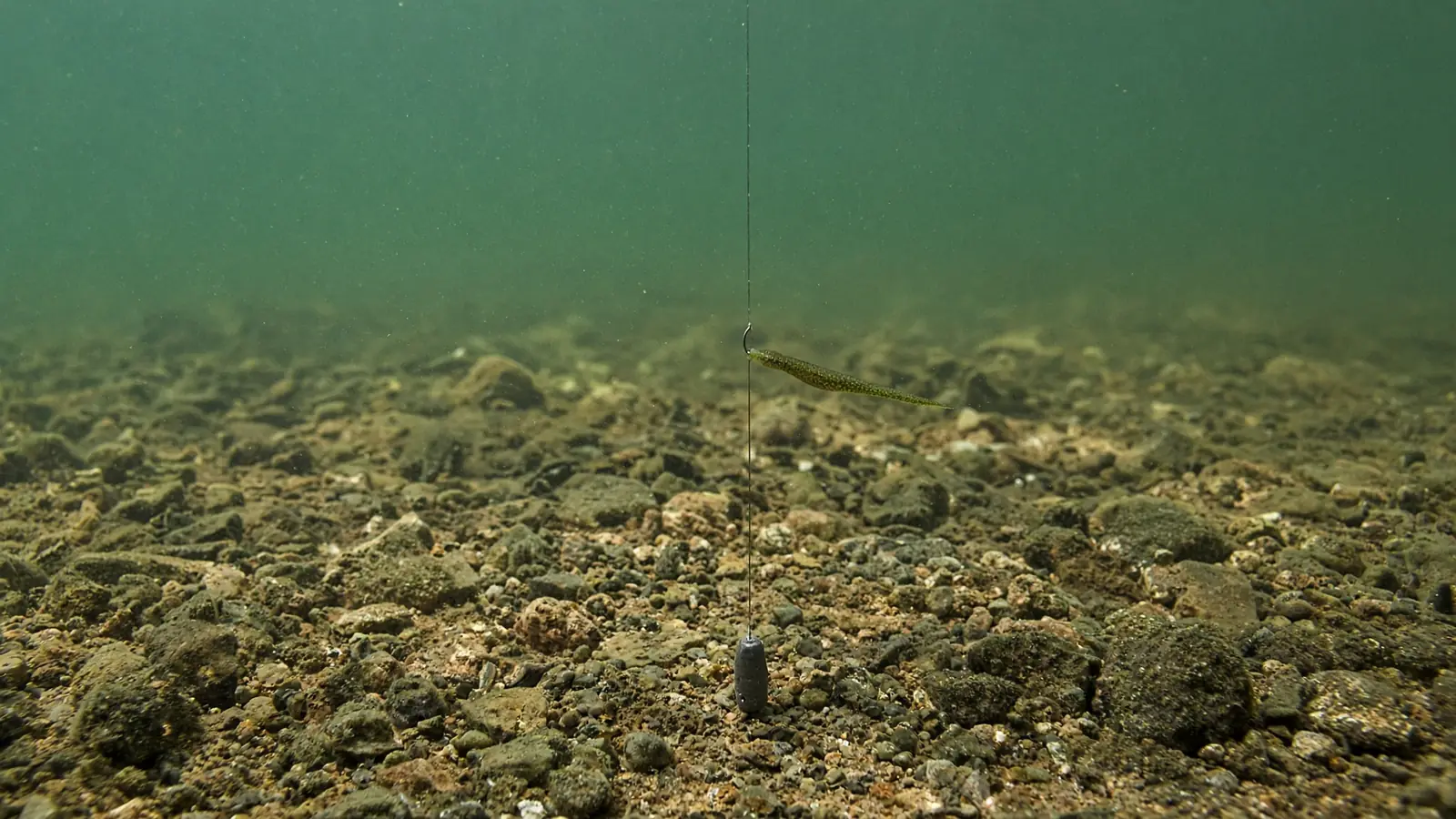
The Drop Shot for Bass: How to Rig It and When It Wins
The drop shot keeps a soft plastic at a precise, fixed depth for as long as you want. That makes it the single most effective technique for clear-water bass, heavily pressured fish, and bass you can see on your fish finder that won’t chase a moving lure. If the Texas rig is the foundation of our complete bass fishing system, the drop shot is the rig you tie on when the bass have seen everything else.

Bass Fishing Mastery: the complete system this article comes from, as an instant PDF. Get the guide — $17
What You Need
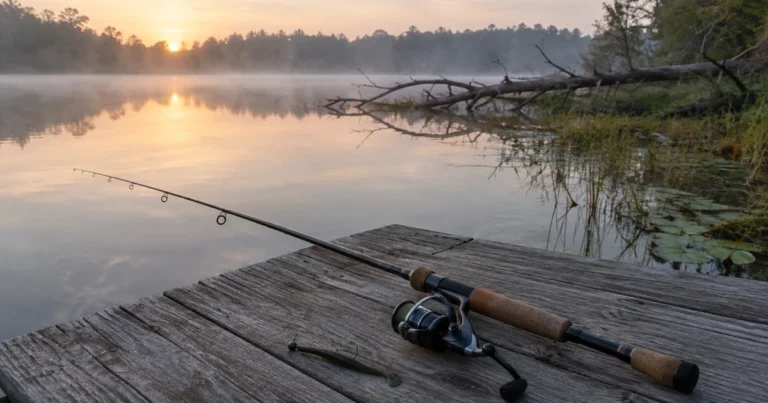
- Rod and reel: a 6’10” to 7’2″ medium-light, fast-action spinning rod with a 2000 to 2500 size reel.
- Line: 8 to 12 lb fluorocarbon, which is nearly invisible in clear water.
- Hook: a size 1 or 2 drop shot hook: small and fine wire, made for nose-hooking.
- Weight: a drop shot weight with a line clip. 3/16 oz in shallow water, 1/4 to 3/8 oz deeper.
- Bait: a finesse worm, a small minnow-style bait or a Ned body.
How to Rig It, Step by Step
- Tie the hook with a Palomar knot, leaving 18 to 24 inches of tag end below the hook. The Palomar is the preferred knot for the drop shot and all finesse rigs. Wet it before you cinch it down.
- Pass the tag end back up through the hook eye from the front. This makes the hook stand out at 90 degrees from the line, with the point up, which is essential for hook penetration.
- Clip the weight onto the tag end. Use the lightest weight that keeps the rig in contact with the bottom. Lighter weights look more natural; add weight only when depth or wind requires it.
- Nose-hook the soft plastic through the very tip of its nose only. The bait should hang horizontally.
The length of the tag end sets how high your bait hovers above the bottom, so it’s worth adjusting to where the fish are holding.
How to Fish It
Lower the rig to the bottom. Take up the slack so the weight sits on the bottom and your line is slightly angled. Then shake the rod tip with small, rhythmic wrist movements without lifting the weight. The bait quivers at a fixed depth while staying completely stationary in the strike zone.
That’s the whole point of the rig. Bass that ignore every other presentation will often inhale a drop shot worked patiently near their face.
The hookset: reel down first to take up the slack, then sweep the rod upward. Don’t jerk the moment you feel something; get tight to the fish first.
The Five Drop Shot Variations
- Standard drop shot: an 18 to 24 inch leader, the hook at 90 degrees, a nose-hooked plastic, shaken in place on the bottom. The classic and most versatile setup.
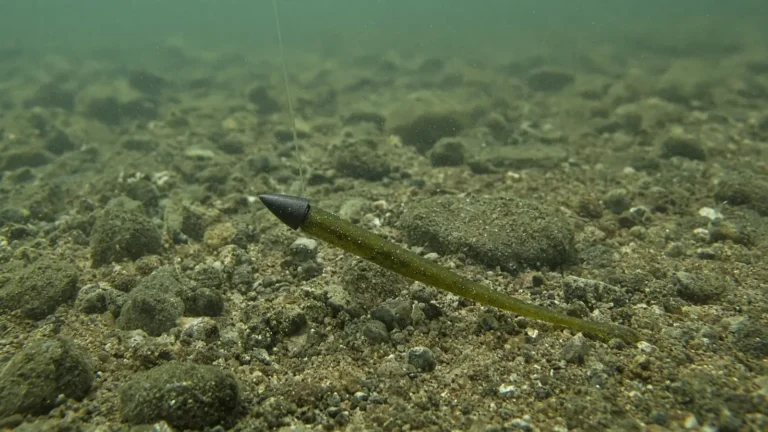
- Floating drop shot: put a buoyant ElaZtech-style bait on the hook. It floats upward on its own and hovers with a lifelike action without any input from you.
- Deep water drop shot: for 30 to 50 feet and more, use a heavier weight, a shorter leader and 30 lb braid as the main line with a 10 lb fluorocarbon leader, for feel at depth and invisibility at the bait.
- Current drop shot: in rivers, position above the target and let the rig drift downstream naturally, rather than trying to hold it directly over the spot. Use a heavier weight to keep bottom contact.
- Largemouth drop shot: a bigger 5 to 6 inch finesse worm or swimbait body on a 1/0 to 2/0 hook, a 1/4 to 3/8 oz weight, fished on baitcasting gear.
When the Drop Shot Wins
- Clear water and pressured fish that have seen every aggressive lure on the lake.
- Fish you can see on your electronics that won’t commit to a moving bait.
- After a cold front, when bass are tight and won’t chase. See how to catch bass after a cold front.
- Winter, when a cold bass needs a bait held in front of it for a long time. See our winter bass fishing guide.
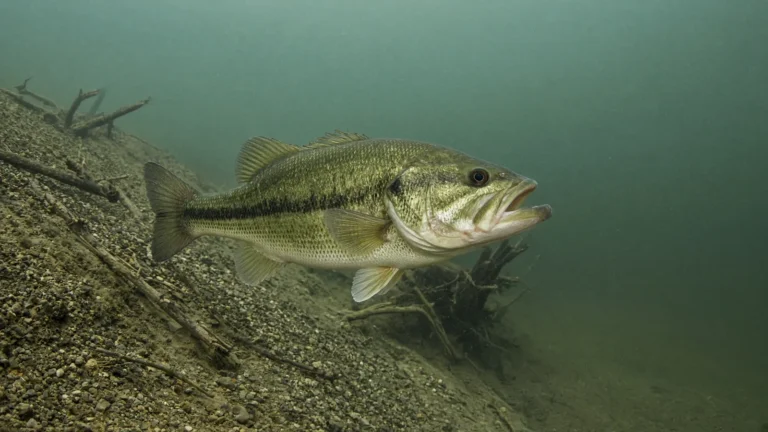
- Spotted bass, which are drop shot and finesse specialists, especially on clear highland reservoirs where they school deep.
Keep it simple the first time: a size 1 hook, a 3/16 oz weight, a finesse worm in green pumpkin, and a patient shake on the bottom next to the best cover you can find.
Tight lines,
— David





One Comment
Comments are closed.