Best Walleye Lures and Live Bait for Every Season
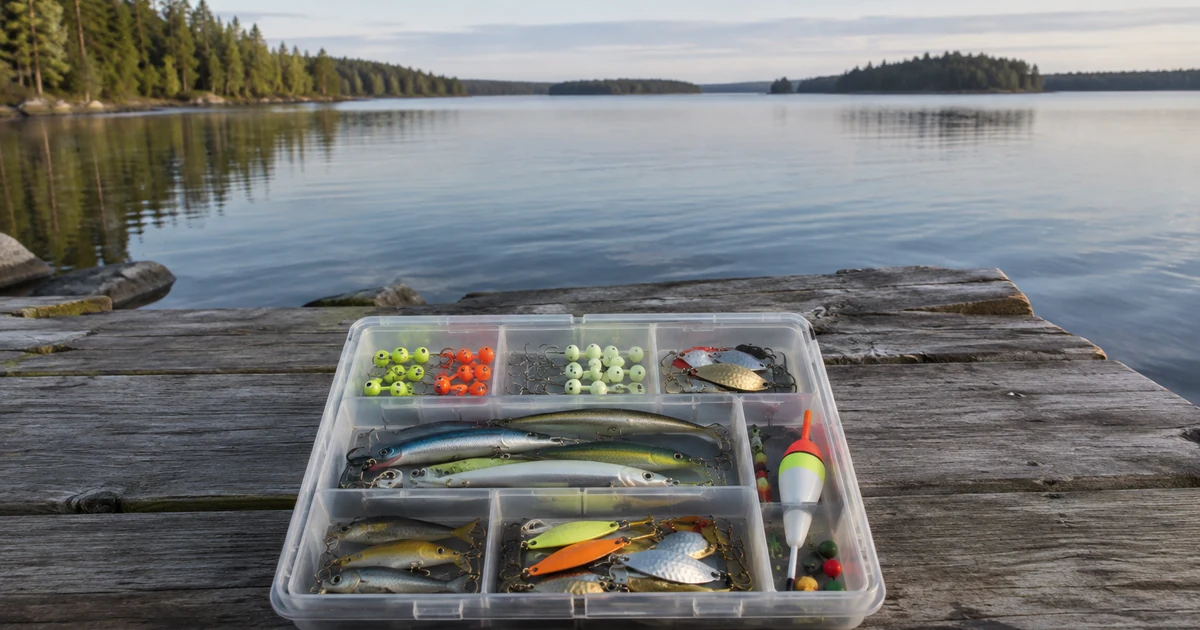
The best walleye lures fit in one small tray. A jig tipped with a minnow is the all-season answer, a leech under a slip bobber owns summer evenings, and a slender minnow stickbait after dark catches many of the biggest walleye anglers ever see. Add a few crankbaits for covering water and a blade bait for cold water, and you’re set for the year. Here’s what each one does, which bait fits which season, and how to pick a color in seconds, all drawn from our complete walleye fishing system.
Walleye Fishing Mastery: the complete system this article comes from, as an instant PDF. Get the guide — $17
The Short Answer: Three Baits Cover Most of the Year
- Jig and minnow: the career bait. It puts the minnow near the bottom, where walleye live, at any depth.
- Leech under a slip bobber: the summer evening weapon on rock piles and points.
- Slender stickbait at night: the big-fish lure on clear water, cast over shallow rock with a slow retrieve.
Everything else on this page builds around those three.
Jigs: The Foundation
A jig isn’t really a lure. It’s a delivery system that keeps your bait within about 18 inches of the bottom, at any depth, with full control. Four types cover almost everything:
- Ball-head jig with a minnow: fatheads for numbers, shiners for action, rainbow chubs for visibility, creek chubs when you want size.
- Ball-head or swimbait-head jig with a soft plastic: 3 to 4 inch paddle-tail swimbaits, ringworms and paddle-tail worms (river standards), and fluke-style minnows.
- Hair jigs in marabou or bucktail: the quiet choice for cold, clear water and pressured fish, because the fibers keep moving when the jig sits still.
- Weedless jigs for pitching into cabbage and coontail, where summer walleye hide and few anglers bother to look.
Weight is the real skill. Use the lightest head that keeps bottom contact: 1/16 oz to 10 feet, 1/8 oz to 15, 1/4 oz to 25, 3/8 oz or more deeper or in wind and current. The full rigging and retrieves are in our jig and minnow how-to.
Live Bait Rigs for Fish That Won’t Chase
On tough days (after a front, under high sun, in late summer), you slow down and bring the bait to the fish.
- Walking sinker rig: a sliding sinker, a swivel, then a 3 to 8 foot leader to a single hook with a minnow, a leech or half a nightcrawler. The fish can pick up the bait and swim off without feeling weight. Drift or slow-troll it at 0.3 to 0.8 mph.
- Crawler harness: two hooks, a stack of beads and a spinner blade ahead of a whole nightcrawler, pulled behind a bottom bouncer at 0.8 to 1.5 mph. It’s the summer workhorse. Start with #3 or #4 Colorado blades, gold in stained water and silver or chartreuse in clear.
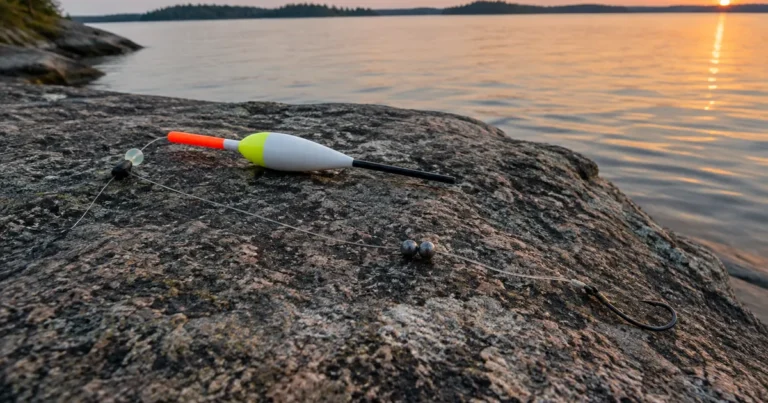
- Slip bobber: a bobber stop lets you hang a leech at exactly 14 feet over a 15-foot rock pile and leave it in the fish’s face. It’s deadly on evening rock and ideal from shore or with kids.
Crankbaits, Stickbaits and Blade Baits
Hard baits find fish. When walleye are scattered across a flat, strung along a break or suspended with baitfish, a lure moving at 2 mph covers far more water than a jig ever will.
- Slender minnow stickbaits (sizes #7 to #12): a tight wobble and a natural profile. The top choice for trolling and for night casting; shallow runners for shorelines after dark, deep runners behind planer boards.
- Banana-shaped deep divers: a hard-thumping action that reaches 20 to 30 feet on line alone. A summer basin trolling standard.
- Shad-profile crankbaits: for reservoirs where shad are the forage and for aggressive fall fish.
- Lipless crankbaits and blade baits: cold-water tools. Let them hit bottom, rip them up 2 to 3 feet, and let them flutter down. Fish hit on the fall.
- Jigging minnows and glide baits: born on the ice, now used all year, either vertically over marked fish or cast and snapped along structure. Big, aggressive fish crush them.
Live Bait or Plastics?
Cold water and slow days call for live bait. Warm, aggressive fish and current are where plastics shine: they catch as well or better, and you’re rebaited in two seconds. A good working rule is to fish plastics until the walleye insist on the real thing.
When you do go live, the bait follows the thermometer. Minnows rule cold water, below about 55°F. Leeches take over from 55 to 75°F; below 55 they ball up on the hook and just hang there. Nightcrawlers come into their own above 60°F on harnesses. Carry two of the three on every trip.
The Best Bait for Walleye, Season by Season
| Season (water temp) | Lures that lead | Live bait |
|---|---|---|
| Pre-spawn (34-42°F, rising) | Jig and minnow fished vertically in river holes; blade baits ripped along breakline bases; slip bobbers on rock at dusk | Minnows (fatheads, shiners) |
| Post-spawn (50-58°F) | Jigs with plastics and shallow crankbaits in warm bays; shallow stickbaits on flats at dusk and night | Minnows, then leeches once the water passes about 55°F |
| Early summer (58-68°F) | Jig with a plastic or leech along weed edges; walking sinker rig on points; harness behind a bottom bouncer on flats | Leeches; nightcrawlers from 60°F |
| Summer (68°F and up) | Harness and bottom bouncer on deep structure; crankbaits trolled for suspended fish; stickbaits on shallow rock at night | Nightcrawlers on harnesses; leeches |
| Fall feed (58°F falling to 42°F) | Big baits: #12 to #14 stickbaits trolled or cast at night, big plastics, blade baits as a search tool | 4 to 6 inch chubs or sucker minnows on jigs or rigs; minnows below 55°F |
| Ice | Rap-style glide baits, rattle and flutter spoons tipped with a minnow head, a plain jig with a whole minnow | Shiners, fatheads or small suckers on a deadstick or tip-up |
The fall row is the one most anglers get wrong. Bait grows all summer, and the biggest females want a meal, not a snack. For the full trophy pattern, see fall walleye fishing. For the after-dark stickbait game from the bank, see night walleye fishing from shore.
Keep the Bait Lively
A lively minnow catches far more than a dying one, and bait condition is often the whole difference between two boats.
- Minnows: keep them cool and oxygenated in an insulated bucket with an aerator, change the water every few hours, and match temperatures when you do. A frozen water bottle in the bucket helps in summer. Shiners have great action but die fast, so buy them the day you fish; fatheads are tough; chubs and small suckers last for days if kept cold.
- Leeches: stored in the fridge in cool, clean, chlorine-free water changed every day or two, they last for weeks. Hook them once through the sucker end so they can swim.
- Nightcrawlers: flat in bedding in the fridge, then in a small cooler on the water. Fish half a crawler on a jig, a whole one on a harness, and puff a little air into it with a worm blower on rigs so it floats up off the bottom.
The rule for all three: if you wouldn’t chase it, a walleye won’t either. Replace it.
Color in Ten Seconds
Color comes after depth, speed and location. When it does matter, let water clarity choose:
| Water clarity | First choices | Backup |
|---|---|---|
| Clear (8 ft+ visibility) | Perch, silver, white, purple | Black or purple at night |
| Stained (2 to 8 ft) | Gold, orange, chartreuse, firetiger | Pink, glow |
| Dirty (under 2 ft) | Chartreuse, bright orange, glow, rattles | Black for silhouette |
| Deep (20 ft+) or night | Glow, UV, purple, black | Chartreuse |
Where it’s legal to run two rods, put a natural color on one and a bright color on the other. The fish usually pick a winner quickly.
Frequently Asked Questions
What is the best bait for walleye?
A jig tipped with a minnow is the best all-around answer. In summer, a leech under a slip bobber is hard to beat on evening rock, and a slender stickbait after dark catches many of the biggest fish. Carry all three.
Are plastics or live bait better for walleye?
In cold water and on tough days, live bait wins. When fish are warm, aggressive or in current, plastics catch as well or better and you rebait in seconds. A good rule: start with plastics and switch to live bait when the fish demand it.
What color lure is best for walleye?
Let water clarity decide. Natural colors like perch, silver, white and purple in clear water; gold, orange, chartreuse and firetiger in stained water; chartreuse, bright orange, glow and rattles in dirty water; glow, UV, purple and black deep or at night.
What size lure should I use for walleye in fall?
Go bigger than you think. In the fall feed, 4 to 6 inch chubs or suckers on jigs or rigs, size #12 to #14 stickbaits and large plastics produce the biggest fish of the year.
Tight lines,
— David