Where Walleye Hold: The Breakline and the Big Five Structures
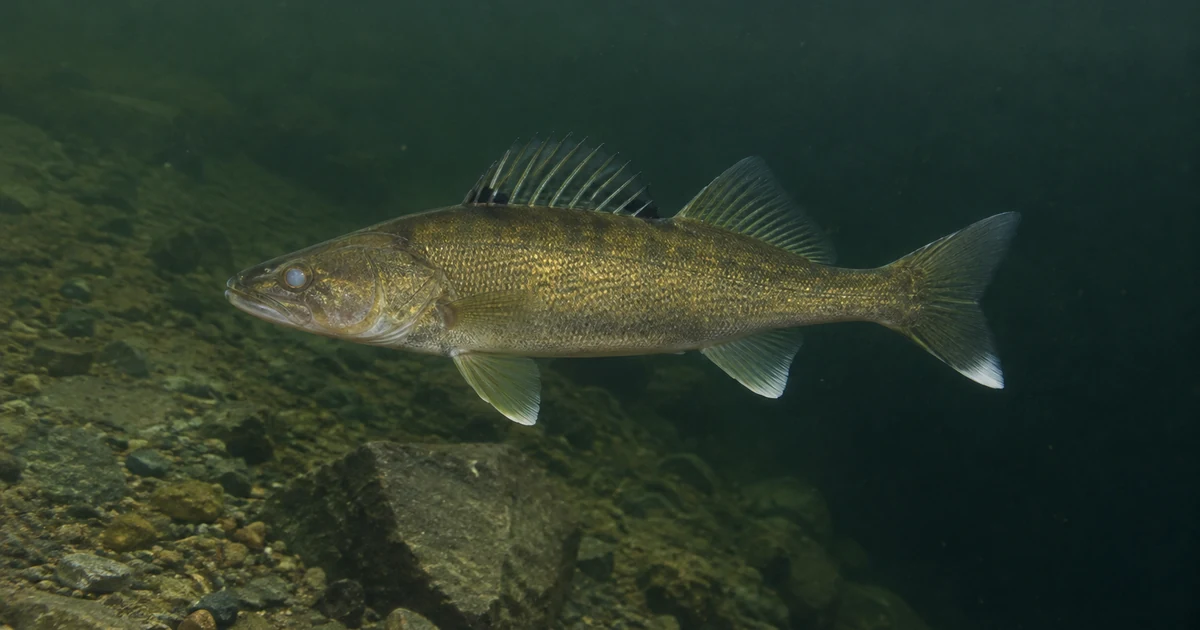
Here is the most useful sentence in walleye fishing: walleye live on the edges of things. The edge between shallow and deep, rock and sand, weeds and open water, current and slack, light and dark. Find an edge and you’ve found the highway walleye travel and the table where they eat. The most important edge of all is the breakline, and it’s the foundation of our complete walleye fishing system.
Walleye Fishing Mastery: the complete system this article comes from, as an instant PDF. Get the guide — $17
What a Breakline Is
A breakline is anywhere the bottom changes depth quickly: the underwater slope between a flat and the basin. Walleye use breaklines the way deer use the edge of a woodlot. They rest deep along them by day and slide up shallow along them to feed in low light.
The Lip and the Base
If a flat is 8 feet deep and the basin is 24 feet, the lip is where the 8 feet starts dropping and the base is where the slope meets 24 feet. Feeding fish are on the lip and the flat. Resting fish hold at the base and mid-slope.
The daily rhythm, in one line: shallow lip at dawn, mid-slope through the morning, base at midday, back up the slope through the evening, on top of the flat after dark.
How to Fish Any Breakline
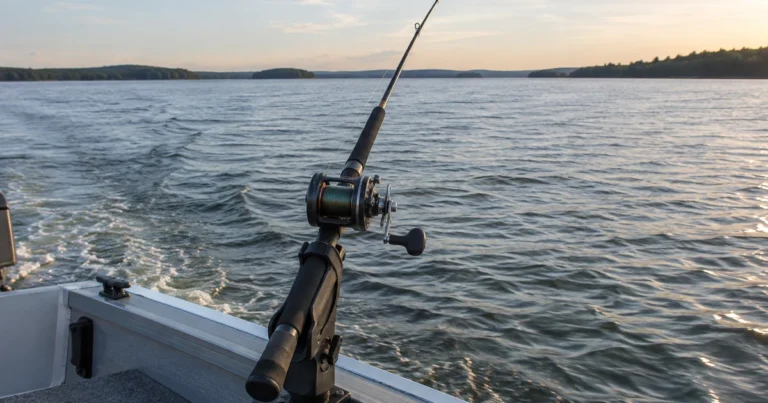
- Follow the contour, not the shoreline. Position the boat over one depth, say the 14-foot contour, and keep it on that line while your jigs or rigs work beneath you. That’s why boat control is a bigger skill than lure choice.
- Fish the irregularities. A straight breakline is a road; walleye stack where the road bends. Points, inside turns (small bays in the contour) and fingers concentrate fish. On a map, wherever the contour lines pinch together or make a V, start there.
- Look for hard bottom. On sonar, a thick, bright bottom band with a fainter second echo below it means hard bottom: rock, gravel or sand. Walleye love it. Idle the breakline until soft turns hard, mark it, and fish it.
The Big Five Structures
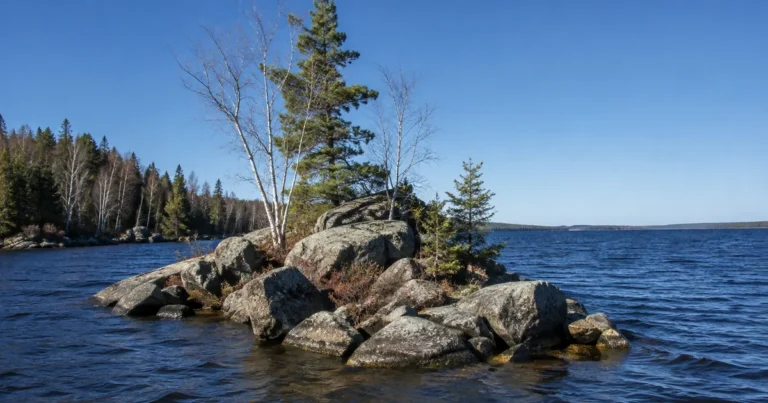
- Points: the most reliable walleye structure there is, because they offer every depth in one spot. Fish the tip and both inside corners. Wind blowing onto a point can turn it on like a light switch; see the walleye chop.
- Humps (sunken islands): mid-lake structures topping out at 5 to 20 feet, surrounded by deep water. The top edge in low light, the sides at midday. A hump with rock or weeds on top is a five-star spot.
- Sand and gravel flats: the feeding tables, especially where perch are the forage. Look for the subtle stuff: a 1-foot depression, an isolated boulder pile, a weed clump. Structure on structure is where the school sits.
- Weedlines: the deep edge where the weeds stop growing, typically 8 to 16 feet depending on clarity. A season-long walleye home most anglers leave to bass fishermen.
- Saddles: the dip between two humps, or between a hump and shore. Fish funnel through them, and they’re underfished everywhere.
And rock above all: scattered boulders beat uniform rubble, rubble beats bedrock, and any rock touching a breakline beats the same rock on a featureless flat.
The 10-Minute Lake Breakdown
Before fishing any new lake, spend ten minutes with a contour map and mark:
- The three best points, the ones reaching farthest toward deep water.
- Every hump topping out between 5 and 20 feet.
- The sharpest breaklines, where the contour lines are pinched tightest.
- Inlets, outlets and any rock or riprap.
- The likely weedline depth for the water clarity.
Then use the season and the light to pick which five spots fit today. Work the lip with a jig and minnow at dawn and dusk, and after dark the same structure’s shallow top is where night walleye feed. If you can’t name the edge you’re fishing, you’re not fishing yet.
Tight lines,
— David


One Comment
Comments are closed.