Best Bass Lures: What to Tie On, Month by Month
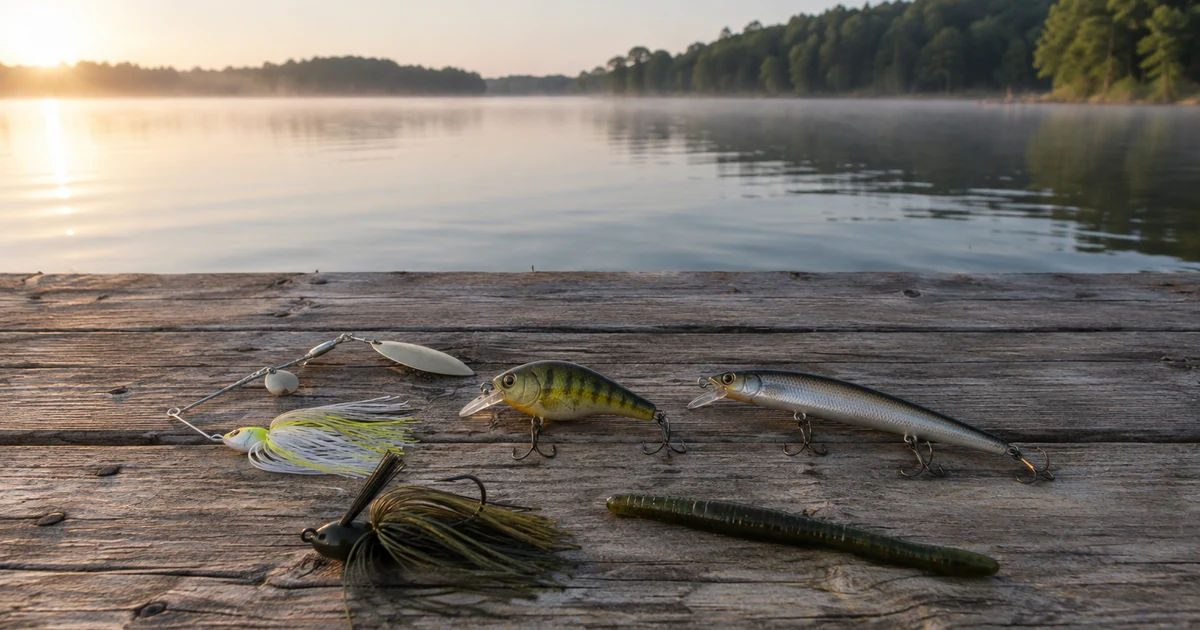
The best bass lures are the ones that match what bass are doing this month. A worm, a crankbait, a spinnerbait, a jerkbait, a jig, a topwater and a finesse rig will cover the whole year, as long as you know when each one earns a place on your line. Below is each lure type in plain terms, then a month-by-month table from our complete bass fishing system that tells you what to tie on and where to throw it.
Bass Fishing Mastery: the complete system this article comes from, as an instant PDF. Get the guide — $17
Soft Plastic Worms: The Lure for Every Month
The plastic worm has caught more bass than any other lure, and not because it copies one particular prey. It moves slowly and naturally enough to draw every kind of strike. Pick the style for the job:
- Straight-tail worm (5 to 7 inches): the all-round starting point. Texas-rig it and fish it anywhere.
- Finesse worm (4 to 5 inches): a smaller profile for clear water and fish that have seen everything.
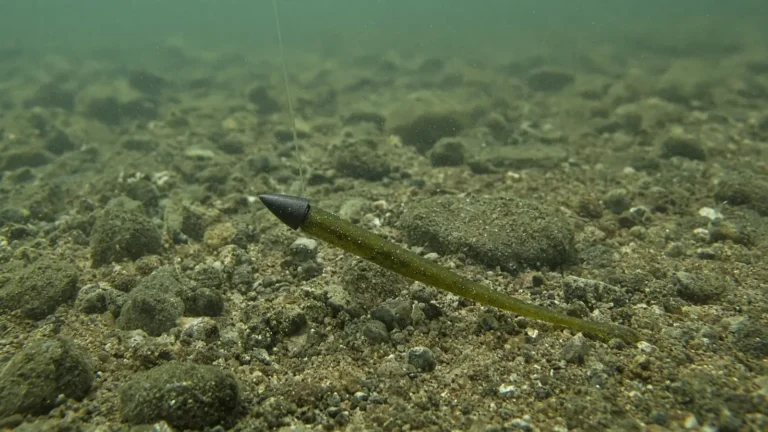
- Stick bait (4 to 5 inches): dense and compact, it sinks level with a slow shimmy. Hook it through the middle (wacky) or Texas-rig it.
- Ribbon-tail worm (7 to 10 inches): a big flowing tail for big fish in spring and summer.
- Creature and beaver-style baits: bulky, with flapping appendages, made for flipping into heavy cover.
- Lizard (6 to 7 inches): a classic near spawning areas before the spawn.
- Tube (4 to 5 inches): spirals down like a crawfish. The top smallmouth bait, and good for largemouth on rocky banks.
Green pumpkin, watermelon red and black work almost everywhere. For the rig most of these go on, see how to rig and fish a Texas rig.
Crankbaits: Choose by Depth
| Type | Runs | Best use |
|---|---|---|
| Square bill | 0–4 ft | Bouncing off rocks, laydowns, stumps and shallow docks; the most snag-resistant crankbait |
| Shallow diver | 2–6 ft | Grass lines, sandy banks, shallow points at moderate speed |
| Medium diver | 6–12 ft | Points, mid-depth humps, channel edges, fall transition depths |
| Deep diver | 12–25 ft | Summer ledges and deep structure, June through August |
| Flat-sided | Any depth | A tight, subtle wobble for cold water (50 to 60°F) and pressured fish |
| Lipless | Any depth (sinks) | Year-round: ripped through spring grass, worked over open water in fall |
Two habits make any crankbait work better: let it hit bottom or cover on every cast, and keep your rod tip low and off to the side so it runs deeper.
Spinnerbaits: Choose by Blade
- Colorado blade: round, turns slowly and thumps hard. Murky or stained water, slow-rolling in cold water, and night fishing.
- Willow blade: long and narrow, spins fast with lots of flash and little vibration. Clear water, fast retrieves, imitating running shad.
- Indiana blade: halfway between the two. Your pick when you’re not sure.
- Tandem blades: two blades for maximum flash and vibration. The default setup for most conditions.
A spinnerbait is also the easiest search lure to learn. A steady, medium-speed retrieve along cover finds active fish fast.
Jerkbaits, Blade Baits and Spoons: The Cold-Water Box
A jerkbait is a slim hard bait that hangs motionless between twitches. The cadence is jerk, jerk, pause, and the bite comes while it sits still like a hurt baitfish. The colder the water, the longer that pause:
| Water temperature | Pause length |
|---|---|
| Below 50°F | 8 to 12 seconds |
| 50 to 60°F | 3 to 5 seconds |
| Above 65°F | 1 to 2 seconds |
When the water sinks into the 30s and 40s, blade baits and jigging spoons take over. Work them straight up and down over a school on deep structure: lift, then let them flutter back. More cold-water tactics in winter bass fishing.
Jigs: Four Shapes, Four Jobs
- Casting jig (3/8 to 3/4 oz): the all-purpose jig. Its weed guard lets you pitch it to docks, flip it into grass and work laydowns. Add a craw or beaver-style trailer.
- Football jig (1/2 to 1 oz): the wide head stays upright on rock. Drag it slowly over ledges, rock piles and gravel bars, especially in summer.
- Swim jig (3/8 to 1/2 oz): swum along grass edges and through sparse weeds, spring through fall.
- Finesse jig (1/8 to 1/4 oz): small, on 8 to 12 lb fluorocarbon and spinning gear, for clear water, cold water and the day after a cold front.
Pick the trailer by the conditions: a small 3-inch craw in cold water, a 4-inch-plus beaver bait in warm water and heavy cover, a swimbait tail when you’re swimming the jig. Keep the trailer in proportion to the jig.
Topwater: Dawn, Dusk and Dark
- Walk-the-dog (pencil) bait: the most versatile surface lure, zigzagging over open water or around cover.
- Popper: pop, pause, pop beside docks, logs and grass edges. Pause longer for cold or picky fish.
- Buzzbait: keep it moving along grass edges and timber-lined banks. Stop reeling and it sinks.
- Hollow-body frog: weedless, so it goes right over pads and matted grass.
Topwater shines whenever bass are shallow and aggressive: the first and last hours of a summer day, around the spawn and post-spawn, and after dark with big dark lures. When a fish blows up on it, wait until you feel the weight before you set.
Finesse Rigs: When Nothing Else Gets Bit
- Ned rig: a small buoyant plastic on a 1/15 to 3/16 oz mushroom head that stands up off the bottom. It catches bass in every season, clarity and weather, including after cold fronts.
- Shaky head: a 4 to 5 inch finesse worm on a 1/8 to 1/4 oz stand-up head, shaken in place so the tail quivers.
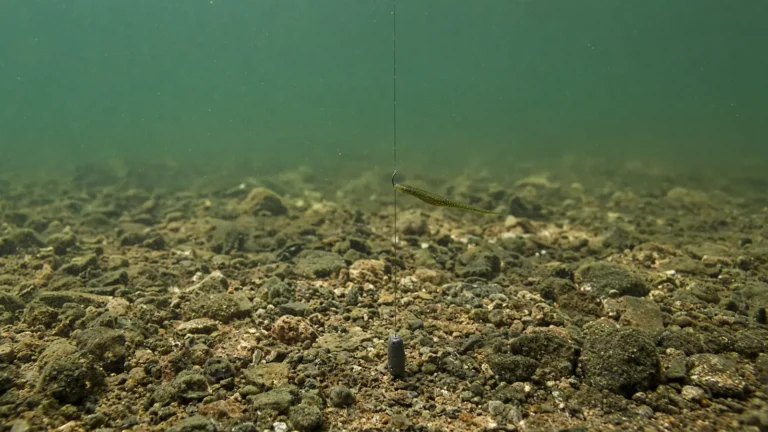
- Drop shot: holds a soft plastic at an exact depth above the weight, for clear water, pressured bass and fish you can see on your graph. Step by step in our drop shot guide.
- Wacky rig: a stick bait hooked through the middle and fished weightless in shallow water. Most bites come as it falls.
Month by Month: What to Tie On
| Month | Typical water | Where | Tie on |
|---|---|---|---|
| January | 38–48°F | Deepest structure, 20–40 ft | Blade bait, jigging spoon, slow jig |
| February | 42–52°F | Deep points, channel bends | Slow finesse jig, blade bait, drop shot |
| March | 50–60°F | Staging areas, 10–18 ft | Jerkbait, slow-rolled spinnerbait, swimbait |
| April | 58–68°F | Pre-spawn to spawning areas, 4–15 ft | Lipless crankbait, jig, swimbait, jerkbait |
| May | 65–75°F | Spawning flats, 1–6 ft | Ned rig, drop shot, finesse jig (sight fishing) |
| June | 70–80°F | Shallow to transition water | Frog, topwater, swim jig early; jig or drop shot later |
| July | 78–88°F | Deep ledges and humps, 15–25 ft | Football jig, deep-diving crankbait, big swimbait |
| August | 80–90°F | Deep at midday, shallow at dawn and dusk | Same as July, plus topwater after dark |
| September | 70–80°F | Creek arms, following shad | Lipless crankbait, swim jig, swimbait |
| October | 60–72°F | Creek backs, shallow flats | Shad-colored crankbait, spinnerbait, swim jig |
| November | 50–62°F | Sliding deeper | Jig, Texas rig, medium-diving crankbait |
| December | 44–54°F | Back on deep structure | Finesse jig, drop shot, blade bait |
These are typical readings. If your thermometer disagrees with the month, trust the thermometer: find the row that matches your water temperature and fish that one.
Picking a Color: Start With the Water
| Water | Start with | Also try |
|---|---|---|
| Crystal clear | Watermelon, green pumpkin | Shad, chrome |
| Clear | Green pumpkin, watermelon red | Natural shad |
| Lightly stained | Green pumpkin, chartreuse/white | Brown/orange (craw) |
| Stained to murky | Chartreuse/white, black/blue | Bright orange |
| Muddy | Black/blue, solid black, bright chartreuse | Dark purple |
| Night | Solid black for silhouette | White or pearl for flash |
Then adjust for the season. In spring, crawfish colors like brown/orange and watermelon/red. In fall, shad colors like chrome/blue, white/silver and pearl, in a size that matches the local baitfish.
Frequently Asked Questions
What is the best all-around bass lure?
The soft plastic worm. It has caught more bass than any other lure because its slow, natural movement draws every kind of strike, in every season. A 5 to 7 inch straight-tail worm on a Texas rig in green pumpkin, watermelon red or black is the most versatile place to start.
What lures work best for bass in cold water?
A suspending jerkbait with long pauses (8 to 12 seconds below 50°F), blade baits and jigging spoons worked vertically over deep schools, a finesse jig and a drop shot. Whatever you throw, fish it very slowly.
What color lure is best for bass?
Start from water clarity. Natural greens like green pumpkin and watermelon in clear water, chartreuse/white or black/blue in stained water, black/blue or solid black in muddy water, and solid black at night for the strongest silhouette.
How many lures does a beginner really need?
Fewer than you think. A spinnerbait to search, Texas-rigged soft plastics to pick cover apart and one topwater cover the bottom, the middle and the surface. Buy fewer lure types in more colors rather than the other way around.
Tight lines,
— David