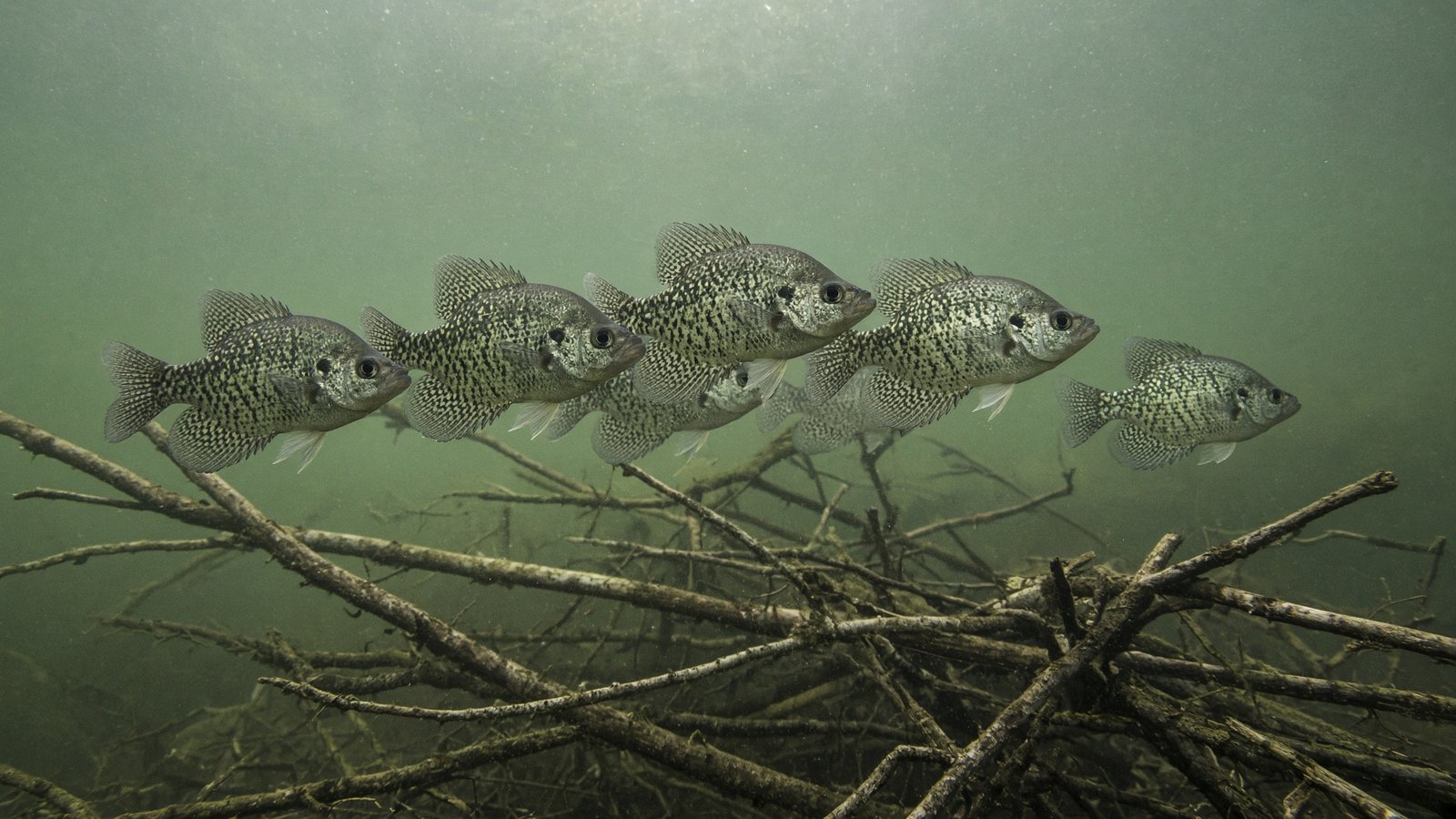
Crappie are not hard to catch. They are hard to find. On any given day, about ninety percent of the crappie in a lake are packed into less than ten percent of the water. The angler who knows where that ten percent is fills a cooler. The angler who doesn’t spends the day dragging a minnow through empty water.
This page gives you the system: how crappie feed, where they go in every season, and the techniques that catch them everywhere they swim, from big reservoirs to farm ponds, from a boat or from a lawn chair on the bank.
On this page
- Know Your Fish: Black vs. White Crappie
- Three Facts That Catch More Crappie
- The Crappie Year: Follow the Water Temperature
- Where Crappie Hold: Cover on Structure at the Right Depth
- Gear: Light, Sensitive and Simple
- Four Techniques to Start With
- Summer Nights Under Lights
- No Boat? You’re Not Out of the Game
- When Nothing Bites: Run the Checklist
- Frequently Asked Questions
Know Your Fish: Black vs. White Crappie
There are two species, and the difference tells you where to fish. Count the stiff spines at the front of the top fin:
- Black crappie: 7 to 8 dorsal spines, scattered dark speckles. They prefer clearer, cooler water and hold around vegetation and rock.
- White crappie: 5 to 6 dorsal spines, faint vertical bars. They tolerate murkier water and love wood: brush piles, standing timber, laydowns.
On a stained reservoir full of flooded brush, you’re probably in white crappie country. On a weed edge in a clear natural lake, expect blacks.
Three Facts That Catch More Crappie
1. Crappie school, so fish fast until you find them
Where you catch one crappie, there are almost always more. Catch one? Slow down and work the spot. No bite after 10 to 15 minutes of proper fishing? The school isn’t there, so move. And schools sort by size: if you’re catching nothing but 6-inch fish, catching fifty more won’t change anything. Move, change depth or change cover. Bigger fish often hold slightly deeper or tighter to cover.
2. Crappie feed up, so keep your bait at or above them
A crappie’s eyes sit high on its head. It drifts under its prey and rises to take it. That makes this the most reliable rule in crappie fishing: keep your bait at or slightly above the fish, never below. A crappie will rise two or three feet to hit a bait. It will almost never dive for one. When in doubt about depth, err shallow.
3. The bite is subtle, and the mouth is paper-thin
Crappie inhale a bait that’s sitting almost still, so many bites never feel like a thump. The line ticks sideways, the float shivers instead of plunging, or the jig suddenly feels weightless. Set on anything different. And set with a firm lift, not a bass angler’s swing: the membrane around a crappie’s mouth tears easily. Keep steady pressure during the fight and net or swing the fish in one motion.
The Crappie Year: Follow the Water Temperature
The spawn might happen in February in Florida and June in Minnesota, but it happens at roughly the same water temperature everywhere. Read the thermometer every trip.
Late winter and early pre-spawn (water 40s to low 50s °F)
Crappie leave their deep wintering areas and move toward creek arms and coves in big schools. They hold on the first structure along the way: channel bends, points at creek mouths, deeper brush piles and ledges in the 10 to 20 foot range. Fish slow and vertical. Three sunny days in a row can pull fish shallower; a hard cold front pushes them back down.
Pre-spawn (mid-50s to low 60s °F)
The best two weeks of the year. Crappie are shallow, grouped and feeding hard. They stage on the last structure next to spawning areas: the deep edge of a spawning flat, a channel swing near a cove mouth, docks in 6 to 12 feet, brush just outside the shallows. Focus on the 4 to 10 foot zone. If your spot is empty after a cold front, the fish didn’t leave. They dropped one depth zone.
The spawn (roughly 56 to 68 °F, peaking in the low 60s)
Males fan nests on firm bottom in protected water 1 to 6 feet deep, near reeds, brush, stumps or dock posts. The northwest corners and backs of protected coves warm first, so start there and follow the warmth around the lake. A small jig under a fixed float, hovered by cover, is the classic. Keep a meal and release the big females: they’re the next generation.
Post-spawn (upper 60s to mid-70s °F)
The fish didn’t vanish. They moved back to the same structure they staged on before the spawn, in 8 to 15 feet, then slide toward summer spots over a few weeks. Slow down, downsize, and fish shade. Docks are the post-spawn cheat code.
Summer (upper 70s and up)
Crappie go deep, shaded, or both: brush piles in 12 to 25 feet, channel ledges, deep dock ends, bridge pilings, standing timber. In lakes that stratify, they stack just above the thermocline. Find that depth once and you’ve found the depth for the whole lake. Dawn, dusk and night are the feeding windows.
Fall (cooling from the 70s back through the 50s °F)
Crappie follow the young shad and minnows into the creeks and onto mid-depth flats: brush in 8 to 15 feet, creek channel edges, dock lines. Find the bait and you find the fish. Fall is the most underrated crappie season in America: the crowds are gone and the big females are at their heaviest.
Winter (below about 50 °F)
Huge, tight schools in the deepest comfortable water, often 15 to 30 feet or more. Small baits, slow and vertical, right on the school. Midday, after the sun has worked for a few hours, often beats dawn. Winter bites can be a half-inch tick of the line.
The Crappie Year at a Glance
Crappie follow the same sequence on every lake. Find your water temperature in the first column and you know where to start.
| Phase | Water temp | Where crappie are | How to fish them |
|---|---|---|---|
| Late winter, early pre-spawn | 40s to low 50s °F | Creek mouths, channel bends, staging structure at 10 to 20 ft | Slow vertical jigs, slow trolling along channels |
| Pre-spawn | Mid 50s to low 60s °F | Last structure outside spawning coves, 4 to 10 ft | Cast jigs, slip floats, troll cove mouths |
| Spawn | About 56 to 68°F, peak in low 60s | Protected hard-bottom shallows, 1 to 6 ft, near cover | Jig under a fixed float, dipping cover with a long pole |
| Post-spawn | Upper 60s to mid 70s °F | First structure back out, 8 to 15 ft, and docks | Dock shooting, slow vertical on nearby structure |
| Summer | Upper 70s and up | Deep brush 12 to 25 ft, ledges, bridges, just above the thermocline | Precision vertical jigging, spider rigs, night lights |
| Fall | Cooling from the 70s through the 50s | Creek arms and mid-depth flats, 8 to 15 ft, wherever the bait is | Cast and slow-troll to find schools, then slow down |
| Winter | Below about 50°F | Deepest basins, channel bends and timber, 15 to 30+ ft | Small, slow, vertical; live minnows; ice tactics up north |
Want the full crappie year on one page? Crappie Fishing Mastery includes printable seasonal cheat sheets for every water temperature, plus the seven core techniques explained step by step.
Where Crappie Hold: Cover on Structure at the Right Depth
Structure is the shape of the bottom: channels, ledges, points, humps, flats. Cover is what sits on it: brush, stumps, weeds, docks, pilings. The winning formula is cover on good structure at the seasonal depth. A brush pile on a featureless flat is decent. The same brush pile on a creek channel swing at the right depth is a gold mine.
- Creek channels: the highways crappie migrate along. The best spots are the “exits”: bends, junctions and places where the channel swings close to a bank or flat.
- Brush piles: nothing concentrates crappie like sunken brush at the right depth. Depth beats everything. Fresh, dense piles hold numbers; older, sparser piles often hold fewer but bigger fish. Work the edges and the top before dropping into the middle.
- Docks: rank them by depth (6 feet or more under them), shade footprint, age and isolation. A dock with rod holders and a fish light usually belongs to someone who sank brush under it.
- Bridges: vertical highways connecting every depth, especially where a bridge crosses a creek arm.
And the rule that overrides everything: crappie live where they eat. A great-looking spot with no bait nearby is off today. A bait cloud with fish under it in the middle of nowhere just became your best spot.
Gear: Light, Sensitive and Simple
- Rod: a 6’6″ to 7′ light or ultralight spinning rod with a fast tip. It casts jigs, fishes floats and vertical jigs.
- Line: 4 to 6 lb high-visibility monofilament. Watching the line is how you see the bites you can’t feel. In gin-clear water, add a 2 to 4 foot fluorocarbon leader.
- Jigheads: 1/16 oz is the workhorse, 1/32 oz for cold water and spooky fish, 1/8 oz for depth and wind. Use light-wire hooks: they penetrate papermouths easily and bend free of snags.
Four Techniques to Start With
1. Vertical jigging
Get directly over the fish, drop the jig to their level, and stop it at or just above them. Then hold still. Every 20 to 30 seconds, lift 6 to 12 inches and let it settle. Most bites come on the settle. Over-working the jig is the number one error in crappie fishing.
2. The slip float
A float that slides against a bobber stop lets you fish a bait at an exact depth, 2 feet or 18 feet, and still cast normally. Cast past the target and draw the float back to it. No bites? Move the stop knot a foot before you move spots. Depth changes catch more fish than lure changes.
3. Dock shooting
Slingshot a 1/32 or 1/16 oz jig into the dark shade under docks where no cast can reach. The fish are in the back, in the darkest shade, and the bite almost always comes on the fall: watch your line, not the dock.
4. The minnow-tipped jig
When fish look but won’t eat, hook a small minnow through the lips on your jighead. You get the jig’s control plus live scent and movement. It’s the best tough-day rig in crappie fishing.
Summer Nights Under Lights
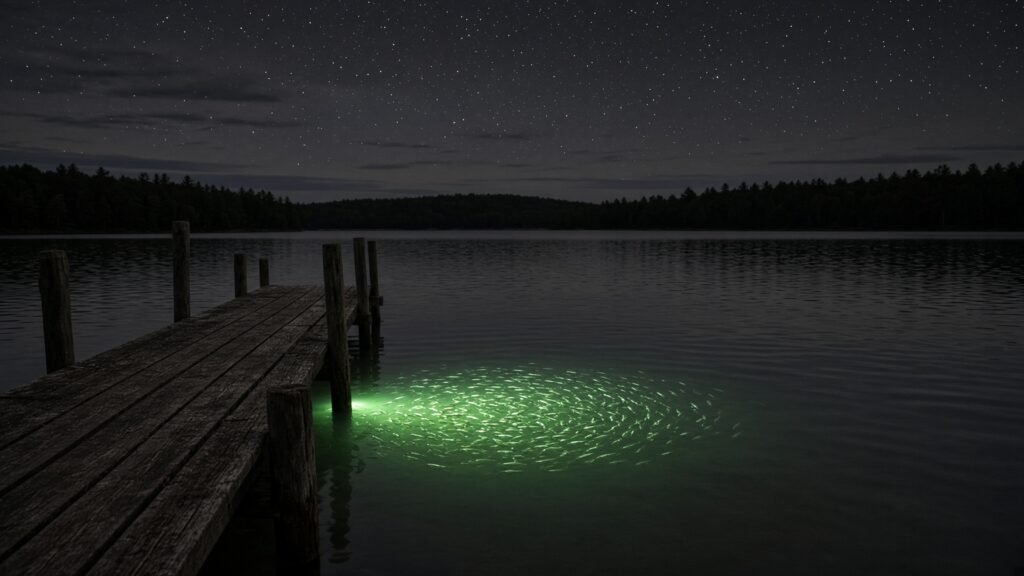
Sink a green LED light near deep structure (bridges, deep brush, dock ends) and you start a food chain: plankton, then bait, then crappie. Give a good spot 45 to 60 minutes to build. Fish the bright center for numbers, and the edge of the glow for the biggest fish. Life jackets on and navigation lights running, all night.
No Boat? You’re Not Out of the Game
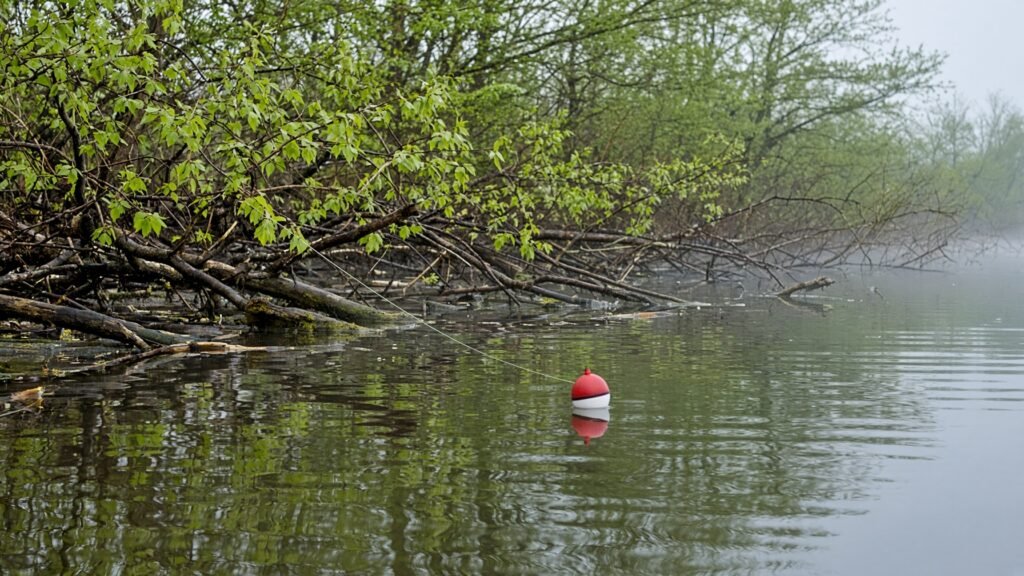
From pre-spawn through the spawn, crappie flood shallow, bank-accessible water for weeks. In fall they come back within range. Bridges and causeways, fishing piers near planted brush (check your state agency’s fish attractor maps), riprap, marinas where fishing is allowed and back-cove pockets are the best shore spots. The slip float is the bank angler’s number one tool. Travel light, give each spot fifteen minutes, and keep walking.
When Nothing Bites: Run the Checklist
Before you change colors, ask these questions in order:
- Am I at the right depth for this water temperature?
- Is there bait here? If not, move now.
- Am I above the fish? Reset shallower.
- Am I slow enough? Halve it and add pauses.
- Am I tight enough to cover? Especially after a front.
- Am I seeing the bites? Watch the line.
The honest order of what matters: location, then depth, then speed, then size, and color last.
Frequently Asked Questions
What depth are crappie at?
It depends on the water temperature. During the spawn (about 56 to 68°F) they’re in 1 to 6 feet. In summer they hold on brush and ledges at 12 to 25 feet, just above the thermocline. In winter they pack into the deepest basins at 15 to 30 feet or more.
What size jig is best for crappie?
A 1/16 oz jighead is the default for casting and float fishing. Go to 1/32 oz for cold water, spooky fish and tough bites, and to 1/8 oz for deep water, wind or current.
At what water temperature do crappie spawn?
Roughly 56 to 68°F, with the peak in the low 60s. The spawn moves around the lake in waves over several weeks, starting in the northwest corners and backs of protected coves, which warm first.
What color jig is best for crappie?
Match the water clarity: smoke, pearl and silver flake in clear water; chartreuse combinations in stained water; solid chartreuse, hot pink or white in muddy water. But color is the last thing to change. Location, depth, speed and size all matter more.
Why do crappie keep coming off the hook?
Crappie have a thin, tearable mouth, which is why anglers call them papermouths. Use sharp light-wire hooks, set with a firm lift instead of a hard swing, keep steady pressure during the fight and net the fish in one motion.
How do you tell a black crappie from a white crappie?
Count the stiff spines at the front of the dorsal fin: black crappie have 7 or 8, white crappie have 5 or 6. Black crappie also wear scattered dark speckles, while white crappie show faint vertical bars, but coloring can fool you.
More Crappie Fishing Guides
- Where Crappie Go After the Spawn (They Didn’t Vanish)
- Dock Shooting for Crappie, Step by Step
- Night Crappie Fishing Under Lights: The Complete System
Go Deeper: Crappie Fishing Mastery
This page is the map. Crappie Fishing Mastery is the full territory: the seven core techniques step by step (including spider rigging, longline trolling and tightlining), live bait mastery, electronics without the headache, the complete night fishing system, ice fishing, bank fishing, a 12-mistake troubleshooting guide, a 30-day improvement plan, and printable cheat sheets for every season.
It’s an instant PDF download that works on phone, tablet and computer. Nothing ships, it’s yours to keep, and every future update is free.
Tight lines,
— David