Slip Bobber Walleye Rig: Depth, Bait and the Bite
A slip bobber rig for walleye holds a bait in one exact place, and that is why it wins: a bobber stop lets you hang a leech at 14 feet over a 15-foot rock pile and leave it hovering in a fish’s face until it gives in. Most anglers treat it as a beginner’s rig; in truth the slip bobber is one of the highest-percentage big-walleye presentations in our complete walleye fishing guide, hour for hour, on evening rock.
Walleye Fishing Mastery: the complete system this article comes from, as an instant PDF. Get the guide — $17
Build the Rig, Top to Bottom
- Bobber stop knot on the main line. This is the part that makes it a slip rig: the stop reels right through the guides, so you can fish 5 feet or 20 feet and still cast normally.
- A small bead below the stop, so the float does not jam on the knot.
- The slip float, line running freely through it.
- One or two small split shot, 12 to 18 inches above the hook.
- A #4 or #6 octopus hook, or a 1/32 to 1/16 oz jig instead, baited with a leech, a minnow or a chunk of crawler.
Carry a few floats, a packet of stops and beads, split shot in two sizes and snelled octopus hooks, and you can build it on the bank in two minutes.
Set the Depth Over the Structure
The depth setting is the entire skill. The bait wants to ride 6 to 18 inches off the bottom, so the stop knot sits a foot or so above the depth of the spot. Measure first: count a jig down, or read it off the sonar.
| Structure depth | Stop knot setting | Weight and bait |
|---|---|---|
| 6 ft weed pocket | 4.5-5.5 ft | No shot or one tiny split shot, or a 1/32 oz jig with a leech |
| 10 ft rock shelf | 8.5-9.5 ft | One split shot 12-18 in above a #6 octopus hook, leech or minnow |
| 15 ft rock hump | 13.5-14.5 ft | One or two split shot, #4 or #6 octopus hook, leech or minnow |
| 20 ft hump edge or break lip | 18.5-19.5 ft | Two split shot or a 1/16 oz jig, #4 hook with a minnow |
| Shallow rock at night, 2-10 ft | 2-3 ft down | Big minnow on a #4 octopus hook, as a second line where legal |
If a soak produces nothing, move the stop a foot before you move the boat. Depth is the first thing to change when nothing happens.
Where to Put It
A precision tool needs a precise target. The three best ones:
- Rock. Scattered boulders beat uniform rubble, rubble beats bedrock, and any rock touching a breakline beats the same rock on a featureless flat.
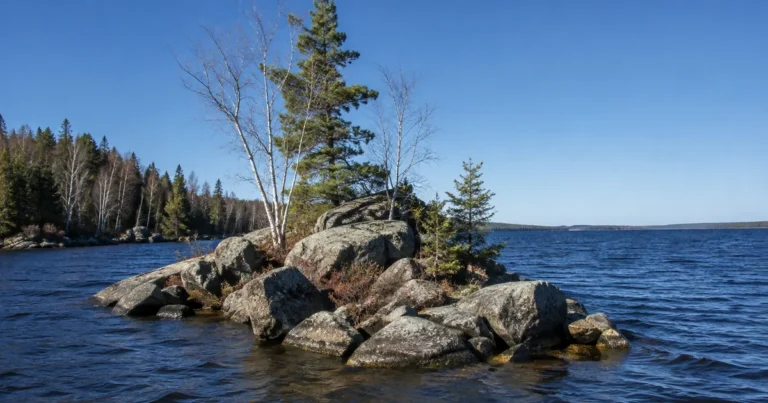
- Hump tops and edges. Mid-lake humps topping at 5 to 20 feet with deep water around them are magnets, and a float holds a bait over the top edge in low light without a cast landing on the fish.
- Weed pockets. The deep weed edge, typically 8 to 16 feet depending on clarity, holds walleye all season and almost nobody fishes it for them.
Choosing between them is a structure question, and the breakline and the big five structures is how you read a lake before you launch.
The Cast and the Take
- Anchor upwind at casting distance. Never park on top of the spot, especially in under 10 feet of water.
- Cast beyond the target and let the wind and waves walk the float across it. A chop helps: it moves the bait naturally and cuts the light.
- When the float goes down, reel until the line is tight, then sweep the rod. No violent set is needed with an octopus hook, and a hard snap tears hooks out of soft mouth corners.
- Keep steady pressure and let the drag work. Net every fish that matters, head first, net held still in the water.
A walleye takes a bait by inhaling it and turning away, so the float usually slides under and keeps going rather than bobbing. Before the first cast, set the drag at a quarter to a third of your leader’s breaking strength, by hand.
Worked example: a 15-foot rock hump at 68F in mid-July
Say it is mid-July, the surface reads 68°F, and your map shows a hump topping out at 15 feet with the basin at 30 around it. That is a five-star float spot, and the settings are not a guess:
- Window: anchored two hours before sunset. On most waters that stretch into dark is the day’s best feeding window.
- Position: upwind, at casting distance from the top edge, never over it.
- Stop knot: 13.5 to 14.5 feet, so the bait rides 6 to 18 inches off the top.
- Bait: a leech on a #6 octopus hook. At 68°F you are inside the 55 to 75°F leech window.
- Shot: one small split shot 12 to 18 inches above the hook.
- Drift: cast past the top edge and let the waves walk the float across it. Reel tight on the take, then sweep.
Same hump at 48°F in late October and two things change: a 4 to 6 inch chub replaces the leech, and the float works the steep edge rather than the flat top.
Pick the Bait by Water Temperature
- Below about 55°F: minnows. Fatheads for numbers, shiners for action.
- 55 to 75°F: leeches, and it is not close. Hook one once through the sucker end and let it swim; below 55°F a leech balls up on the hook and does nothing, which is a season problem and not a bait problem.
- Summer backup: half a crawler or a chunk, especially during a mayfly hatch when downsizing is the fix.
- Fall, 58°F falling through 42°F: a 4 to 6 inch redtail, creek chub or sucker minnow on a #2 hook. Big baits mean fewer bites and bigger fish, and a float is a fine way to present one.
Whatever you hang on the hook, keep it fresh. A dying minnow fishes at half power, and bait is the cheapest line item of your day.
When the Float Beats the Jig
A jig is the better search tool and gives you more control. The float wins in four situations:
- Snaggy rock. You can hold a bait inside a boulder field that would eat a jig every third drop. Behind a cold front, with fish tucked tight to cover, a small leech set inside the boulders is often the only thing that gets bitten.
- Fish suspended just over structure. A float holds a fixed height off bottom with no effort.
- Spooky shallow water at dusk. The bait sits still, far from the boat.
- Shore fishing and beginners. A disappearing float needs no sonar and teaches faster than anything else.
When fish are scattered and you need to find them rather than wait for them, go back to a jig and minnow and cover ground.
Dusk, Dark and the Shore Angler
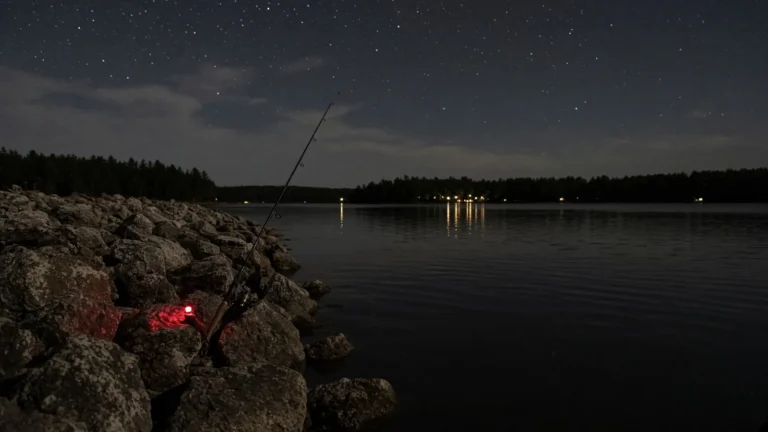
Timing is half of this presentation. Two hours before sunset into dark is the best feeding window on most waters, and that is when a float on a rock point earns its reputation. From shore it is your soaker: a leech or minnow 1 to 2 feet off the bottom, drifting along a rock edge on the breeze while you cast a stickbait with the other rod where two lines are legal. That pairing is the backbone of night walleye fishing from shore.
After dark on clear water, shorten up instead of fishing deep: a big minnow set 2 to 3 feet down over shallow rock. Keep the noise down and use a red headlamp, because fish in 4 feet of water spook from a dropped pair of pliers.
Rod, Reel and Line
A 7’0″ to 7’6″ medium power, moderate-fast spinning rod with a 3000-size reel. The length picks up slack on a long sweep. Straight 8 to 10 lb monofilament earns its place here because it manages better on the surface than braid and the stretch is forgiving on a sweep set. Check hooks on a thumbnail after every rock contact: a walleye’s mouth is bone and gristle.
Set up before the light goes, measure the spot, put the stop knot a foot above bottom, match the bait to the thermometer and let the chop do the work. Fished that way on evening rock, the slip bobber walleye rig turns patience into the biggest fish of your day.
Frequently Asked Questions
How deep should you set a slip bobber for walleye?
So the bait rides 6 to 18 inches off the bottom. Over a 15-foot rock pile that means a stop set at 13.5 to 14.5 feet. Measure the spot first with a jig or your sonar, then set the stop to that depth minus about a foot.
What is the best bait under a slip bobber for walleye?
Water temperature decides: minnows below about 55°F, leeches from 55 to 75°F, a chunk of crawler as backup. Below 55°F a leech balls up and does nothing. In the fall trophy window, a 4 to 6 inch chub or sucker is the big-fish choice.
Do you set the hook hard with a slip bobber?
No. When the float goes down, reel until the line is tight and then sweep the rod. An octopus hook needs no violent set, and a hard snap pulls hooks out of the soft corners of a walleye’s mouth.
When does a slip bobber beat a jig for walleye?
When fish are buried tight in snaggy rock, suspended just over structure, or spooky in shallow evening water, and any time the bait has to stay in one exact place. It is also the best rig from shore.
Where does the split shot go on a slip bobber rig?
Twelve to 18 inches above the hook. Use the lightest shot that carries the bait down, or run a 1/32 to 1/16 oz jig instead of a plain hook and skip the shot.
Tight lines,
— David