Walleye Jigging: Vertical Jigs, Blade Baits and Raps
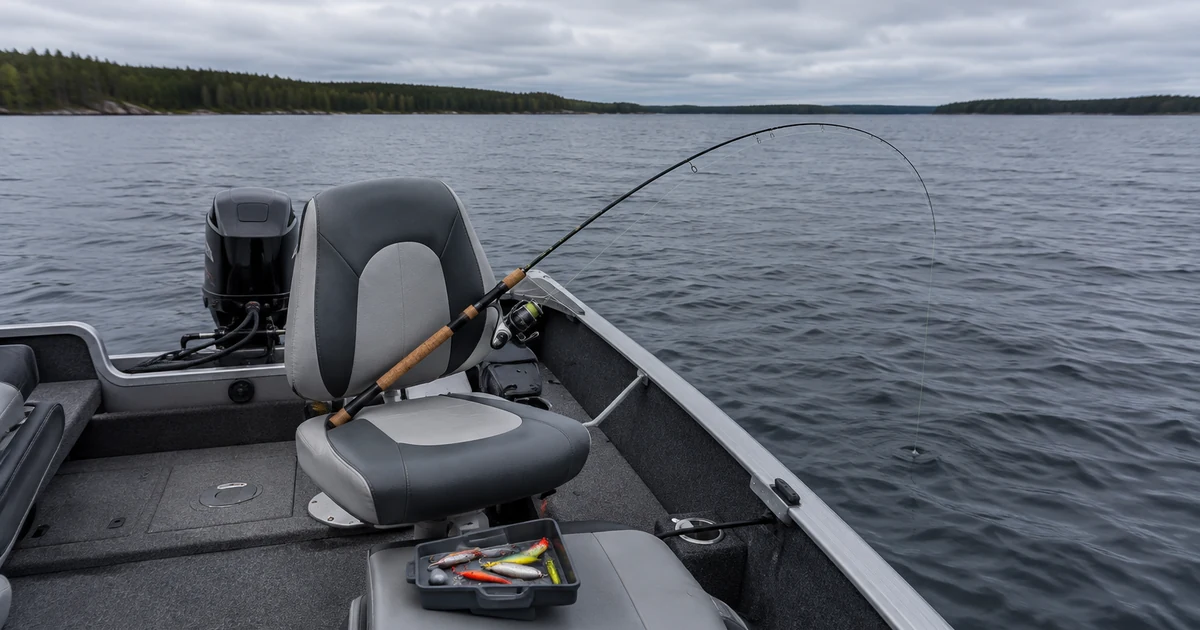
Walleye jigging, done vertically, means holding a lure straight under the boat and working it just off the bottom over fish you can see on your sonar. It’s the tool for river holes, deep humps and the ice, and it relies on three lures: a plain jig, a blade bait and a jigging minnow-style glide bait. The skill that ties it all together is picking the right weight for the depth. Here’s how each piece works, taken from our complete walleye fishing system.
Walleye Fishing Mastery: the complete system this article comes from, as an instant PDF. Get the guide — $17
When Vertical Jigging Beats Everything Else
Vertical jigging is precision work. It turns marks on your screen into bites, and it’s at its best when the fish are concentrated in a small area right below you:
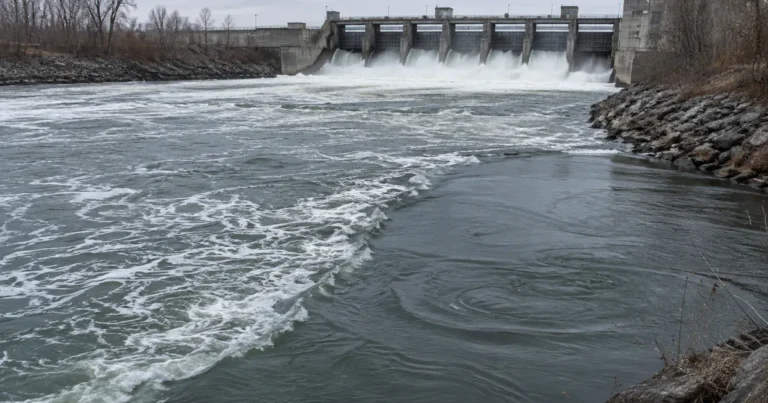
- River holes in pre-spawn (34 to 42°F, rising water), when walleye stack up below rapids and dams. This is the prime season for it.
- Tailraces and river holes through fall and winter, where the boat slips downstream with the current and the jig ticks bottom on each lift.
- Deep humps and the bases of breaklines, where fish rest when the light is bright.
- The ice, where every hole is a vertical presentation by default.
For the slower casting and dragging retrieves with a minnow, see jig and minnow for walleye. This article sticks to the vertical game and the two reaction lures that go with it.
The Rod and Line
- Rod: a 6’8″ to 7’0″ medium-light, extra-fast spinning rod. The soft tip shows the light tick of a bite; the fast taper drives the hook home. Of all your walleye rods, this is the one worth spending on.
- Reel: a 2500-size spinning reel with a smooth drag.
- Line: 10 lb high-visibility braid (8 to 15 lb range) with a 3 to 8 foot fluorocarbon leader, 6 lb in clear water and 8 to 10 lb in stained water or around zebra mussels. Braid’s near-zero stretch carries the bite up from 30 feet; the leader stays nearly invisible and stands up to rock.
- Knot for raps and glide baits: a small non-slip loop knot, about 1/4 inch, lets the lure swing freely and glide wider than a cinched knot allows.
Jig Weight by Depth
Pick the lightest jig that still reaches bottom and keeps touching it. Start from this chart:
| Depth | Calm water | Wind or current |
|---|---|---|
| 0-10 ft | 1/16 oz | 1/8 oz |
| 10-15 ft | 1/8 oz | 3/16-1/4 oz |
| 15-25 ft | 1/4 oz | 3/8 oz |
| 25 ft+ | 3/8 oz | 1/2-5/8 oz |
Rivers are the exception people underestimate: vertical jigs there usually run 1/4 to 5/8 oz, heavier than lake habits suggest.
The most common jigging mistake is going too heavy “to feel the bottom.” A 3/8 oz jig in 12 feet falls like a stone, kills the glide, snags twice as often and turns soft bites into nothing. Here’s a simple check: if you never lose touch with bottom now and then, you’re too heavy.
How to Vertical Jig, Step by Step
- Find the fish first. Look for marks hugging the bottom 2 feet, hard bottom and bait on your sonar.
- Hover over them. Use the trolling motor or spot-lock to sit on the spot. If your line leans more than 10 to 15 degrees, add weight or fix your drift. A vertical line gives you control, direct feel and a hookset that drives straight up.
- Work a 12-inch window. Lift, hold, drop, staying within about a foot of the bottom.
- Watch two things: the rod tip and the spot where your line enters the water. In cold water, many bites are seen before they’re felt.
- In current, walk the jig. Lift as the boat slides downstream so the jig touches bottom again every few feet.
- Set on anything unusual: a tick, added weight, a mushy feel, or a jig that doesn’t reach bottom when it should. A slack-line jig bite gets a quick snap; otherwise keep steady pressure and let the drag work.
River walleye add their own rules about seams, holes and tailraces; we cover them in river walleye below dams.
Blade Baits: The Cold-Water Rip
A blade bait is a thin metal lure that vibrates hard when pulled and flutters when it falls. It’s one of the best cold-water tools in walleye fishing, and few anglers throw it.
- When: water under about 55°F. It’s a top search lure in late fall and a good choice in pre-spawn along breakline bases. It also works during turnover, when reaction baits beat finesse.
- Where: the base of breaklines and river holes.
- How: let it sink to the bottom while you count, rip it up 2 to 3 feet, then follow it down on a controlled fall. Repeat. Strikes come as it falls, so keep just enough tension to feel the hit.
- Dirty water: when a river or lake suddenly muddies, fish find food by vibration and silhouette, which is where blades and rattles shine.
Jigging Minnows and Glide Baits
These swimming jigging lures started on the ice and are now used all year, especially for aggressive and big fish.
- Vertical over marked fish: snap the lure up 6 to 18 inches, then give a little controlled slack so it glides out in a circle. Strikes come as it settles. Don’t overwork it: two snaps, a long pause, and repeat.
- Snap-casting on flats: make a long cast and work it back with a snap, glide and pause rhythm. It finds active fish fast and weeds out the small ones.
- Through the ice: the pause is the presentation. Give active fish about 3 seconds; give tough fish 10 seconds or more. The full winter system is in ice fishing for walleye.
Choosing the Jig, the Trailer and the Color
- Ball-head jig and minnow: the all-around choice; for vertical work, hook the minnow up through the mouth and out the back of the head.
- Soft plastics: ringworms and paddle-tails are river standards and outfish live bait when fish are aggressive, in current or in warm water.
- Hair jigs: for cold, clear water and pressured fish.
- Jig colors: start with chartreuse, orange, pink and glow, and run one bright and one natural each day. In rivers, go a bit brighter than the clarity suggests; current gives fish only a split second to decide. Deep water calls for glow, UV, purple or black.
Fixing Common Jigging Problems
- Snagging all the time: the jig is too heavy or the rod tip is held too low.
- Can’t feel bottom: the jig is too light, or too much line is out. Keep the line angle under 45 degrees, and closer to straight down when vertical jigging.
- Taps but no hookups: add a stinger, a #10 treble on a short 2 to 3 inch loop off the jig eye with one point lightly in the minnow’s tail. If that’s not enough, downsize the bait, then go to a lighter jig for a slower fall.
- Fish on the screen, no bites after 20 minutes: don’t leave, downshift. Hold a drop shot dead still with a nose-hooked minnow or a 3 to 4 inch finesse plastic, 12 to 24 inches above a 1/4 to 3/8 oz weight.
Frequently Asked Questions
What size jig is best for walleye?
Match the jig to the depth and use the lightest one that keeps bottom contact. In calm water: 1/16 oz to 10 feet, 1/8 oz to 15 feet, 1/4 oz to 25 feet, 3/8 oz deeper. Go up a size in wind or current, and expect 1/4 to 5/8 oz in rivers.
When should I use a blade bait for walleye?
Blade baits shine in cold water, under about 55°F. Rip them along breakline bases and in river holes, especially in late fall, when they are one of the best tools for locating fish.
How do you jig a jigging minnow for walleye?
Snap it up 6 to 18 inches, then give a little controlled slack so it glides out in a circle and settles. Most strikes come as it settles. Two snaps, a long pause, and repeat; don’t overwork it.
How do I keep my line vertical when jigging?
Hover over the fish with the trolling motor or spot-lock. If the line leans more than 10 to 15 degrees, add weight or correct your drift.
Tight lines,
— David