Walleye Fishing Tips: Rules From the Water, by Theme
The best walleye fishing tips have little to do with secret lures. They are simple rules about when you fish, where you fish and how fast, and most anglers break several of them every trip. Below they’re grouped by theme, each one paired with the mistake it fixes. They all come from our complete walleye fishing system; reworked here into a checklist you can read in the truck.
Walleye Fishing Mastery: the complete system this article comes from, as an instant PDF. Get the guide — $17
Timing and Light
- Fish the end of the day, not the middle. Banker’s hours (launch at 9, home at 5) miss the walleye’s feeding windows. If you only have four hours, take the last four before dark, and be rigged and on the spot 90 minutes before sunset.
- Try both ends of the day before judging a lake. Dusk usually beats dawn, but give each a fair test.
- Stay past sunset. The first hour of darkness is often when the biggest fish of the day bite. Leaving because you “can’t see” hands them to someone else.
- Clear water and calm sunshine? Come back after dark. That combination is the hardest daylight condition, and flat-calm nights often fish well.
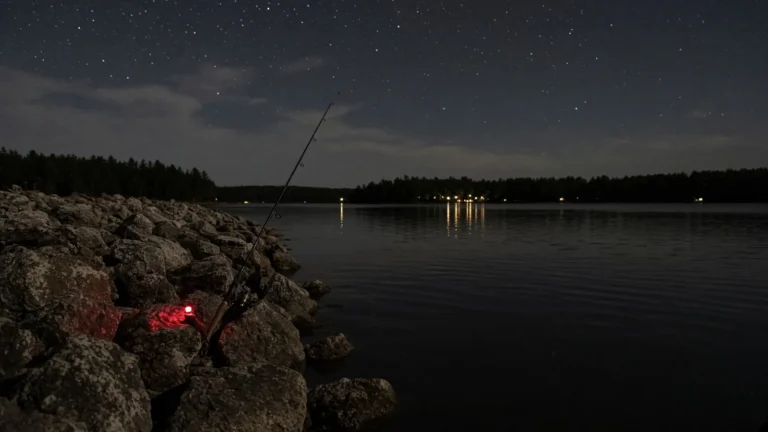
- Use a red light after dark. A white beam sweeping the water can shut the night bite down.
Location: Fish Edges, Not Water
- Name your edge. Breaklines, weedlines, current seams and spots where hard bottom turns soft. If you can’t say which edge you’re on, you’re drifting, not fishing. Ten minutes with a contour map before launch rules out most of the lake.
- Work the bends. An inside turn on a breakline holds more fish than a straight stretch.
- Base of the break at midday, lip at dusk. Walleye ride the slope with the light.
- Stop for the trio. Hard bottom, baitfish on the screen and low light together mean fish here. A faint second bottom echo on your sonar signals hard bottom.
- Rock first, then sand, then mud, unless a mayfly hatch has pulled fish onto the soft bottom.
- Run a little farther. The spot farthest from the ramp usually holds the least educated fish.
- In rivers, fish the seams where fast water meets slow, not the main flow.
Wind and Weather
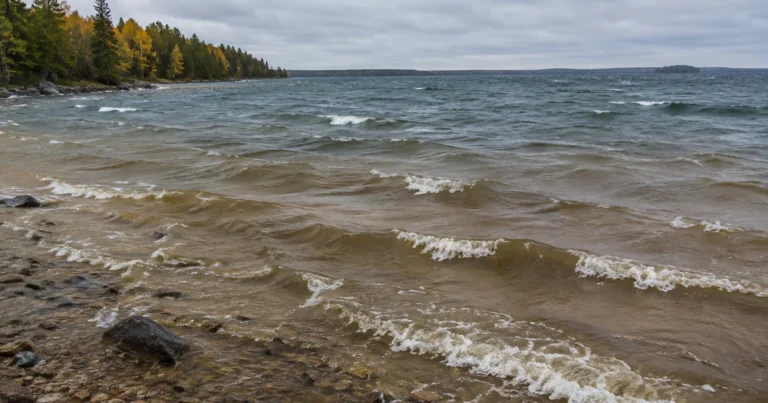
- Fish the windy side. The calm bank feels nice because nothing is going on there. Waves cut the light and pile baitfish against the downwind structure. A drift sock gives you control. More on this in why wind turns walleye on.
- Follow today’s wind, not yesterday’s. When the wind flips, the fish relocate within hours.
- After a cold front, adjust in order: go deeper, then slower, then smaller, then tighter to cover. The full staircase is in walleye after a cold front.
- Warm rain is a dinner bell. Fish every inlet and fresh mudline.
- In muddy water, lean on vibration and silhouette: chartreuse or black, rattles, and slower speeds.
- Turnover scatter? It lasts one to two weeks on lakes that stratify. Switch to a river or a shallow lake that doesn’t turn over, and come back for the fall feed afterward.
Presentation: Weight, Speed and the Change Order
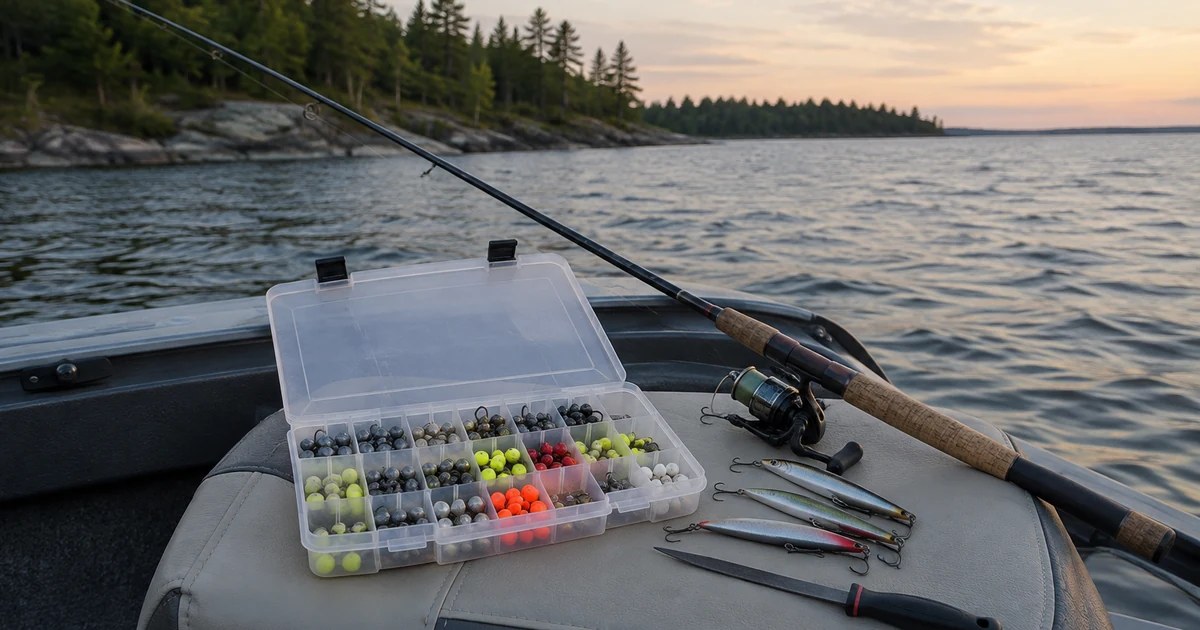
- Go lighter on the jig. A 3/8 oz head in 12 feet sinks like a rock, kills the glide and doubles the snags. Use 1/16 oz to 10 feet, 1/8 to 15, 1/4 to 25. If the jig never loses touch with bottom now and then, it’s too heavy.
- Match speed to water temperature. Trolling crankbaits: 1.0 to 1.5 mph under 50°F, 1.5 to 2.0 mph from 50 to 65°F, 2.0 to 2.8 mph above that. Read it on GPS, then let S-turns fine-tune it: if the outside rods keep firing, speed up; if it’s the inside rods, slow down.
- Treat speed as a lure. Change your mph before you change your color.
- When nothing works, change things in this order: depth, then location, then speed, then bait size, and color last. Most tough days get fixed at step one or two.
- Start fast, slow down when told. Slow wins in cold water and after fronts, but active fish all season will run down a fast bait. Fast presentations find the biters quicker.
- Run one bright and one natural rod until the fish show a preference.
Feeling and Hooking the Bite
- Set on anything different. About half of walleye bites are a tick, added weight, a mushy feel or a twitch in the line. Waiting for a hard thump means missing them. A hookset costs nothing.
- Watch your line where it meets the water. In cold water, many bites are seen before they’re felt.
- Use braid with a fluorocarbon leader. Braid barely stretches, so the light tick reaches your hand; the leader keeps the business end hard to see.
- Mark every fish. Drop a GPS waypoint on each one, and when trolling, note the line-counter number and copy it to the other rods. One fish is luck; the second on the same setting is a pattern.
Bait and Big Fish
- Rebait without guilt. A dying minnow fishes at half strength.
- Switch to leeches once the water passes 55°F. For weeks, they’ll outfish everything else.
- Go big in fall. Big baits don’t scare walleye. In fall the baitfish are a full year grown, and a big female that snubs a fathead will cross a point for a 6-inch redtail chub. See the fall trophy window.
- Fish the weather that empties the parking lot. Giants come in wind, cold and low light, when few boats are out.
Maintenance and Fish Care
- Two-minute discipline: test hooks on your thumbnail at rig-up and after snags, run your fingers along the last 3 feet of leader after every fish, and set the drag by hand every trip. Set it for the leader, not the main line.
- Retie after every rock fight. A nicked leader is a gift to the lake.
- Handle fish gently: wet hands, a horizontal hold, and no more than 30 seconds out of the water.
- Keep the middle, release the top. Eat the 15-inchers; let the big females go.
- Read the regulations every season. Slot limits and dates change; check with your state agency.
Myths Worth Dropping
- “They only bite at night.” They bite when light is low or broken, which includes windy noons and overcast days.
- “Summer is the dog days.” Warm water speeds up their metabolism; they eat more, just deeper and in shorter windows.
- “Walleye must be fished slow.” Only in cold water and after fronts.
- “Turnover ruins fall.” It disrupts a week or two. The feed that follows is the best big-fish window of open water.
- “It’s all about color.” Color is the last variable, not the first.
The Mindset Rules
- The 30-minute rule. A proven spot in a good window with no contact after half an hour of focused fishing means move. Camping on last week’s memory is expensive.
- Never leave biting fish to look for bigger ones during the same window.
- Keep a log. Three lines per trip: conditions, what worked, what didn’t. Within two seasons it will teach you more about your own water than any book.
Frequently Asked Questions
What is the most common walleye fishing mistake?
Fishing the wrong hours. Many anglers launch mid-morning and quit before dark, which skips the low-light windows when walleye feed. If you can only fish four hours, make them the last four hours of daylight.
Does lure color matter for walleye?
Less than most people think. Depth, location, speed and bait size all come before color. When color does matter, run one bright and one natural option until the fish show you which they prefer.
Do walleye only bite at night?
No. They bite whenever light is low or broken: at night, but also on a windy noon, under heavy overcast, in stained water in the afternoon, or deep on structure in the middle of the day.
How long should I fish a spot before moving?
On a proven spot during a good window, give it about 30 focused minutes. If you get no contact, move. The fish relocated first; you just need to catch up.
Tight lines,
— David