Night Bank Fishing for Catfish: The Complete Setup
Night is when the bank angler catches up with the boats. Catfish feed harder after dark, and at the same time boat traffic and fishing pressure drop off. Put the two together and a few rods on the bank at night can match or beat a boat. Here’s the complete setup, from our complete catfish fishing system.
Catfish Fishing Mastery: the complete system this article comes from, as an instant PDF. Get the guide — $17
Why Night Works
- Low light triggers feeding. Dawn, dusk and full night bring more active, confident feeding across all catfish species. Bright sun pushes them deeper and makes them sluggish.
- Channel and blue cats feed day and night, but channel cats in particular feed harder after dusk.
- Flatheads are almost entirely nocturnal. They stay in cover all day and come out at night to hunt. More on them in our guide to catching flathead catfish.
- Summer is prime time. When the water is 70 to 85°F, catfish are at their most active, but daytime heat pushes that activity into dusk, night and early morning.
Set Up Your Bank Station
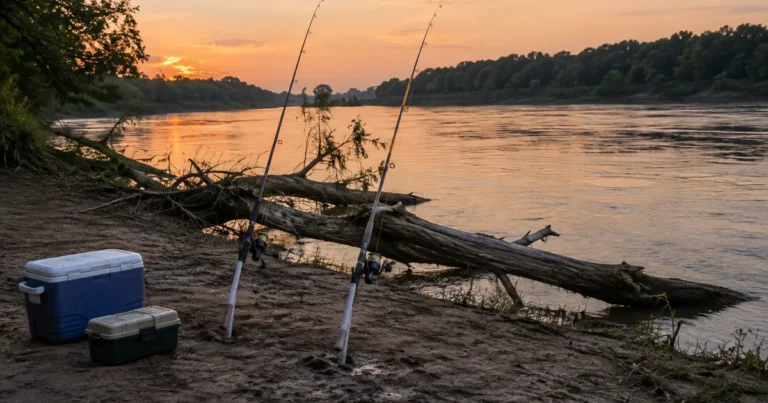
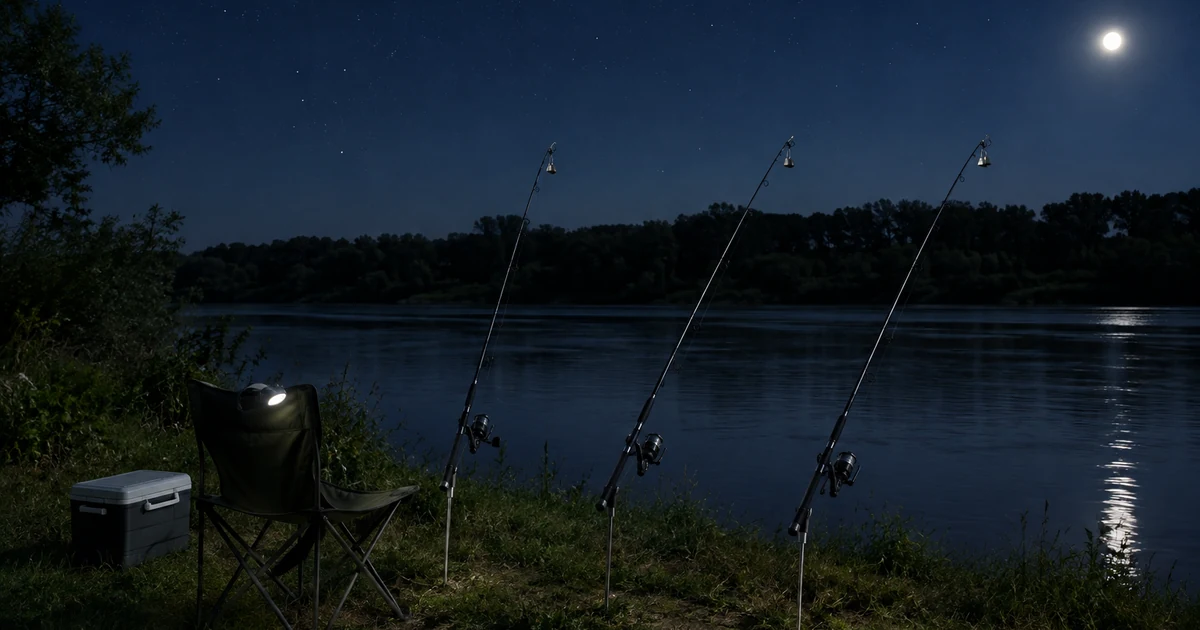
A good station lets you fish several rods, see bites quickly and stay comfortable for a long session:
- 2 to 4 rod holders, spike-style, angled at 30 to 45 degrees and spaced several feet apart so lines don’t tangle.
- A chair placed so you can see every rod tip at once.
- Bite detection for the dark: a bell or bite alarm clipped to each rod tip, or a small clip-on light. On a float rig, use a glow bobber.
- A net or cradle within arm’s reach.
- A cooler for bait and, if you’re keeping fish, a stringer.
- A headlamp.
Point each rod tip slightly downstream or across the current, not straight upstream. That keeps slack out of the line so light bites show up as tip movement.
Choose Your Spot Before Dark
You can only fish what you can reach, so pick spots where good structure is within casting range:
- Steep banks. They drop into deep water close to shore, so you reach holes and channel edges without a long cast.
- Points and bends. They funnel current and fish past a fixed casting spot.
- Current breaks and confluences on rivers, where a creek enters the main river or a log or piling breaks the flow.
- On ponds: the deepest water, often near the dam, plus any inflow pipe or ditch where food washes in.
Scout in daylight and tie your rigs at home. Finding a spot and re-rigging in the dark wastes the best hours.
The Multi-Rod Strategy
You can’t move around like a boat, so let your rods search for you:
- Rod 1: close to shore, near visible structure.
- Rod 2: mid-range, on a drop-off or current seam.
- Rod 3: your longest comfortable cast, into deeper water.
After 30 to 45 minutes, if one rod keeps producing, move the others to that depth and distance. Mark your line at a measured cast length with a marker or tape so you can hit the productive zone again in the dark.
Rig and Bait
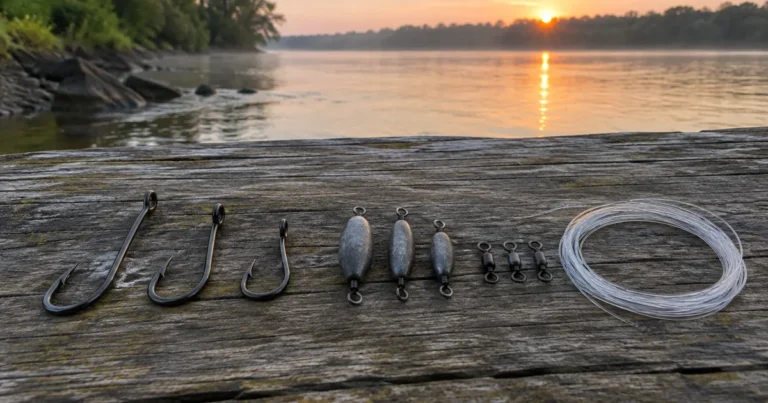
- The slip sinker rig is the default for night bank fishing. The fish can take the bait and move without feeling the sinker.
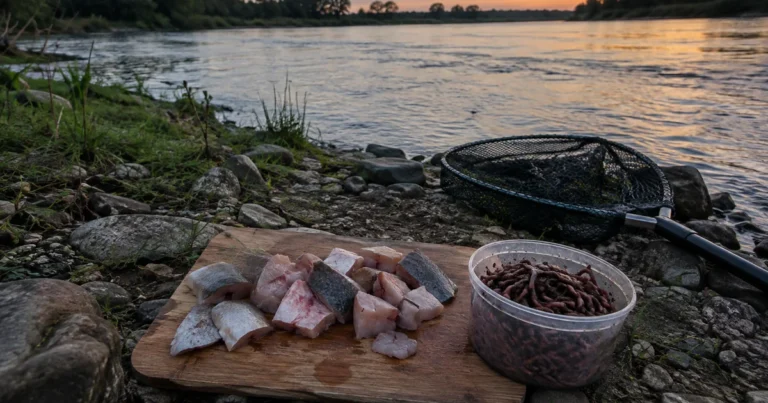
- Cut bait for channel and blue cats, especially in current.
- Live bait near heavy cover for flatheads.
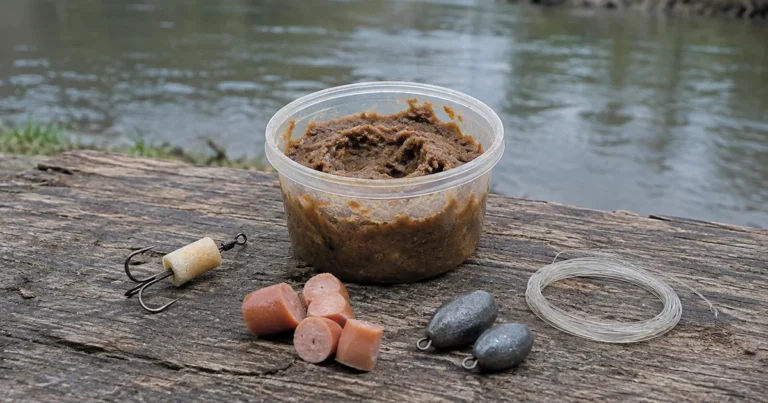
- Stink bait or chicken liver for channel cats in warm, still water. Our homemade stink bait recipes cost next to nothing.
Reading the Rod Tip at Night
- A steady bend is current or wind. That’s your baseline.
- Light, repeated taps mean a catfish is testing the bait with its barbels. Stay ready, but don’t strike yet with a circle hook.
- The tip loads up and stays loaded: that’s the bite. Pick up the rod and reel steadily into the fish. No swinging with circle hooks.
Night Safety
- Tell someone where you’re going and when you’ll be back, especially if you’re alone.
- Below dams, water can rise quickly and without warning when generation changes. Know the schedule and keep an exit route.
- Stay back from strong current around pilings and dam discharges.
- Handle catfish carefully in the dark. The pectoral and dorsal spines can give you a painful puncture. Grip just behind the head, avoiding the pectoral spines, and keep a small first aid kit in your bag.
- Pack out your line, hooks and trash.
Tight lines,
— David