How to Catch Catfish in a River: Rigs, Bait and Current
To catch catfish in a river, put a scent-heavy bait just upstream of a spot where the current slows, hold it there with the right rig and sinker, and let the current carry the scent to the fish. That is the whole method, and it is the river side of our complete catfish fishing system. Below: where to place the bait, which rig to tie for each kind of current, what to put on the hook and when to go.
Catfish Fishing Mastery: the complete system this article comes from, as an instant PDF. Get the guide — $17
Let the Current Do the Work
Catfish find food mostly by smell and taste, and a river is a delivery system for scent. Your bait leaks a trail downstream that spreads into a cone, and fish follow it upstream to the source. Two consequences:
- Place the bait upstream of the holding spot, not on top of it. The scent should wash over the fish.
- Fish face into the current while they wait in slow water for food to drift by. They are not built to sit in fast water for hours.
The holding spots themselves (current breaks, deep outside bends, confluences, eddies and tailwaters) are covered one by one in where catfish hold in a river. If the river is new to you, start at a confluence or a visible current break near a deep bend.
Match the Rig to the Current
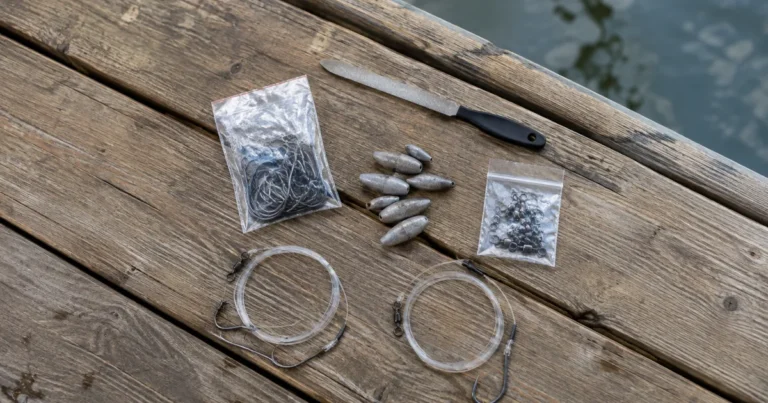
Two rigs cover almost every river. Tie them at home so a snag costs you seconds, not half an hour.
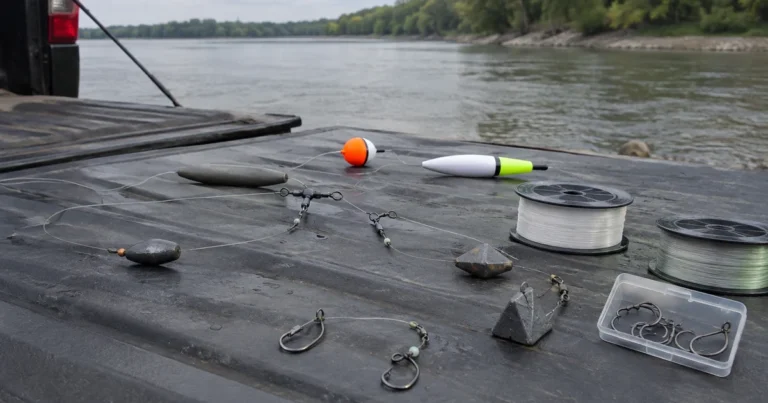
- Slip sinker rig: the default for light to moderate current. The line slides through the sinker, so a fish can move off with the bait without feeling the weight. The barrel swivel keeps spinning cut bait from twisting your line.
- Three-way swivel rig: for strong current, tailwaters and rocky or snaggy bottoms. The sinker hangs on its own 4 to 8 inch dropper of slightly lighter line, and the bait rides an 18 to 24 inch leader just off the bottom. If the sinker hangs up, the dropper breaks first and you keep the rest of the rig.
- Slip float rig: when you want a bait drifting along a current seam at a set depth, or the bottom is too full of debris for a bottom rig.
All five rigs, with the knots, are in our catfish rigs guide.
Sinker Weight and Shape
Use just enough weight to hold bottom. The shape matters as much as the ounces:
- No-roll sinkers have flat sides, so they stay put in current where a round egg sinker rolls downstream.
- Pyramid sinkers dig into sand or mud and hold well on big rivers.
- Bank or bell sinkers work on the three-way dropper, but they snag more often in rock.
| Current | Rig | Sinker | Bait that holds up |
|---|---|---|---|
| Slow or slack water | Slip sinker | 1/2 to 1 oz | Cut bait, liver, stink bait |
| Light to moderate | Slip sinker | 1 to 2 oz | Cut bait, liver wrapped in netting |
| Strong, big river or tailwater | Three-way | 3 to 6 oz or more | Fresh cut bait |
| Seam over a snaggy bottom | Slip float | Split shot | Live bait, cut bait |
Baits That Stay On in Current
Current strips soft baits and washes scent away fast, so the river favors tough, oily baits:
- Cut bait is the first choice for channel and blue catfish: shad, or skipjack herring in rivers that have them. Cut at an angle to expose more flesh, and slit the skin.
- Live bait is close to mandatory for flatheads: a lively baitfish or a crawfish fished at night beside heavy cover. Crawfish are a natural staple in rocky rivers and creeks.
- Chicken liver catches channel cats but washes off in current. Wrap it with bait thread or a small piece of pantyhose.
- Stink and dough baits belong in still or slow water. Fast current carries the scent away and pulls the bait off the hook.
The full bait breakdown by species is in the best catfish bait.
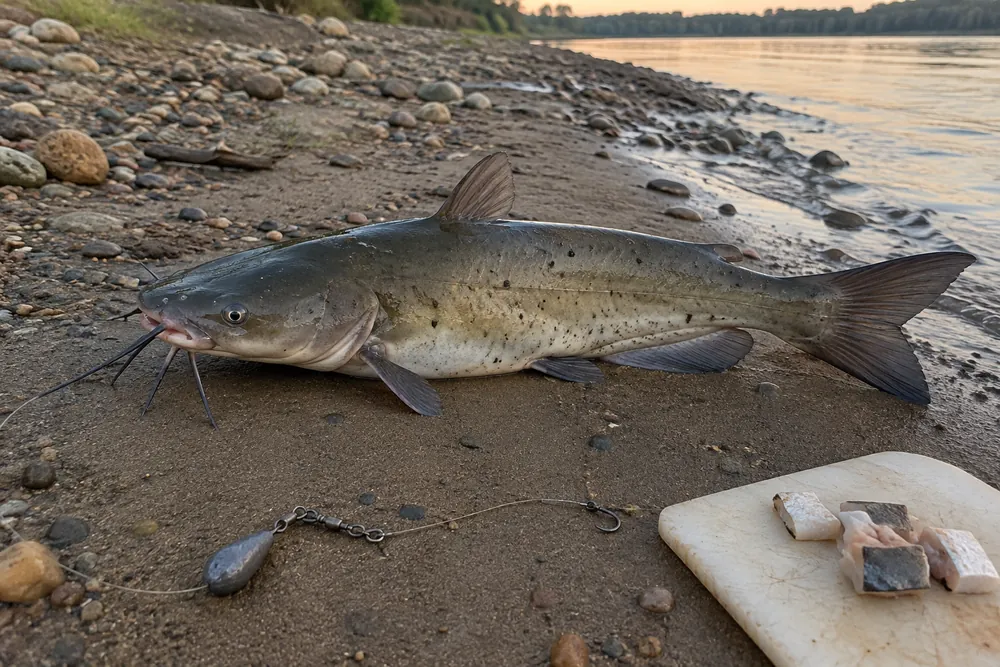
Worked example: a fall evening on a medium-size river
Say it is mid-October, the water has dropped into the 60s, and you reach a bend where a small creek enters the main river. The current is moderate, the bottom is sand with scattered wood, and you have fresh cut shad in the cooler. Here is how the session plays out with the method above:
- Spot: the confluence, with the deeper outside bend just downstream. That combination has the best blind-cast odds on any river.
- Rig: a slip sinker rig with a 2 oz no-roll sinker, a barrel swivel and an 18-inch leader. The swivel stops the cut bait from twisting the line as it turns in the current.
- Spread: rod one on the slow pocket where the two currents meet, rod two on the seam, rod three in the deep water on the outside of the bend. Tips point slightly downstream.
- Bait: 2 to 4 inch chunks of shad cut at an angle, with a small slit in the skin to speed up the scent.
- Clock: give it 30 to 45 minutes. If one rod gets the bites, move the other two to that depth and distance. If the sinker keeps rolling or snagging in the wood, switch that rod to a three-way rig.
October is one of the best months of the year for this, because shad are bunched up and big blue catfish follow them.
Set Up So You See Every Bite
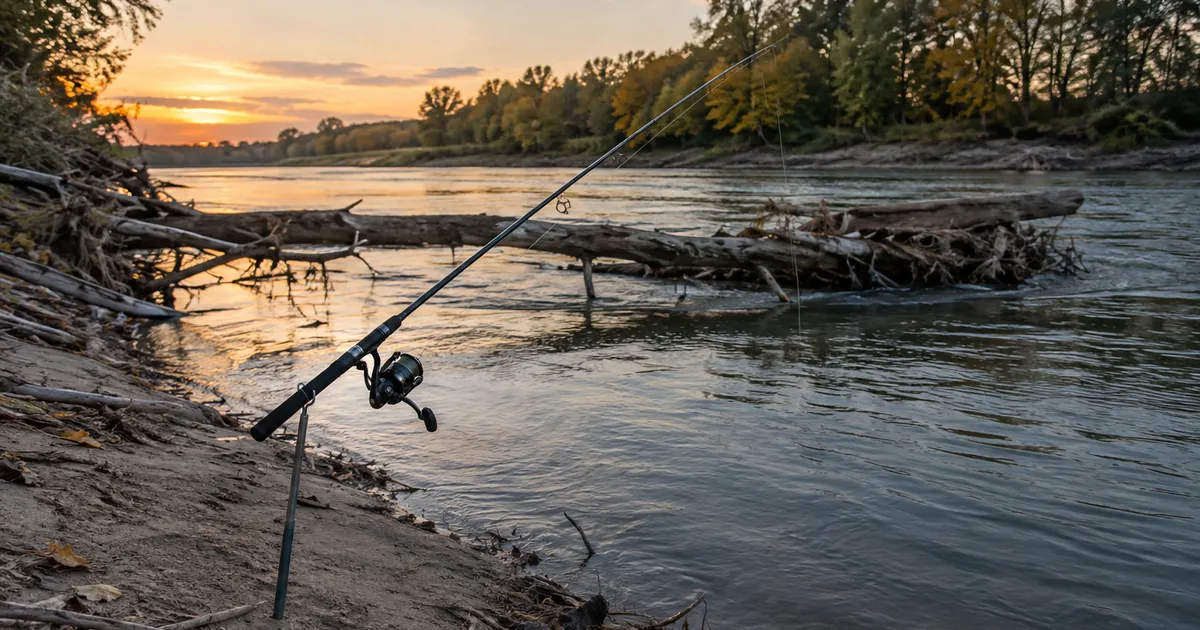
- Angle the rod holder so the tip points slightly downstream or across the current, never straight upstream. That keeps slack out of the line, so a light bite shows on the tip instead of disappearing into a belly of line.
- Learn the baseline. A steady bend is just current pressure. Light, repeated taps mean a fish is testing the bait. A tip that loads up and stays loaded is the signal to pick up the rod.
- Do not jerk a circle hook. Reel steadily into the fish and let the hook turn into the corner of the mouth.
- Consider braid with a leader. Braid is thinner for its strength, so it cuts through current with less drag and transmits more bites.
Small River or Big River
The principles are the same; only the scale changes. A small river concentrates catfish into a few obvious spots, so read the bank and fish them in turn. A big river spreads them out, so narrow it down first with a depth map or electronics. On a big river, blue catfish are the most current-oriented species and will sit in fast water other catfish avoid, while flatheads stay in deep holes with wood, roots or rock.
When to Go
- Time of day: dawn, dusk and night bring the most confident feeding, especially in summer heat.
- Rain: light to moderate rain and the runoff after it often turn the bite on, because food washes in and the water stains.
- Floods: high, fast, debris-filled water is dangerous. Skip it.
- Below dams: the water can rise quickly and without warning when release schedules change. Watch the level, wear a life jacket in a boat, and tell someone where you are fishing.
Check your state wildlife agency’s rules for the water you fish before every trip.
The Short Version
Read the current, put the bait just upstream of the slow water, tie the rig and sinker the flow calls for, use bait that survives the current, and give each good spot 30 to 45 minutes before you move. Do that at dusk and you already know how to catch catfish in a river.
Frequently Asked Questions
What is the best bait for catfish in a river?
Fresh cut bait is the most reliable choice in current: shad or skipjack herring where they are legal and available. It stays on the hook and spreads scent well downstream. Use live bait near heavy cover if you are after flatheads, and keep stink bait for slow water.
What size sinker do you need for river catfishing?
Match it to the current. Light to moderate current usually needs 1 to 2 oz, while a big river or a tailwater can take 3 to 6 oz or more. Use just enough weight to hold bottom.
Where do catfish hide in a river?
In slower water where food keeps coming to them: behind current breaks such as logs, boulders and bridge pilings, in deep holes on the outside of bends, at confluences, in eddies and below dams.
What is the best time to catch catfish in a river?
Dawn, dusk and night produce the most active feeding, especially in summer. Light to moderate rain is often good too, because the runoff washes food into the river and stains the water. A river in flood is a different story: stay off it.
Tight lines,
— David