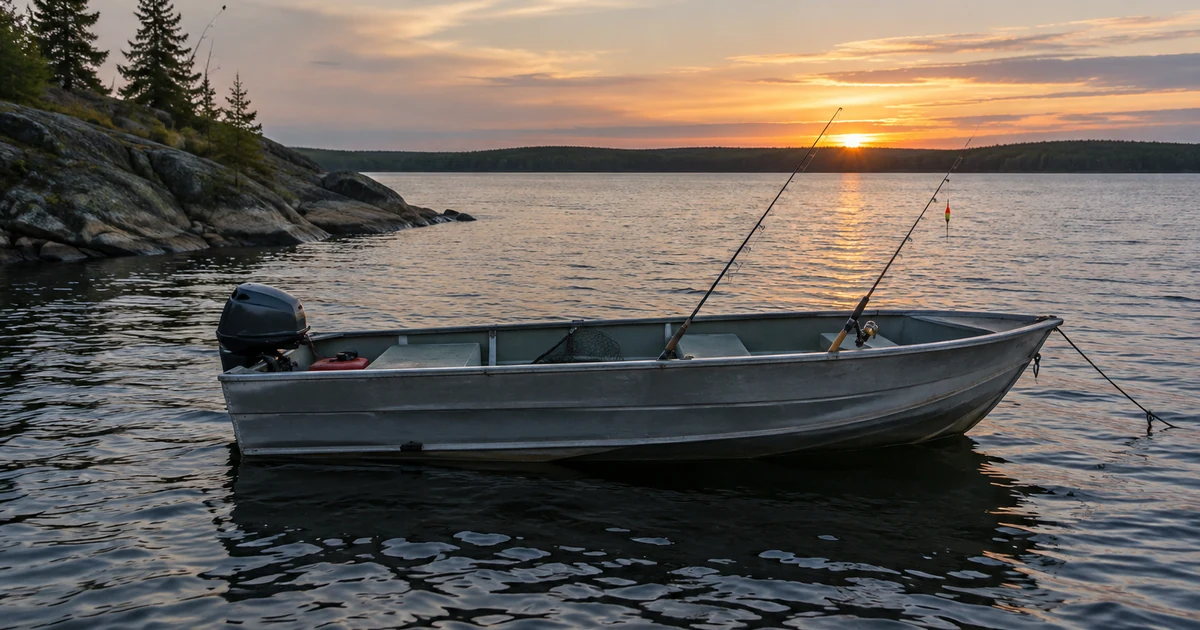
How to Catch Walleye: Light, Temperature and the Edge
To catch walleye on a regular basis, stop thinking about lures first and start reading three things: light, water temperature and edges. Walleye feed when dim or broken light gives them an advantage over their prey, they sit at a depth the water temperature predicts, and they travel along the places where the bottom changes. Get those three right and a basic presentation will do the rest. This is the foundation of our complete walleye fishing system, cut down to a plan you can fish this week.
Walleye Fishing Mastery: the complete system this article comes from, as an instant PDF. Get the guide — $17
Why Walleye Seem Moody (They Aren’t)
Most frustration with walleye comes from one habit: fishing them like bass. A bass hides in cover and ambushes. A walleye roams in schools, dislikes bright light and relates to structure, depth and food. Cast at visible targets on a sunny afternoon and you’ll catch one now and then, by accident, and decide the fish are moody.
They’re the opposite. Walleye are some of the most predictable fish in fresh water, because where they sit follows three variables you can check before you leave the house:
- Light decides the hour.
- Water temperature decides the depth and the type of spot.
- Edges decide the exact address.
Small details count too. A 1/8 oz jig instead of a 1/4 oz, or a bait riding 6 inches above the bottom instead of 3 feet, can be the gap between a couple of fish and a busy evening.
Light: Read the Sky, Not the Clock
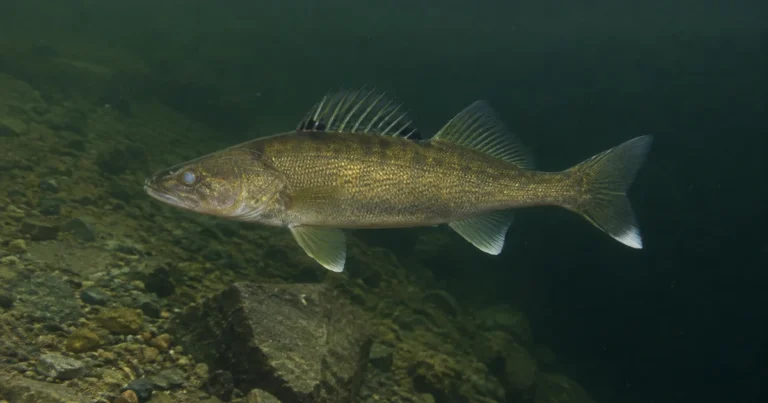
The walleye is named for its big, glassy eyes. Behind the retina sits a reflective layer, the tapetum lucidum, that sends light through a second time and roughly doubles what the fish can see in the dark. Baitfish don’t have that. When light drops, the walleye sees its prey clearly while the prey struggles to see it.
That one fact explains most walleye behavior:
- Dawn, dusk, night, deep water, stained water, wind-churned water and heavy overcast all favor the walleye. Those are its hardest feeding times.
- Under a high sun in clear water, walleye slide deeper, tuck into shade or weeds, or stop chasing. They haven’t left. They’ve moved to where the light is comfortable.
- As a working rule, the prime windows are an hour and a half bracketing sunrise and a two-hour stretch bracketing sunset, which runs on into full darkness on clear lakes.
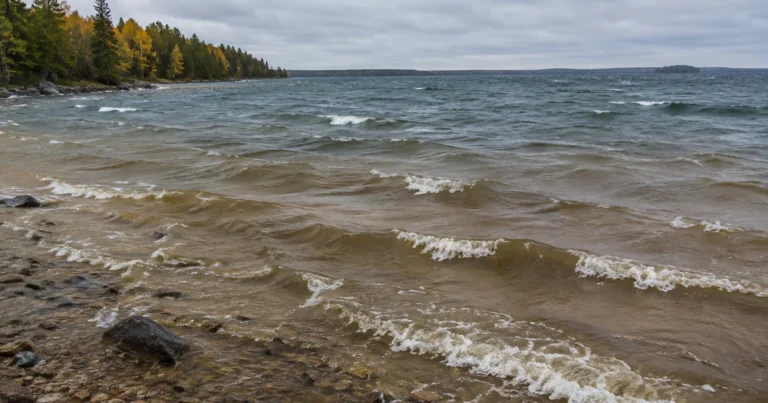
So walleye eat when the light favors them, not on a fixed schedule. A gray, windy weekday at noon can beat a bright, calm Saturday sunrise. Waves rolling onto a point break up the light at midday too; that’s the subject of the walleye chop and how to fish it.
Temperature: The Thermometer Is Your Calendar
Forget the month. A late spring up north and an early one farther south can put the same spawn weeks apart. What matters is the water temperature. Here is where walleye tend to be at each stage:
| Water temperature | Phase | Where to look |
|---|---|---|
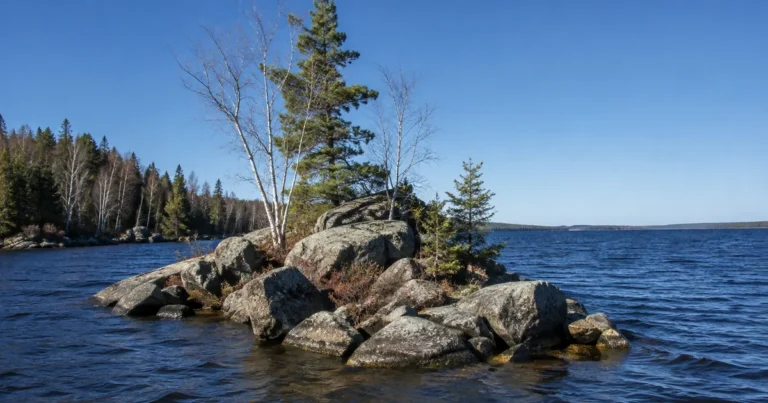
| 34-42°F, rising | Pre-spawn | Mouths of spawning rivers, rock shorelines near spawning flats, the deep basins beside them |
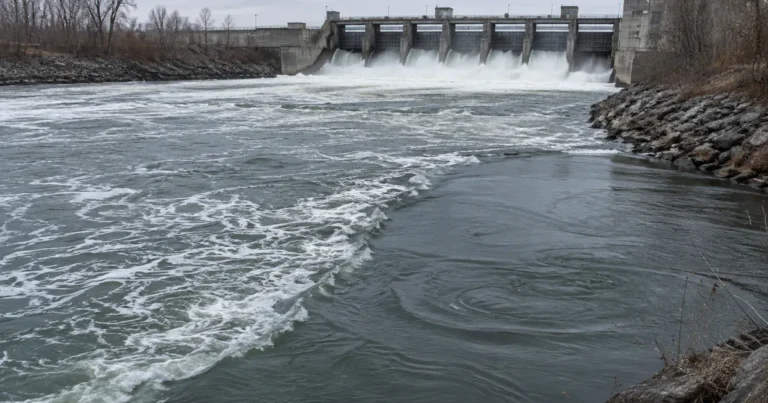
| 42-50°F | Spawn | Rock and gravel in 1 to 6 feet, river rapids, tailraces, windswept gravel shoals (check season dates) |
| 50-58°F | Post-spawn recovery | Scattered fish; warming bays holding baitfish and the first weedlines |
| 58-68°F | Early summer | New weedlines at 6 to 12 feet, sand flats, shoreline points: the easiest fishing of the year |
| 68°F and up | Summer | Deep structure at 15 to 35 feet, humps, main-lake points, fish suspended over basins; a stronger night bite on clear lakes |
| Falling from about 60 to 40°F | Fall feed | Steep structure, river mouths, main-lake points; the year’s biggest fish eat big baits |
| Ice | Winter | Late-fall spots at early ice; basin flats at 25 to 40 feet in midwinter |
Two numbers are worth memorizing. Between 42 and 50°F, walleye are shallow and gathered near rock and current. And once autumn water drops below 55°F, the largest walleye of the season move up and feed hard.
The Edge: Where Walleye Actually Live
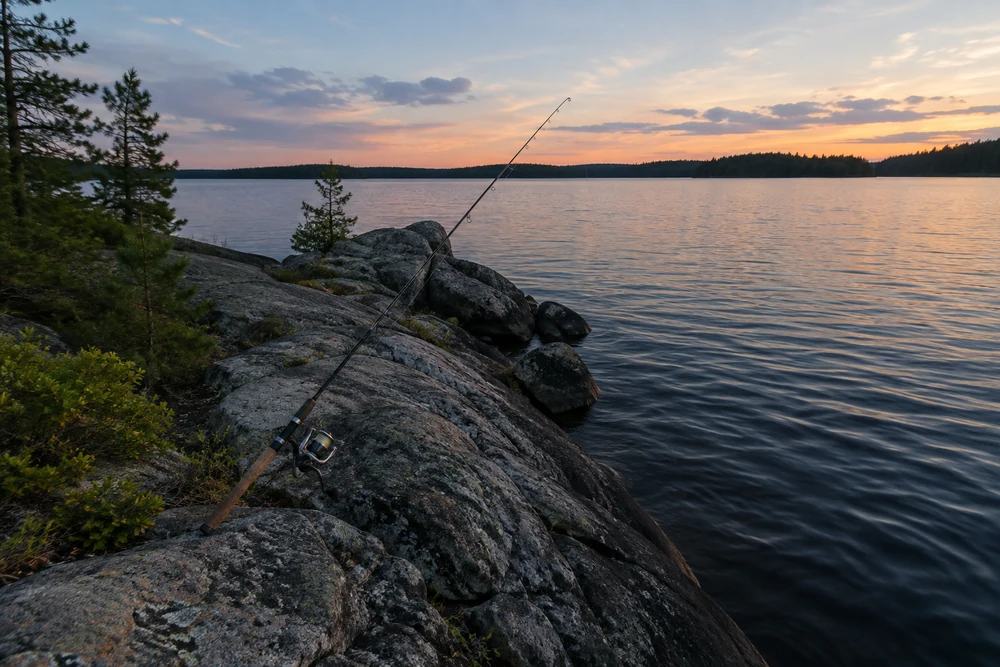
If you keep one location rule, keep this one: walleye live on edges. Shallow against deep. Rock against sand. Weeds against open water. Current against slack. Light against dark.
The most important edge is the breakline, the slope where a flat drops toward the basin. Walleye rest along it while the sun is high and climb it to feed as the light fades. Picture a flat at 8 feet and a basin at 24 feet:
- The lip is where the 8-foot flat starts to fall away. Feeding fish sit on the lip and up on the flat.
- The base is where the slope meets the 24-foot bottom. Resting fish hold there and partway up the slope.
- The bends matter most. Points, inside turns and fingers gather fish. On a map, start where the contour lines squeeze together or form a V.
Work the contour, not the shoreline. Keep the boat over a single depth, say 14 feet, while your jig or rig works below you. For the full list of structures, see where walleye hold along breaklines.
Light Plus Edge: The Daily Elevator
Put the light and the breakline together and you get a daily pattern you can plan around. The fish ride the slope up and down like an elevator:
- From 90 minutes before sunrise to an hour after: fish move up onto the lip, flats, points and shallow rock. Be in place before the light changes, with jigs shallow or crankbaits over the flat.
- Mid-morning: they ease back down the slope. Follow them and switch to live bait rigs.
- Midday, high sun: look at the base of the break, deep structure, weeds and shade. The exception: if wind or clouds cut the light, fish can stay shallow, so head for the windy bank.
- Two hours before sunset until dark: on most waters, the best window of the day. Fish climb again and turn aggressive. Slip bobbers on rock, jigs on the lip, crankbaits over flats. Don’t leave early.
- After dark on clear water: walleye feed shallow, 2 to 10 feet, and the biggest fish of the day often show up.
Plan backward from those windows. Use the bright hours to scout, rig and move, then fish hard when the light is low. Four well-placed hours beat eight casual ones.
Your First Presentation: A Jig and a Minnow
If you only learn one presentation, make it a jig tipped with a minnow. It keeps the bait near the bottom at any depth and costs very little. Pick the lightest head that still touches bottom: about 1/16 oz down to 10 feet, 1/8 oz to 15, 1/4 oz to 25, and heavier beyond that or in wind and current.
Use the lift-drop as your default: raise the jig 6 to 12 inches, lower it until the line barely goes slack, wait 2 to 3 seconds, and repeat. Bites are rarely a thump. Maybe half the time you’ll feel a tick; the rest of the time it’s extra weight, a mushy feel, a jig that doesn’t reach bottom when it should, or line moving to the side. If anything changes, set the hook. Hooksets cost nothing. Rigging and the other retrieves are covered in our jig and minnow how-to.
Tonight’s Plan: Where to Start
- Tonight: choose one lake or river and get its water temperature, online or with a thermometer off a dock. Match it to the table above.
- Pick two spots on a map that fit that phase. A point and a breakline with a sharp bend are good bets.
- Note tomorrow’s wind and sunset time. The spot the wind blows into moves to the top of the list.
- Tomorrow evening: fish your plan through the dusk window with two rods, a jig rod and a slip bobber rod.
- Afterward: write three lines in a log: conditions, what worked, what didn’t.
Then add one skill per trip. A sensible order for a first season: a jig-only evening on a point; a trip following one contour for 500 yards; a slip bobber evening on rock with leeches a foot above the bottom; a trip to the windward bank whatever the forecast; and later, a night on shallow rock with stickbaits. One more is worth doing on purpose: a bluebird day after a cold front, fished deep, slow and small. That trip teaches more than any easy one.
Frequently Asked Questions
What is the best time of day to catch walleye?
On most waters, the best window runs from about two hours before sunset into the first hour of darkness, with the period around sunrise as the second choice. Heavy cloud, wind and stained water cut the light and can keep walleye feeding through the middle of the day.
How deep are walleye?
It depends on water temperature. As a rough guide, they sit shallow (2 to 10 feet) in spring, in fall and at night, in the 6 to 15 foot food zones in early summer, and on structure at 15 to 35 feet at the peak of summer. Wind, clouds and darkness always push them shallower than normal.
Do I need a boat to catch walleye?
No. Walleye were caught from shore, from small rowboats and through the ice long before modern electronics existed. After dark, fish move onto riprap, piers, causeways and river mouths within casting range of the bank.
Why can’t I catch walleye in the middle of the day?
Bright light makes walleye uncomfortable, so on a calm, sunny day in clear water they drop to the base of the break, into weeds or into shade. Fish those spots slowly, look for a windy bank, or save your energy for the evening window.
Tight lines,
— David