The Walleye Chop: Why Wind Turns Walleye On (and How to Fish It)
Bass anglers curse wind. Walleye anglers pray for it. A steady wind rolling waves onto a point can pull walleye into a few feet of water in the middle of the day, and the anglers who run to the calm side of the lake never see it. Here’s why wind matters so much, and how to fish it, as part of our complete walleye fishing system.
Walleye Fishing Mastery: the complete system this article comes from, as an instant PDF. Get the guide — $17
What Wind Does, All at Once
- It cuts light. Waves scatter light penetration, and walleye feed when light is low or broken. On a windy day they feed shallower and longer.
- It creates current. The wind pushes plankton, and therefore baitfish, against the downwind shore. Predators follow.
- It hides your bait. A broken surface means fish can’t inspect what you’re throwing.
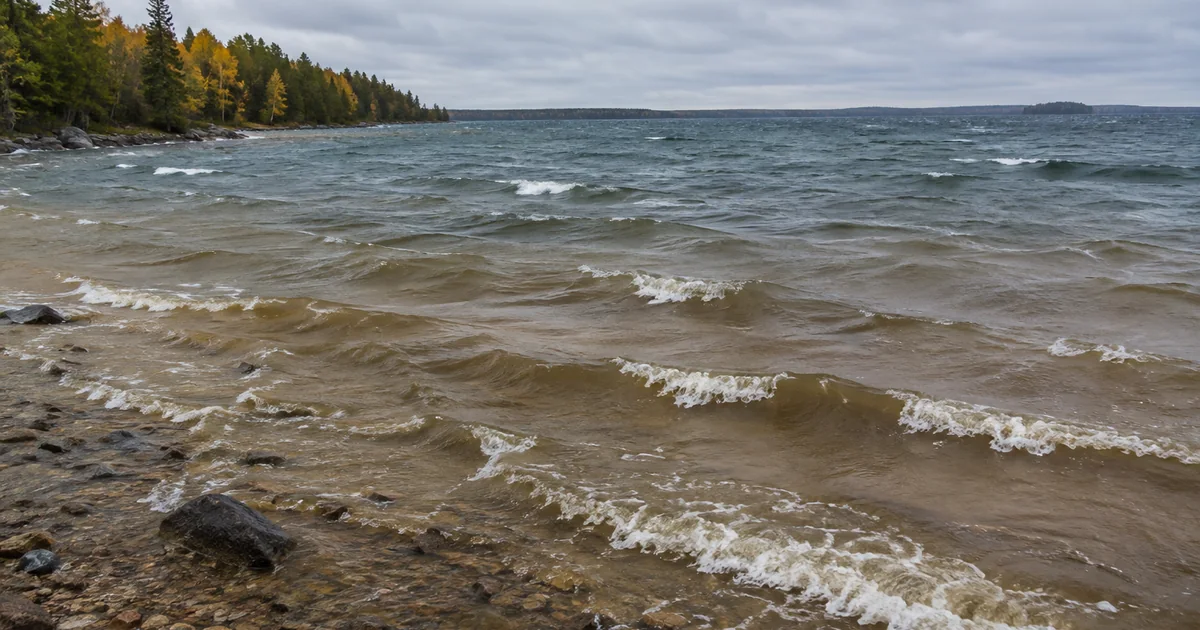
That’s the walleye chop: waves of 1 to 2 feet rolling onto a point, a flat or a rock shore for a few hours can create a feeding zone in water as shallow as 2 to 6 feet, at midday. Two-foot rollers can pull fish onto a 4-foot flat at noon. Wind plus clouds is the signal to drop everything and go.
Where to Fish It
- The windward side of structure: points, flats and rock shorelines the wind has been hitting for one to three days. Bait, plankton and predators stack there.
- The mudline: where churned water meets clean water. It’s an edge like any other; work its outside seam.
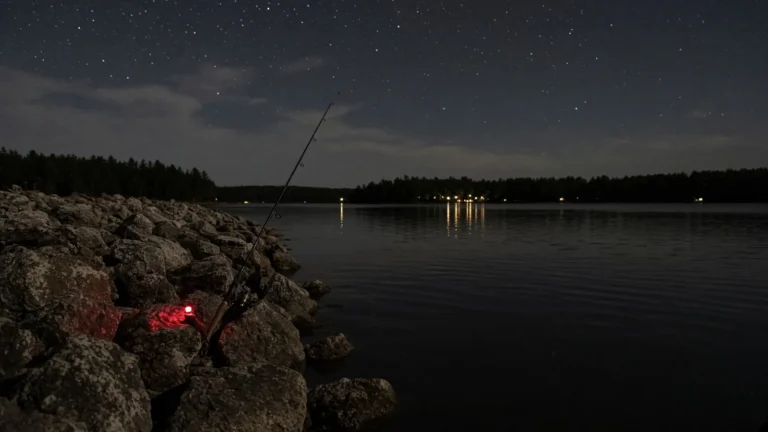
- Rock and riprap on the windward bank, which shore anglers can reach. We cover shore spots in night walleye fishing from shore.
If you see whitecaps on the west shore, don’t run to the calm east side “where it’s comfortable.” The calm side is comfortable because nothing is happening there.
How to Fish It
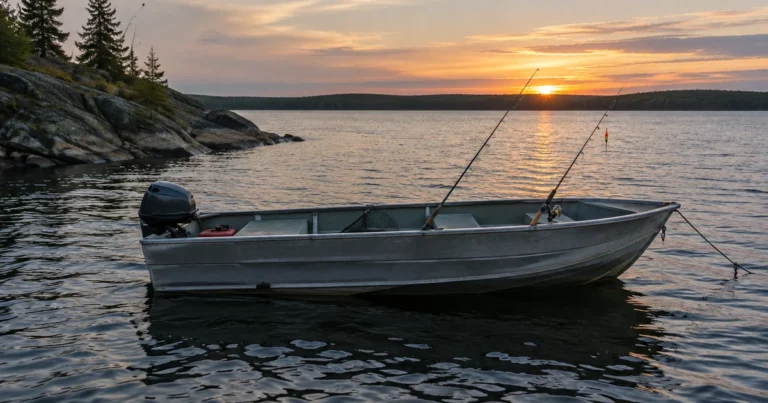
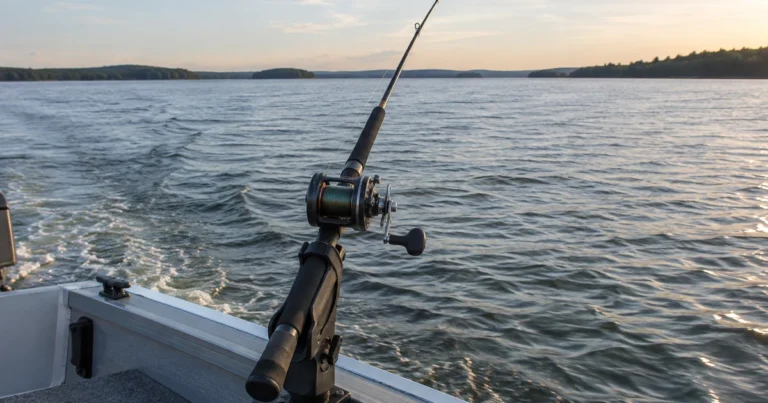
- Control the boat. A drift sock slows your drift to fishing speed; an anchor or spot-lock lets you sit on the spot.
- Don’t drive over them. If the fish are in 4 feet on the windward bank, cast to them from deeper water.
- Cast shallow cranks and jigs into the waves, and let a slip bobber ride the chop across the rocks. The waves walk the bobber across the spot for you.
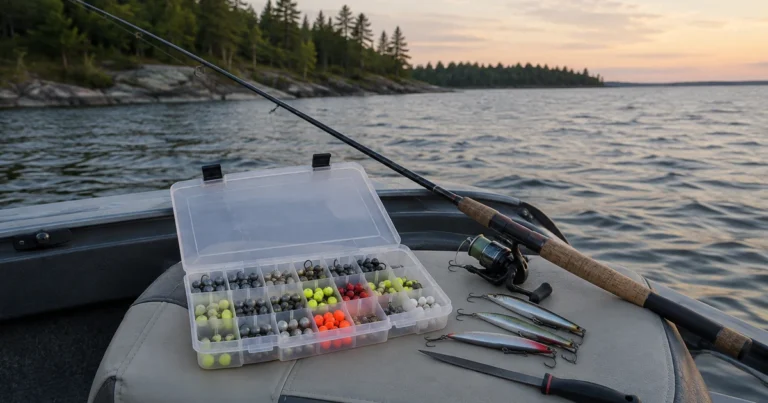
- Go a jig size heavier in wind so you stay in contact with the bottom: add one size over the calm-water rule.
When the Wind Changes
Wind switch: yesterday’s magic bank can die when the wind flips. Follow the new wind; the pattern follows within hours. Don’t camp on yesterday’s memory.
Too much wind: when you can’t hold the boat at around 0.8 mph, you can’t fish effectively. Use drift socks and heavier jigs to stay vertical, tuck into the wind-protected side of the same structure (fish use the calm seam behind points), or fish a protected shore that still has old waves rolling in. And safety comes first: wind is a tool up to the point where it becomes a hazard, especially in small boats.
Flat calm and a clear sky: the hardest daylight condition on clear water. Go finesse and deep, or come back for the night bite, which flat-calm nights serve beautifully. If the calm came in behind a front, read walleye after a cold front.
Wind Works Best on the Right Structure
Wind makes a good spot great; it doesn’t make a featureless flat productive. A point or breakline that drops into deep water, with the wind rolling onto it, is the combination to look for. Learn to find those edges in where walleye hold: the breakline.
Tight lines,
— David


One Comment
Comments are closed.