Jig and Minnow for Walleye: The Complete How-To
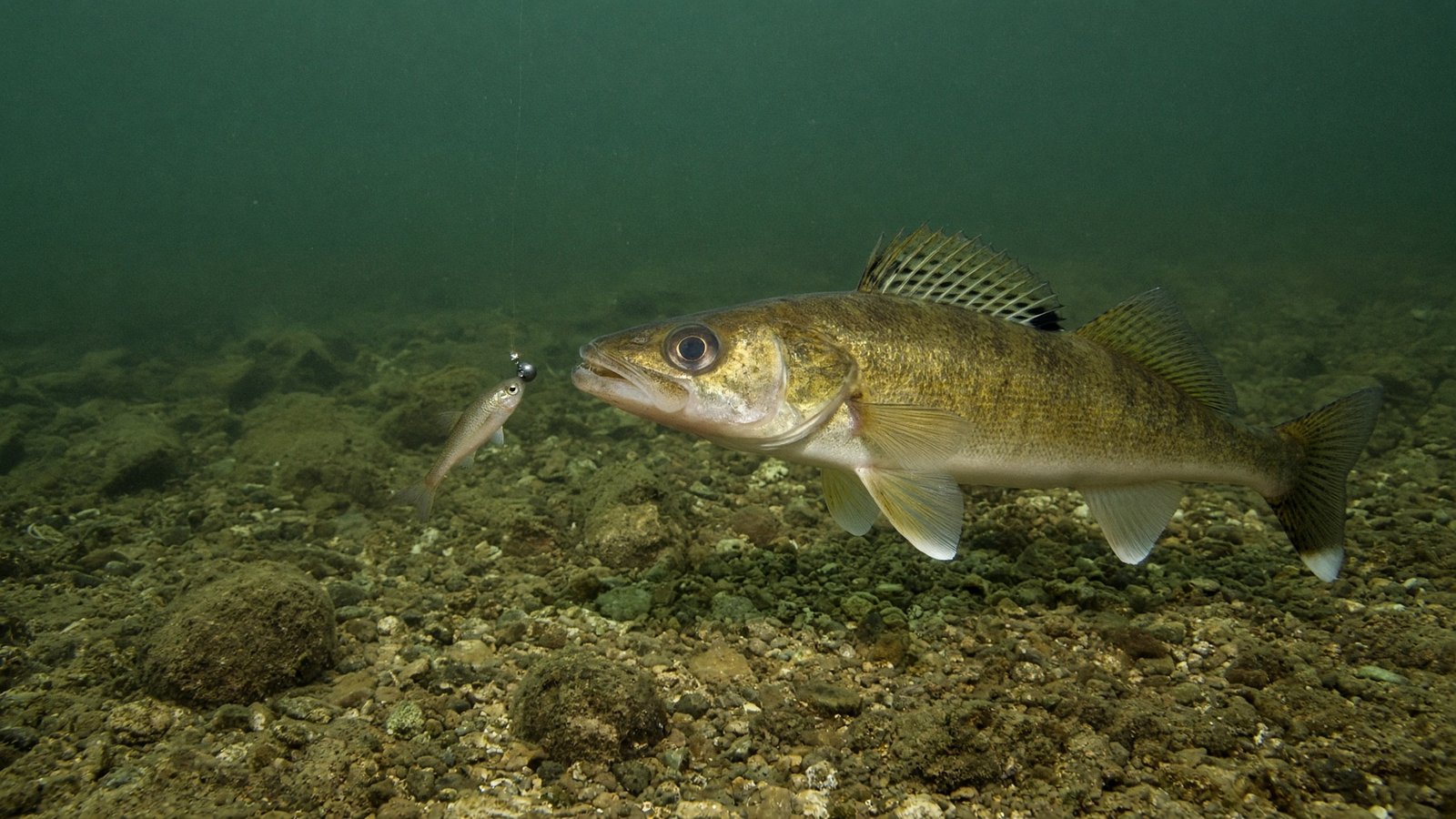
If walleye fishing were reduced to one lure, it would be a jig tipped with a minnow. More walleye have been caught on this combination than on everything else put together. A jig isn’t really a lure so much as a delivery system: it puts the bait exactly where walleye live, within 18 inches of the bottom, at any depth, with total control. It’s the foundation of our complete walleye fishing guide.
Pick the Right Jig Weight
Weight selection is the skill. The jig should touch bottom and stay in contact with the lightest weight that can manage it:
- 1/16 oz down to 10 feet
- 1/8 oz to 15 feet
- 1/4 oz to 25 feet
- 3/8 oz or more beyond that, or in wind and current
Fishing too heavy is the most common jigging mistake there is. A heavy jig falls like a stone, kills the glide, doubles your snags and turns soft bites into nothing. If you never lose touch with the bottom, you’re too heavy.
Hook the Minnow Right
- For casting and dragging: hook a fathead or shiner up through the bottom lip and out a nostril.
- For vertical work: hook it up through the mouth and out the back of the skull.
Either way, the minnow should hang straight in line with the hook. Fatheads are tough and catch fish all year; shiners have great action but a short shelf life; creek chubs give you size. Keep them cool and oxygenated, and replace a minnow at the first sign of sluggishness. If you wouldn’t chase it, neither will a walleye.
The Four Retrieves
- Snap-jigging (most aggressive): cast, let it touch bottom, snap the rod tip up 1 to 2 feet, and follow the jig down on a semi-tight line. Strikes come on the fall. Use it for active fish and to cover water.
- Lift-drop (the standard): lift 6 to 12 inches, lower it back until the line just ticks slack, pause 2 to 3 seconds, repeat. This is 80% of your jigging.
- Drag-and-shake: on sand and gravel, drag the jig 1 to 2 feet along the bottom, shake it in place, pause. For cold water and neutral fish.
- The do-nothing hold: hold the jig dead still 3 to 6 inches off the bottom. In water under 45°F, this “boring” presentation often beats everything. Cold-water walleye eat what stops.
Want the full presentation encyclopedia? Walleye Fishing Mastery covers jigs, live bait rigs, crankbaits and the stinger hook, with exact weights, speeds and colors for every situation.
Detecting the Bite
Walleye rarely smash a bait. The classic take is the pin-and-turn: the fish inhales the jig and turns away. You’ll feel a distinct tick maybe half the time. The rest is weight that wasn’t there, a mushy feeling, the jig not reaching bottom on schedule, or the line moving sideways.
The rule that catches fish: if anything feels different, set the hook. Hooksets are free. And run a 10 lb braid main line with a 6 to 10 lb fluorocarbon leader: braid has almost no stretch, so the soft tick reaches your hand from 30 feet down, and high-visibility braid lets you see the bite where the line enters the water.
Quick Fixes
- Snagging constantly: the jig is too heavy, or your rod is too low.
- Can’t feel bottom: too light, or too much line out. Keep the line angle under 45 degrees.
- Short strikes: add a stinger, a small #10 treble on a 2 to 3 inch loop from the jig’s hook eye with one point lightly pinned near the minnow’s tail, or downsize the minnow.
Colors and Timing
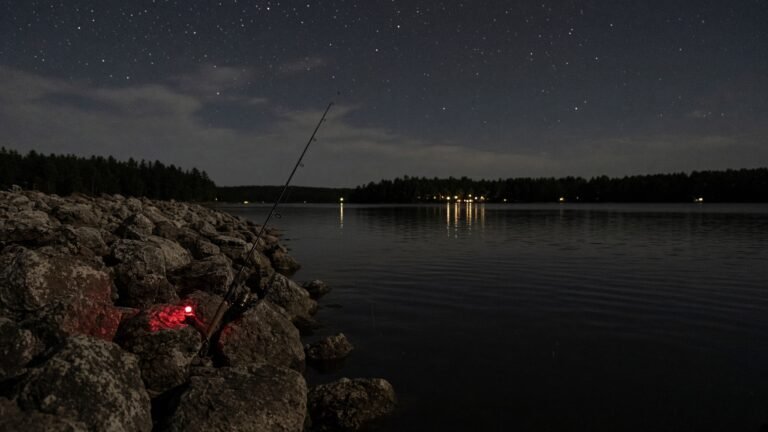
Start each day with one bright jig and one natural. Chartreuse, orange, pink and glow cover most stained and dark water; natural colors shine in clear water. Then fish it at the right time: walleye feed when light is low, so dusk and dawn beat midday. After dark, switch tools: see night walleye fishing from shore. And in fall, upsize the minnow to a 4 to 6 inch chub for the trophy window.
Go deeper with Walleye Fishing Mastery. It’s the complete system this article comes from: an instant PDF download that works on your phone, tablet and computer. Nothing ships, and every future update is free.
Tight lines,
— David
One Comment
Comments are closed.