Walleye After a Cold Front: Deeper, Slower, Smaller, Tighter
Yesterday the sky was dark and the fish were eating. Today the front has passed: bright blue sky, a north wind, and walleye that seem to have vanished. It’s the classic tough day in walleye fishing. The fish haven’t gone anywhere. They’re tight to the bottom or buried in cover, and there’s a clear staircase of adjustments that still catches them, straight from our complete walleye fishing system.
Walleye Fishing Mastery: the complete system this article comes from, as an instant PDF. Get the guide — $17
What the Front Did
Before a front, falling pressure and a darkening sky are often the best fishing of the week. The building wind and cloud extend the feeding window, sometimes for a full day. (Lightning ends the session, immediately, every time.)
Behind the front, high pressure brings the opposite: a bright sky, a north wind, and fish that hold tight to the bottom or bury in cover. Remember that walleye feed when light is low or broken. A bluebird sky takes away both the clouds and, often, the wind that breaks light up. That’s why the same spot can go from 25 fish to zero overnight.
The Staircase: Four Adjustments, in Order
1. Fish deeper
Move to the base of the break, not the lip. “Gone” usually means “15 feet deeper” on the same breakline. Slide down the structure you were fishing before you abandon the area.
2. Slow down
Drop to rigging speeds or do-nothing jigging: a live bait rig at around 0.5 mph, or a jig held dead still a few inches off the bottom. Cold, reluctant walleye eat what stops.
3. Downsize
Go to 1/16 to 1/8 oz jigs, smaller minnows and half crawlers. The lightest jig you can feel the bottom with is the right jig.
4. Tighten to cover
Put a slip bobber inside the boulder field, not next to it. Pitch the jig into the weed pockets. The bait has to go where the fish are hiding.
The Rigs That Still Get Bites
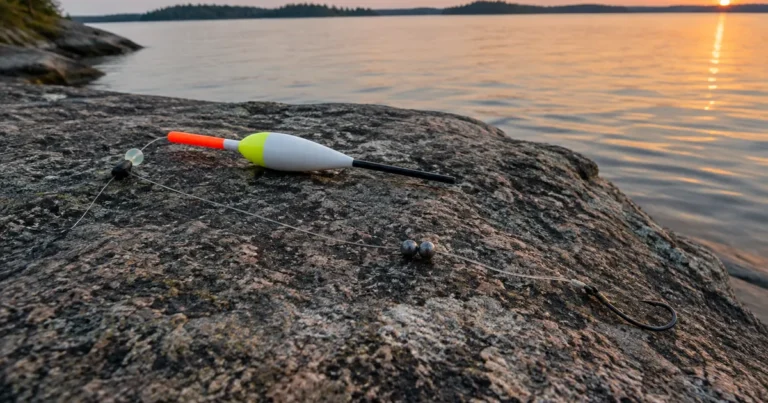
- Slip bobber and a small leech, set inside the rocks. It hovers the bait in a walleye’s face until it gives in.
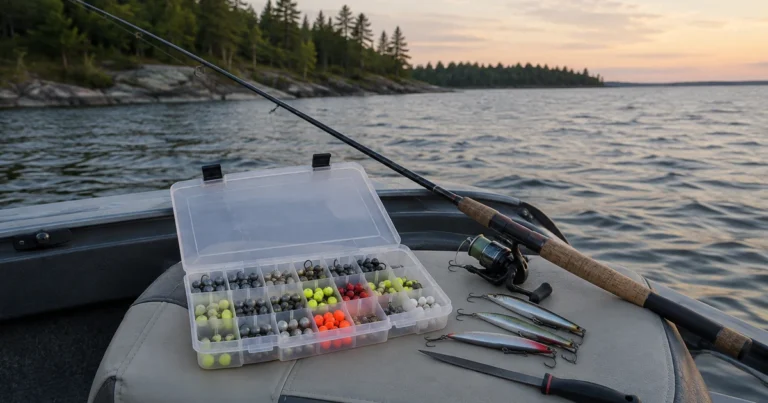
- The split-shot rig: a hook, a small split shot 18 inches up, nothing else. Drifted or slow-trolled with a leech or half crawler, it’s the slowest fall and most natural drift possible, and the “nothing else works” presentation after a front and in ultra-clear water.
- The walleye drop shot: a hook tied 12 to 24 inches above a 1/4 to 3/8 oz weight, with a nose-hooked minnow or a 3 to 4 inch finesse plastic, held perfectly still.
- The do-nothing jig at the base of the break. We cover rigging and retrieves in jig and minnow for walleye.
When They Tap but Won’t Take
Post-front walleye often nip at the tail of the bait. The fix, in order: add a stinger hook (a #10 treble on a short loop, one point lightly in the minnow’s tail), then downsize the bait so they get the whole thing, then slow the fall with a lighter jig. Taps are fish asking for a smaller, slower yes.
Don’t Skip Dusk
The dusk window survives even a cold front. Whatever the day was like, be on your best spot for the last two hours of light. Accept a five-fish grind during the day and know that the evening can still turn on.
A Cold Front Isn’t Wind
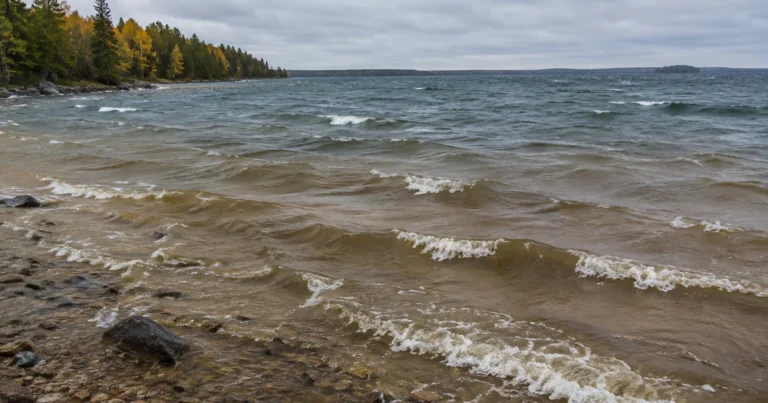
If the wind that came with the front is blowing onto a point or a rock shore, that bank may still be feeding. Wind cuts light and pulls walleye shallow even on a bright day. See the walleye chop for how to fish it. And in fall, a tough post-front day is still inside the trophy window: fished deep, slow and small, it beats the couch.
Tight lines,
— David



One Comment
Comments are closed.