Night Walleye Fishing From Shore: The Complete System
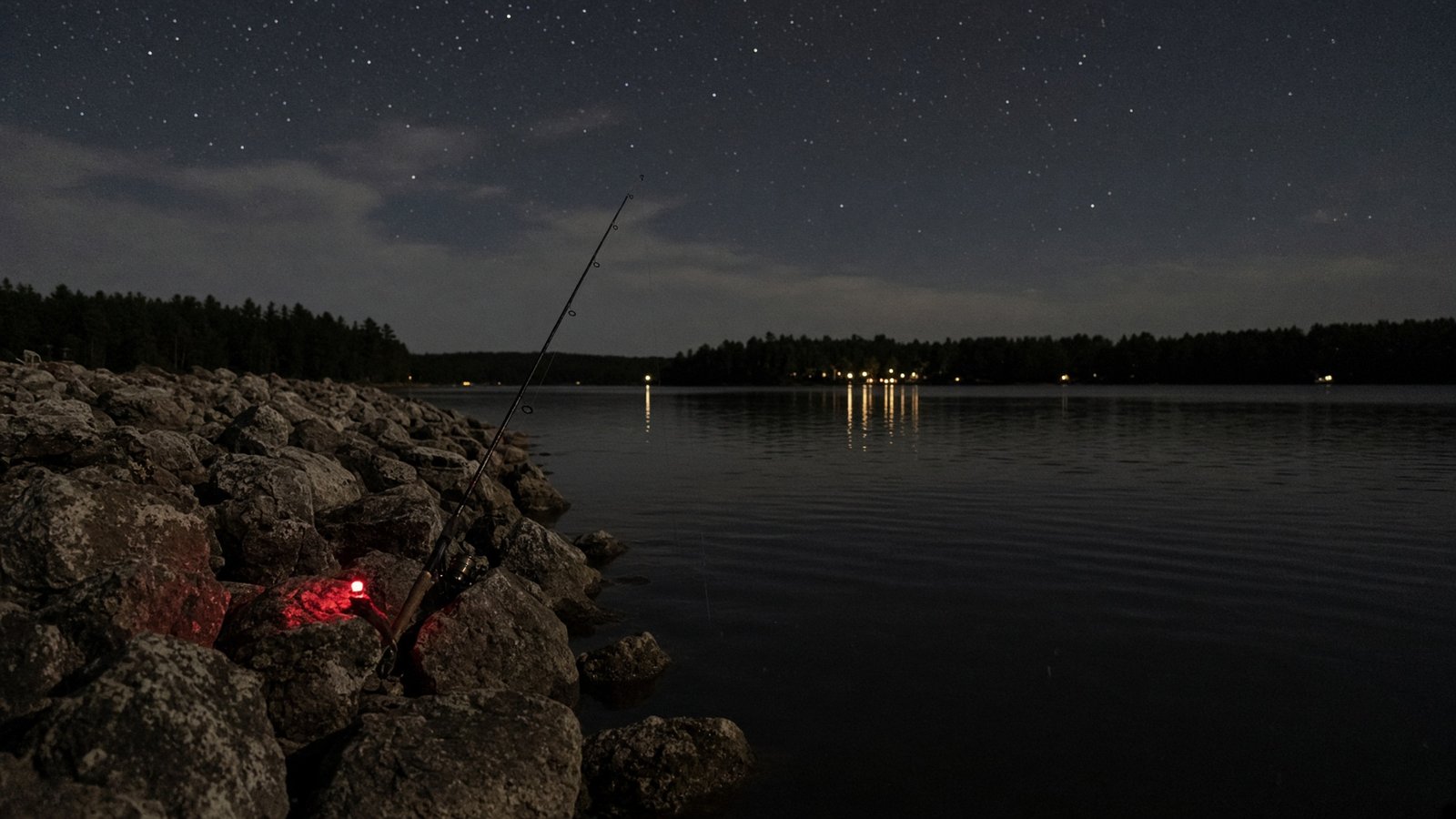
Everything that limits shore fishing by day reverses at night. On clear lakes, walleye push shallow after dark, onto riprap, piers, causeways, beach troughs and river mouths, right into casting range. A shore angler with two rods, a headlamp and a warm jacket, standing on the rocks after dark, is fishing the same water as a $70,000 boat, and often out-catching it. Night is the heart of the walleye clock in our complete walleye fishing guide.
Why Walleye Feed at Night
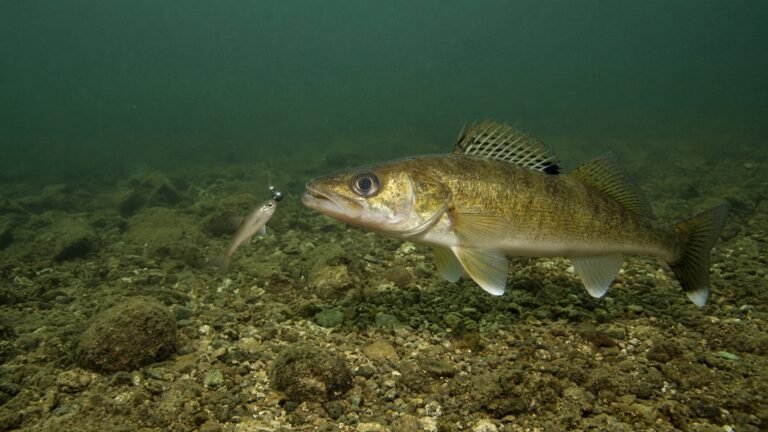
A walleye’s eye carries a reflective layer, the tapetum lucidum, that bounces light back through the retina and roughly doubles its sensitivity in dim conditions. Walleye see well in light where their prey sees poorly. That’s their edge, and it’s why they feed hardest in low light. It also makes bright light uncomfortable for them, which is why clear lakes are night lakes.
When to Go
- Season: clear lakes, from spring through ice-up. Spring (ice-out through the spawn) and fall (58°F falling to ice) are the best shore windows, and the fall night riprap bite is the big-fish one.
- Nights: calm, clear nights after warm days are classic; a light onshore breeze is even better.
- Hours: the first two hours of darkness are prime. Get there before the window and rig in daylight.
Where to Stand
Night walleye push shallow, into 2 to 10 feet. The fish holding at 22 feet at 4 PM is cruising a 5-foot boulder flat at 10 PM. From shore, look for:
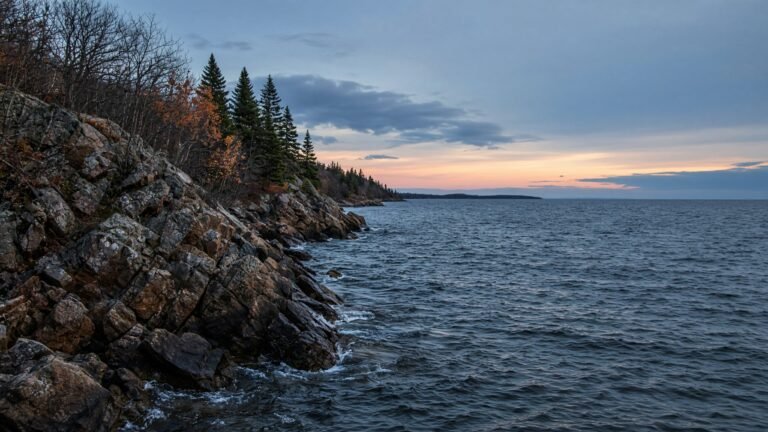
- Riprap: causeways, bridge embankments, marina walls and dam faces. Man-made spawning rock and crayfish habitat.
- Points and gravel shorelines, anywhere the bank pinches toward deep water.
- River mouths and inlets, especially after rain and during the spring and fall migrations.
- Piers, breakwalls and harbor mouths on big water.
- Beach troughs: the trough between the first and second sandbar is a night highway.
Want the whole walleye clock? Walleye Fishing Mastery turns low light into a complete fishing system: daily windows, light modifiers, the night system and a no-boat chapter for shore anglers.
The One Lure That Rules the Night
A slender minnow stickbait, size #8 to #12, fished with a slow, straight retrieve: just fast enough to feel the wobble, with occasional 2-second pauses. Strikes feel like the lure hit a wall. Black, purple and firetiger over rock. Work it fan-wise across your casting arc, and cast parallel to the bank as well as straight out: the fish are cruising the same contour you’re standing on.
Where two lines are legal, add a second rod: a slip bobber with a leech or a big minnow set 1 to 3 feet off the bottom, drifting along the rock edge while you cast. It catches the fish that won’t chase.
The Rules That Separate the Pros
- Quiet is everything. Night fish in 4 feet of water spook from dropped pliers and lights sweeping the water. Stand back from the edge in clear shallows; your silhouette is the biggest spook factor.
- Red light only. A headlamp with a red mode preserves your night vision. White light on the water ends the night bite.
- Travel light. One small bag, a shoulder net, a headlamp.
- Safety is part of the system. Learn the spot in daylight first and tell someone your plan.
Why Shore Anglers Have the Edge
Shore fishing is a specialist’s game with its own advantages: you fish the highest-percentage windows by default, you’re silent, you can drive between spots faster than a boat crosses a lake, and your costs are close to zero, which means you fish more.
In daylight, the same spots produce with a jig and minnow at dusk. And in October and November, the night riprap bite is where shore anglers catch genuine trophies: see fall walleye fishing.
Go deeper with Walleye Fishing Mastery. It’s the complete system this article comes from: an instant PDF download that works on your phone, tablet and computer. Nothing ships, and every future update is free.
Tight lines,
— David
One Comment
Comments are closed.